
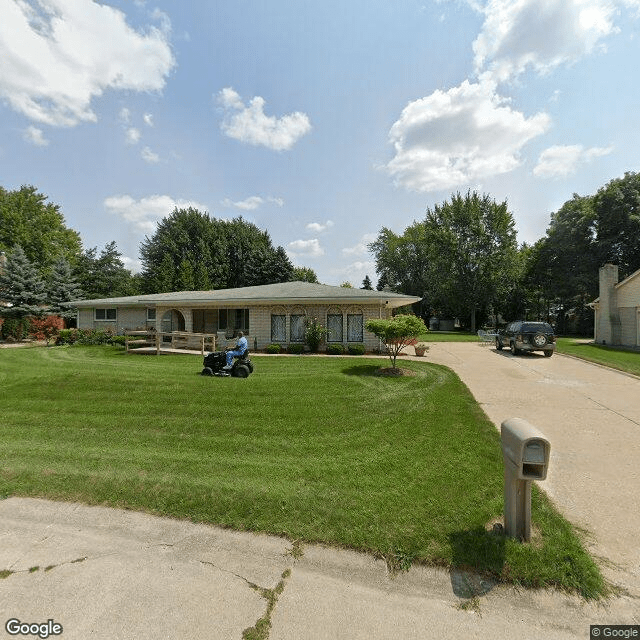
39764 Bonnie Ct, Clinton Township, MI 48038
For more information about senior living options: (866) 208-4318
Bonnie Villa Costs & Pricing
Bonnie Villa offers competitive pricing for its accommodations compared to both Macomb County and the broader state of Michigan. For semi-private rooms, residents enjoy a monthly fee of $2,500, which is significantly lower than the county average of $3,232 and the state average of $3,191. Private rooms at Bonnie Villa are priced at $3,500, again showcasing affordability relative to the county's average of $3,567 and the state's higher figure of $3,675. Even for one-bedroom units, Bonnie Villa presents a cost-effective option at $4,000 per month, in contrast to Macomb County's average of $3,527 and Michigan's overall average of $3,384. These comparative figures highlight Bonnie Villa's commitment to providing quality living arrangements at more accessible prices within its market.
| Floor plans | Bonnie Villa | Macomb County | Michigan |
|---|---|---|---|
| Semi-Private | $2,500 | $3,232 | $3,189 |
| Private | $3,500 | $3,567 | $3,674 |
| 1 Bedroom | $4,000 | $3,527 | $3,384 |
Memory care communities with a similar price nearby
-
from -$225 / mo
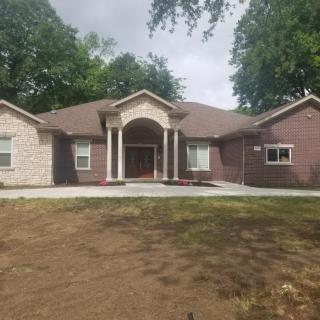
Pleasant Valley Family Care
$2,275 to $7,000 / month20.6 miles away -
from +$380 / mo

Town Village Sterling Heights and The Gem Memory Care
$2,880 to $5,095 / month6.6 miles away -
from +$163 / mo
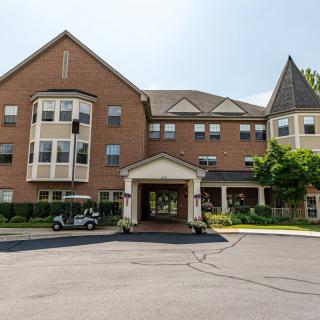
Clausen Manor
$2,663 to $5,227 / month21.6 miles away -
from -$267 / mo
Town Village Sterling Heights
$2,233 / month6.6 miles away -
About the same
Westwood Inn
$2,545 to $3,995 / month6.7 miles away
Overall Review of Bonnie Villa
Pros
 The property has nice curb appeal and ample land.
- It provides three meals a day plus a snack.
- The surrounding neighborhood is nice.
- The owners seem caring and loving.
- The facility is very nice, clean, and well kept, with residents appearing comfortable.
- The staff provides exceptional care to residents.
- Fe, the owner, is available and flexible to work with families.
- The home-like setting offers more one-on-one help with three aides for six residents.
Cons
 They felt the price for a semi-private room was high.
- They noted the house and rooms are small.
- They observed there is no transportation provided for appointments.
- They reported there are no activities.
- They indicated there is only one staff member on site.
- They felt the level of care was not appropriate for what their loved one needed.
- They found the location a bit too far to travel from their home base.
Review
Bonnie Villa in Clinton Township, Michigan is best suited for families seeking a compact, home-like senior residence with a straightforward, affordable option. The property offers curb appeal and a quiet, residential atmosphere, favoring comfort over institutional scale. Living spaces and common areas are compact, reinforcing a cozy, neighborly feel. The price point, about $3,000 for a semi-private room, keeps costs predictable for families mindful of budget. Meals are provided, three a day with a snack, supporting routine without requiring residents to navigate cafeteria-style dining. Overall, Bonnie Villa favors a calm, domestic rhythm over a flashy, activity-forward model.
That approach suits some perfectly and leaves others wanting more. Several reviewers questioned whether the level of care matched their loved ones’ needs, suggesting the home may not absorb complex medical or daily-living demands. Distance can also be a factor; one reviewer noted the location felt a bit far from home, which can complicate regular visits or monitoring. For families seeking proximity to a familiar neighborhood or who anticipate transferring from a more intensive facility, Bonnie Villa can be a practical, lower-demand step. Those prioritizing accessibility to family, frequent medical oversight, or dementia-focused programming may want to explore alternatives.
Staffing and day-to-day attention emerge as a notable point of contention. Some accounts describe a single staff member on site, which raises legitimate concerns about continuity, responsiveness, and safety. Others describe a more hands-on, home-like staffing pattern, three aides for roughly six residents, creating more one-on-one assistance and a sense of individualized attention. The truth may lie in nuance: a small, family-run operation can deliver warmth and frequent check-ins, but bursts of need or medical complications can strain a tiny team. Despite staffing questions, reviewers consistently note caring owners who appear genuinely invested in resident welfare, and residents often seem comfortable and well cared-for within a peaceful, intimate setting. That combination can translate into meaningful peace of mind for families who value personal connections and a familiar routine.
Programming and activities are noticeably limited. There is no robust activities calendar reported, and structured engagement seems sparse beyond mealtime routines. The facility does accommodate visiting doctors and therapists, which helps keep medical oversight accessible, but the on-site, day-to-day stimulation falls short for residents who crave social opportunities, dementia-friendly activities, or fitness-oriented programming. Transportation to appointments is not provided, placing additional planning tasks on family members or external services. The upside of this relative stillness is reduced chaos and a predictable day, which can be ideal for residents who prefer quiet, predictable living rather than high-energy programming. Prospective families should weigh whether a low-activity environment aligns with their loved one’s preferences and cognitive needs.
Environment and vibe compensate in practical ways. The overall condition is clean, well maintained, and clearly cared for by owners who emphasize a warm, homelike atmosphere. The neighborhood is described as nice, contributing to a stable, comfortable daily routine and a sense of belonging. Space constraints, small rooms and compact common areas, limit private living area and social expanses, which may matter for couples or residents who value more personal space. Yet for residents who prize safety, routine, and a familiar, intimate setting, Bonnie Villa delivers a compelling fit. The gap between what is offered and what some families expect is real, but not insurmountable for the right profile.
Bottom line: Bonnie Villa works best for families seeking a modest, home-centered option with attentive, personal contact and a predictable, affordable baseline. It’s well-suited for residents who value quiet routines, a friendly, caring staff, and a compact living footprint. Those needing frequent structured activities, transportation for external appointments, or higher-intensity medical care should consider alternatives with broader programming and greater on-site support. With careful screening of staffing norms and a candid visit to observe daily life, families can determine whether this intimate setting aligns with their loved one’s needs and priorities.
 6 resident community capacity
 Assisted Living
 Board and Care Home
 Memory Care
 Activities off-site
 Bath tubs
 Cable or satellite TV
 Dining room
 Fully furnished
 Garden
 Housekeeping services
 Indoor common areas
 Move-in coordination
 Outdoor common areas
 Private
 Telephone
 Wi-Fi/high-speed internet available
 24-hour supervision
 Assistance with bathing
 Assistance with dressing
 Assistance with transfers
 Diabetes diet
 Diabetic care
 High acuity care
 Meal preparation and service
 Medication management
 Special dietary restrictions
 Transportation arrangement (medical)
 Transportation to doctors appointments
 Christian services



 Comprehending Evening Confusion in Dementia: Causes, Manifestations, and Support
 Delirium and Dementia: Unraveling the Key Differences
 Are Dementia and Alzheimer's Disease Lethal? A Comprehensive Exploration