
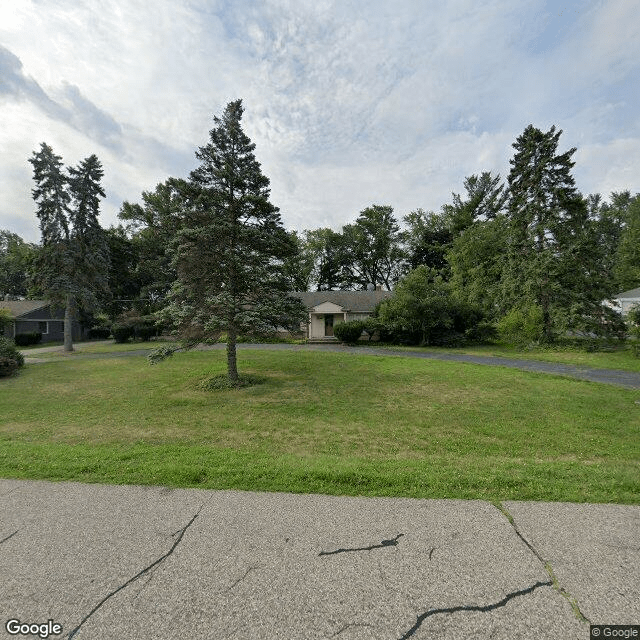
3871 Millerway, Bloomfield Hills, MI 48302
To contact a resident: (248) 346-3912
For more information about senior living options: (866) 208-4318
Comfort CASA Inc Costs & Pricing
Comfort CASA Inc offers competitive pricing for its services compared to both Oakland County and the broader Michigan area. For a semi-private room, Comfort CASA Inc charges $2,500 per month, significantly lower than the county's average of $3,204 and the state average of $3,191. Similarly, their private room rate of $3,500 also stands out against local and state figures - Oakland County averages $3,708 and Michigan averages $3,675. These pricing advantages highlight Comfort CASA Inc's commitment to providing high-quality care while ensuring affordability for families seeking essential services.
| Floor plans | Comfort CASA Inc | Oakland County | Michigan |
|---|---|---|---|
| Semi-Private | $2,500 | $3,204 | $3,189 |
| Private | $3,500 | $3,708 | $3,674 |
Senior living communities with a similar price nearby
-
from -$305 / mo

Simply Beautiful Adult Foster Care Homes
$2,195 to $4,100 / month7.9 miles away -
from +$100 / mo
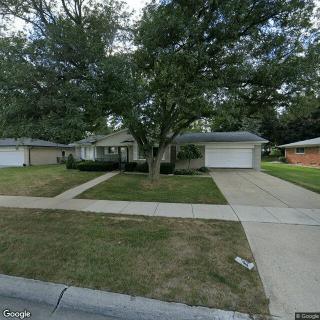
Angelic Foster Care
$2,600 to $3,380 / month13.8 miles away -
About the same

Oakmont Manor
$2,455 to $2,780 / month10.1 miles away -
from +$200 / mo
Home Helpers and Direct Link
$2,700 to $3,000 / month20.9 miles away -
from -$225 / mo
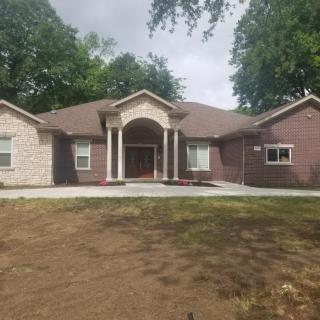
Pleasant Valley Family Care
$2,275 to $7,000 / month4.7 miles away
Overall Review of Comfort CASA Inc
Pros
 The staff's professionalism is exemplary.
- The organization supports its employees, and this support is evident in the care it provides to clients.
- Comforcare understands it is in the business of serving people.
- The organization can provide scheduling flexibility and additional care as needed.
Cons
 The clients they service lack proper care.
- The staff provide poor or no care, especially to the vets they service.
- The head staff do not like honest criticism.
- Privately hired aides who provided better care to the clients were let go.
- The business was sold; the new owner laid off nurses and a coordinator, with more likely to follow.
- Nurses are not there daily, despite what the company says.
- Potential clients are advised not to put their loved ones here.
Review
Comfort CASA Inc in Bloomfield Hills is best suited for families that want in-home, hands-on care delivered by a highly professional frontline team and can tolerate some staffing variability. The community’s strongest selling point is the people delivering care: staff are described as trained, responsive, and clearly supported by leadership who backs their work. When needs shift, additional visits, faster scheduling, or extended care, the provider has shown the ability to adjust without forcing families into new arrangements. For families that prize a personal, relationship-driven care approach and value caregivers who feel supported by management, this option can feel like a welcome extension of home life.
That said, serious caveats accompany the positives. Several reviewers raise red flags about overall care quality and consistency, including concerns that some clients, particularly veterans, did not receive adequate attention. Perceptions about leadership resisting honest feedback threaten trust, while abrupt ownership changes reportedly led to layoffs of nurses and a coordinator, undermining daily medical oversight. For families with medically complex needs or a preference for stable, predictable staffing and supervision, these warnings are not trivial and should shape the due diligence process.
The upside of this provider, the professionalism and adaptability of the caregiving team, can offset many logistical headaches for the right client. When schedules need to flex, or when additional non-medical support is required, a prepared, responsive staff can deliver meaningful relief and a higher quality of life at home. The sense that the organization values service and supports its employees translates into more consistent, attentive care on days when fewer hands might otherwise be available. In contexts where the emphasis is on daily interaction, companionship, and practical assistance, these strengths are tangible and impactful.
Nevertheless, the negatives cannot be dismissed. Reports of uneven care, and claims that better-performing aides are dismissed, signal real risk of variable experiences across caregivers. The veteran-specific concerns point to a broader issue: without steady, on-site nursing oversight, medically vulnerable clients may face gaps in care. The perception that ownership priorities skew toward cost-cutting rather than reliable medical continuity compounds the concern. Families must weigh whether the potential for high-touch, flexible support justifies exposure to staffing volatility and the possibility of inconsistent medical oversight.
To move from impression to confidence, families should demand concrete, up-to-date details: who is supervising care on a daily basis, how many nurses are on site or on call, and what the exact plan is if ownership changes again. Clarify what tasks are handled by aides versus licensed nurses, and obtain a transparent staffing schedule for weekends and holidays. Such questions are essential in deciding whether this provider’s strengths align with the client’s medical reality and risk tolerance. For clients without heavy medical needs, the model can be a strong fit; for those requiring steady nursing oversight, alternatives should be explored.
Overall, Comfort CASA Inc presents a pragmatic, experience-driven choice for families who value a hands-on caregiving culture and flexible support at home. The combination of strong frontline professionalism and adaptable scheduling can yield meaningful benefits, especially when care needs are primarily functional and relational. However, the concerns about care consistency, leadership responsiveness, and post-sale staffing stability push toward caution. In short, this community is a viable option for the right family, one that explicitly prioritizes caregiver quality and flexibility, while remaining a potentially risky match for those requiring unwavering medical continuity and a stable, complaint-proof staffing backbone.
 Board and Care Home
 Activities off-site
 Bath tubs
 Devotional services off-site
 Indoor common areas
 Outdoor common areas
 Private
 Private bathrooms
 Wheelchair accessible showers
 Detroit Metropolitan-Wayne County (24 miles away)
 Ambulatory care
 Diabetic care
 High acuity care
 Incontinence care
 Kosher
 Christian services
 Islamic services






 Comprehensive Approaches for Arthritis: A Detailed Guide to Symptoms, Causes, and Care
 Comprehensive Insights and Practical Strategies to Help Older Adults Avoid Falls
 6 Crucial Ways an Elder Law Attorney Assists Families