

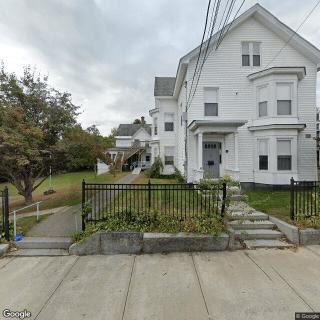
446 Main Street, Leominster, MA 01453
To contact a resident: (978) 534-6270
For more information about senior living options: (866) 208-4318
Village Rest Home Costs & Pricing
At Village Rest Home, the monthly costs for accommodations present a compelling value when compared to both Worcester County and the broader Massachusetts market. For a semi-private room, residents can expect to pay $3,000, significantly lower than the county average of $5,477 and the state average of $5,805. Similarly, the cost for a studio room is set at $4,500, which remains competitive against Worcester County's average of $5,109 and Massachusetts' state average of $5,312. This pricing structure reflects Village Rest Home's commitment to providing quality care while ensuring affordability for families seeking supportive living options.
| Floor plans | Village Rest Home | Worcester County | Massachusetts |
|---|---|---|---|
| Semi-Private | $3,000 | $5,477 | $5,805 |
| Studio | $4,500 | $5,109 | $5,312 |
Assisted Living communities with a similar price nearby
-
from +$186 / mo

Aynsley Place
$3,186 to $9,300 / month20.1 miles away -
from +$350 / mo

Benchmark Senior Living at Chelmsford Crossings
$3,350 to $4,550 / month21.1 miles away -
About the same

Benchmark Senior Living At Billerica Crossings
$3,050 to $5,300 / month24.2 miles away -
About the same
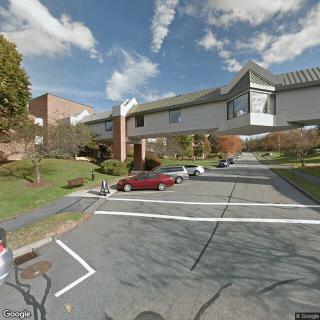
Hampton Suites at Southgate
$2,995 to $3,310 / month17.1 miles away -
from +$570 / mo
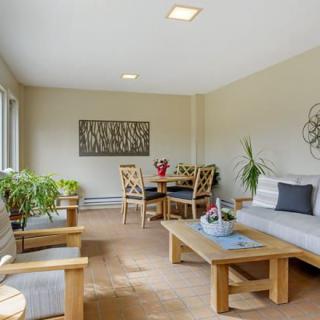
Brookdale Cushing Park
$3,570 to $5,245 / month23.5 miles away
Overall Review of Village Rest Home
Pros
 Yve is so nice and takes care of my brother.
- They provide really good care to him.
- Lovely family setting.
- Great place and it’s been family run for over 30 years; Ron and his family love their residents.
- There is a lot of love here; it truly is a home that can be full of fun and laughter.
- The facility’s Facebook page shows pictures that don’t lie about the positive environment.
Cons
 The only bad reviews ever seen come from two employees who were terminated for work ethic, performance, and dress code.
- The horrible review posted here comes from another employee who was terminated for not following new employment hire regulations.
Review
Village Rest Home in Leominster, MA is best suited for seniors who want a small, family-run, home-like environment where residents are known by name and cared for with genuine warmth. This is the right fit for those who value privacy and routine, along with a consistent, attentive staff that treats daily living as something personal rather than transactional. With a capacity of roughly 23 to 25 residents, the community delivers an intimate, neighborly atmosphere where caregivers can monitor health needs closely, foster relationships, and respond quickly to day-to-day concerns. Families seeking a place with a long-standing local footprint will find confidence in a home that has operated under family ownership for decades, and where care feels ingrained in the culture rather than outsourced to a distant administrator.
Those who may want to consider alternatives are seniors who require robust, around-the-clock medical supervision or a wide array of high-end amenities. If memory care, intensive rehab, or a large continuum-of-care campus is essential, this smaller operation may not satisfy those needs. Likewise, residents seeking a highly structured program with extensive on-site activities, frequent schedule of specialized therapies, or cutting-edge facilities may prefer a larger facility with more formal programming. The setting’s age and footprint, while part of its charm, may also be less appealing to families looking for ultra-modern amenities or a campus-style experience.
The strongest pro is a palpable, family-driven care ethos. Staff and leadership are repeatedly described as caring, accessible, and invested in residents’ happiness, with many references to “love” and a genuine sense of community. The homey feel isn’t incidental; it translates into personalized attention, steadier routines, and meals that residents enjoy, including social meals that feel more like a family dinner than a clinical setting. Residents and staff alike describe a culture where people are treated with respect and kindness, and where the same small-town warmth that characterizes a family home also underpins day-to-day safety and oversight. The practical payoff is a high degree of comfort and trust for families who want their loved ones to feel at home.
Those same pros help offset the downsides that come with a smaller, older establishment. The intimate scale means staff can focus on individual preferences, monitor health changes quickly, and maintain a steady, predictable schedule that supports autonomy. The trade-off is not hidden in theory: it’s visible in the experience of residents who appreciate having their own rooms, nearby amenities (Dunkin’ Donuts next door and a pleasant picnic area for socializing), and a straightforward, unpretentious dining routine. When a facility operates with a long tenure of ownership and a hands-on leadership style, the risk of impersonal care or bureaucratic rigidity lowers, even if the campus lacks some of the modern accoutrements found at larger communities.
Nevertheless, the realities of size and scope do shape expectations. There is no claim of a sprawling activity roster or on-site rehab center, and the setting is clearly more about comfort and companionship than tiered clinical sophistication. That reality is precisely why this option shines for families prioritizing cost-efficiency and home-like stability over the glitter of a larger campus. The reviews consistently question not the compassion of care, but whether a given family’s needs align with a smaller, simpler model. For many, the alignment is spot-on: a supportive, low-stress environment where independence can flourish, and where daily life feels manageable and meaningful rather than overwhelming.
To decide, families should visit with a focused checklist: observe how staff interact with residents and how quickly help appears when needed; assess room options and privacy levels; confirm whether memory care or additional therapies are available or needed; inquire about transportation, activities, and meal variety; and talk to current residents about daily satisfaction and safety. Consider the importance of proximity to family, cost clarity, and the sense of community on site. For seniors who prize a warm, intimate, family-run setting and who do not require intensive medical supervision, Village Rest Home stands out as a practical, trustworthy choice. For those chasing a modern, high-amenity, high-touch continuum of care, it may be wise to explore larger facilities that offer broader medical services and more robust programming.
 Assisted Living
 Independent Living
 Activities off-site
 Beautician on-site
 Devotional services off-site
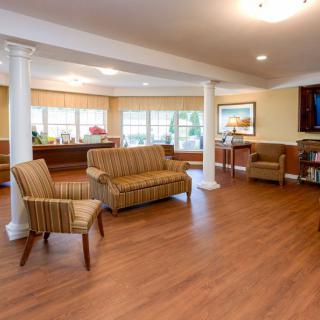
 Indoor common areas
 Outdoor common areas
 Respite or short term stays offered
 Worcester Regional (20 miles away)
 Ambulatory care
 Diabetic care
 Incontinence care
 Meals provided




 Understanding Medicaid Coverage for Assisted Living: A Comprehensive Guide
 How and When Medicaid May Cover Assisted Living Costs
 A Detailed Exploration of Assisted Living Medicaid Waivers Across the United States