
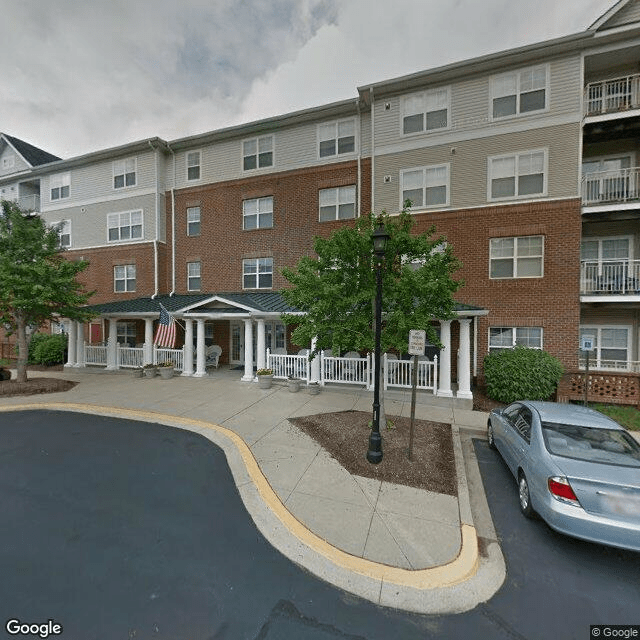
125 Alnut Ct., Prince Frederick, MD 20678
To contact a resident: (410) 414-8280
For more information about senior living options: (866) 208-4318
Overall Review of Chapline House
Pros
 Chapline House is wonderful.
- It is a beautiful place.
- It is immaculate and attractive.
- It has a lovely courtyard with rocking chairs and a beautiful lobby sitting area.
- The apartments are designed for seniors.
- It provides pull cords for emergencies.
- Carts, walkers, and wheelchairs are available in the lobby.
- The staff members are very accommodating and very sweet.
- The rooms are full apartments, and residents take care of themselves completely.
- Daily activities are offered, including card games, music, and pool games.
- The reviewer is glad they found Chapline House.
Review
Chapline House in Prince Frederick, Maryland, is best suited for active, socially minded seniors who want a refined, home-like independent living experience with readily available safety features. The community conveys a polished, immaculate ambiance: a sunny courtyard with rocking chairs, a welcoming lobby, and apartments that feel like true residences rather than institutional spaces. Emergency pull cords are clear to reach, mobility aids are accessible in common areas, and staff come across as accommodating and genuinely kind. This combination signals independence with a dependable safety net. For families seeking a serene, sociable, well-maintained setting where daily life can be lived largely on one’s own terms, Chapline House is a compelling match.
That said, some residents and families should consider alternatives. The model here leans toward independence with light support, so seniors who require daily hands-on care, constant nursing supervision, or memory-care services may outgrow the environment quickly. The lack of explicit on-site clinical care means health management and rehabilitation services aren’t front and center, which can be a mismatch for those needing regular assistance with bathing, medications, or post-acute therapy. For those prioritizing a robust continuum of care, from rounds of therapy to 24/7 nursing, other communities with higher acuity options will typically serve better. Even so, for households prioritizing autonomy and social engagement, Chapline House can still be a strong foundational choice.
The strongest pros align closely with residents’ quality of life and peace of mind. The property’s beauty and meticulous upkeep create a dignified, comforting setting that minimizes institutional feel. Independent apartments preserve autonomy while signaling that help remains accessible without intrusion. The social infrastructure, a thoughtfully designed courtyard, a lively lobby, and a calendar of daily activities, cultivates regular interaction and helps prevent isolation. Activities such as card games, music, and pool provide predictable, low-stress engagement that suits residents who want companionship without crowded, rigid programming. Staff impressions as accommodating and sweet translate into smoother transitions and a sense of reliable support when needed, reinforcing a practical balance between independence and safety.
The potential downsides deserve clear scrutiny. The core trade-off is the limited scope of care beyond the basic level, which means declines in health or mobility may necessitate a transition elsewhere. The intimate size, while fostering community, can limit on-site resources during peak times or emergencies. Details about meals, transportation to appointments, and long-term pricing aren’t spelled out in reviews, so families must verify these elements during tours. Nonetheless, the social fabric and safety-oriented design mitigate some concerns, turning what could be a critical drawback into a manageable consideration for those who plan around potential health shifts rather than expecting a full-care solution on site.
Guidance for families evaluating Chapline House should be concrete and proactive. During visits, confirm the exact range of services included and what constitutes “light” versus “additional” care, including medication management, bathing assistance, and therapy options. Experience within a sample apartment can reveal whether space and layout support daily living needs. Examine the activity calendar in person to determine if it truly matches interests and energy levels, and taste-test dining options if possible to gauge consistency and quality. Inquire about transportation for errands or medical appointments, and obtain a clear, written sense of billing, initial move-in costs, ongoing fees, and how any rate changes are handled. Finally, discuss contingency plans for health changes and the process for transitioning to higher levels of care if needed.
Bottom line: Chapline House stands out as a practical, confident option for seniors who prize a refined, welcoming home atmosphere, strong social programming, and reliable, unobtrusive safety features. It excels for those who want to maintain independence while benefiting from a responsive staff and a tight-knit community. For families guiding individuals requiring regular personal care, memory-support services, or a higher level of medical oversight, alternatives with a more robust continuum of care are advisable. In Prince Frederick’s senior-living landscape, Chapline House delivers a compelling blend of beauty, simplicity, and liveability, making it a credible, well-considered choice for an independent-leaning chapter of aging in place.
 Active Adult Communities (55+)



 Skilled Nursing Facilities vs. Nursing Homes: Making Sense of the Differences
 A Detailed Examination of Nursing Home Costs Across the U.S.
 Exploring Nonmedical Home Care: Understanding Services, Costs, and Financial Approaches