
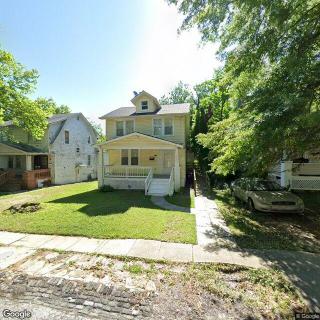
607 Woodbourne Avenue, Baltimore, MD 21212
For more information about senior living options: (866) 208-4318
Hope A Home Offers Opportunity for Each Other Costs & Pricing
Hope A Home Offers Opportunity for Each Other presents a competitive pricing structure compared to the surrounding options in Baltimore City and across Maryland. For those seeking semi-private accommodations, the monthly cost is $1,500, which is significantly lower than the $3,116 average in Baltimore City and $3,545 statewide. Private rooms are also attractively priced at $2,000 monthly, again undercutting both the city's rate of $3,729 and the state's average of $4,112. Additionally, for individuals looking for one-bedroom units, Hope A Home's rate of $3,000 remains below the local and state averages of $3,113 and $3,904 respectively. Overall, these pricing advantages position Hope A Home as a financially savvy choice for potential residents seeking quality living arrangements without straining their budgets.
| Floor plans | Hope A Home Offers Opportunity for Each Other | Baltimore city | Maryland |
|---|---|---|---|
| Semi-Private | $1,500 | $3,116 | $3,545 |
| Private | $2,000 | $3,729 | $4,112 |
| 1 Bedroom | $3,000 | $3,113 | $3,904 |
Overall Review of Hope A Home Offers Opportunity for Each Other
Pros
 The head person that oversees H.O.P.E Assist Living was exceptionally helpful.
- He personally picked my dad up and has helped with various specific issues, which has been very helpful.
- Dad seems very happy there.
Review
Hope A Home Offers Opportunity for Each Other in Baltimore is best suited for families seeking intensely personal, hands-on leadership and a small, tightly managed setting. This community works best for seniors who want direct access to the person running the operation and who value rapid problem-solving over a broad slate of formal programming. The standout dynamic here is a leader who is highly reachable, actively involved in daily issues, and willing to roll up sleeves to resolve concrete concerns. For families prioritizing trust, responsiveness, and a sense that someone is personally advocating for mom or dad, this option earns strong consideration.
Those who may want to consider alternatives are seniors who require robust, hospital-grade medical oversight, extensive therapy services, or a large, varied activity calendar every day of the week. A larger community with multiple shifts, more on-site clinicians, and formalized memory care programming may better serve residents with advanced medical needs or dementia progression that demands specialized supervision. Families seeking a wide network of social opportunities, structured outings, and predictable staffing patterns across the day will likely find more comfort elsewhere. In short, when clinical intensity or breadth of amenities is the top criterion, other facilities should be evaluated first.
The most persuasive pro here is the level of hands-on leadership. The head administratorā€™s willingness to personally assist, up to transporting a resident and addressing a range of specific issues, creates a rare sense of reliability and trust. This is not merely good customer service; it translates into tangible relief for caregivers and emotional security for residents. When a family sees issues being addressed promptly and notices a resident like dad feeling content and engaged, that aura of active stewardship can offset potential gaps in scale or programmatic breadth. In practical terms, the payoff is reduced caregiver anxiety, fewer unresolved snags, and a smoother daily experience for the person living there.
Yet, the strength of this approach can also illuminate potential gaps. A small, personally operated setting may have fewer on-site amenities, limited clinical staffing, and less formalized activity schedules than bigger communities. The very advantage, immediacy and accessibility of leadership, can come with trade-offs in consistency across all shifts, and in the depth of medical and rehabilitative services available on-site. For families weighing options, the key balance to assess is whether the immediate responsiveness and personal attention sufficiently compensate for any limits in medical resources, therapy options, or long-range continuity of care that might be necessary as health needs evolve.
To move from consideration to confidence, plan a focused due-diligence dialogue. Ask about who coordinates care plans and how quickly issues are escalated and resolved when the administrator is not on site. Verify transportation policies beyond occasional pickups, including scheduling, liability coverage, and whether transportation supports doctor appointments, pharmacy runs, or social outings. Clarify what levels of in-house clinical support exist, what specialties are available on-site, and what partnerships are in place for external rehab or memory care if needs increase. Discuss transparent fee structures, what is included in monthly costs, and how changes in health status might affect pricing or service levels.
Overall, Hope A Home Offers Opportunity for Each Other represents a compelling choice for families prioritizing hands-on leadership and a warm, responsive environment. The strongest pros, direct administrator involvement, quick issue resolution, and demonstrably content residents, can outperform the comparative drawbacks for a particular subset of seniors: those who prosper in a small-community context and value trustworthy advocacy above breadth of programming. For seniors whose care needs are more complex or who require more predictable, hospital-style oversight, alternatives with larger staffing pools and more formal clinical offerings will likely serve better. In the right match, this community delivers peace of mind and daily life that feels well managed, personal, and genuinely attentive.
 8 resident community capacity
 Assisted Living
 Board and Care Home
 Memory Care
 Cable or satellite TV
 Dining room
 Fully furnished
 Garden
 Housekeeping services
 Move-in coordination
 Outdoor space
 Private
 Telephone
 Wi-Fi/high-speed internet available
 Baltimore-Washington International (13 miles away)
 24-hour supervision
 Activities of daily living assistance
 Assistance with bathing
 Assistance with dressing
 Assistance with transfers
 Diabetes diet
 Meal preparation and service
 Medication management
 Special dietary restrictions
 Transportation arrangement (medical)
 Transportation to doctors appointments




 Guiding Your Journey: Understanding Power of Attorney for Elderly Parents
 22 Remarkable Caregiver Support Groups Available Online and In-Person
 Understanding Medicaid Coverage for Assisted Living: A Comprehensive Guide