
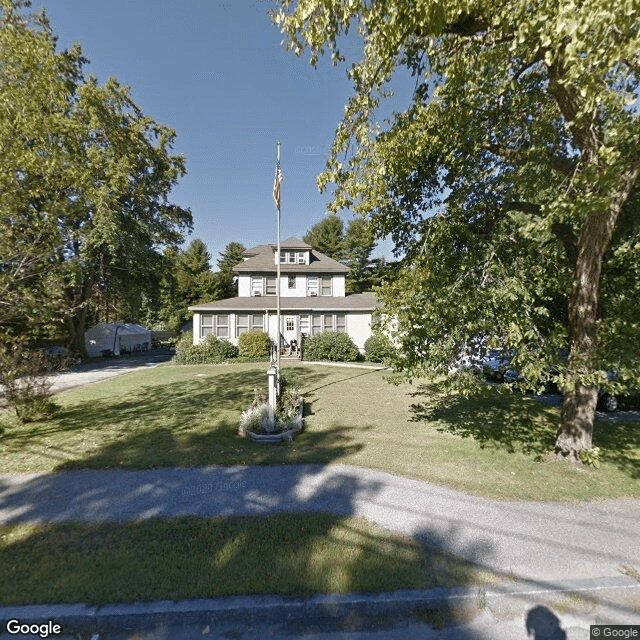
9 Lewiston Rd, Gray, ME 04039
To contact a resident: (207) 657-4949
For more information about senior living options: (866) 208-4318
Overall Review of Gray Manor
Pros
 They love this app.
- The app is amazing.
Cons
 The business was closed about two years ago because this type of group home is being forced out of business.
- Elaine Morrison should be better informed before she attacks a business that has served the community for six decades.
- What happened to Emily, her belongings, and her plants, her vehicle?
Review
Gray Manor in Gray, Maine is best suited for families exploring addiction-recovery services in a setting with a long history of community service, not for seniors seeking traditional assisted living. The property’s recent transformation, having shifted from a long-running boarding home for mentally ill veterans to a drug-rehabilitation facility about two years ago, fundamentally changes the care model and the resident profile. That history can be comforting to those who value decades of local stability, but it also signals a misalignment with the needs of typical assisted living residents who require ongoing daily living support, structured activity programming, and clear elder-care oversight.
Those who may want to consider alternatives are primarily families pursuing standard assisted living, memory care, or long-term elder housing. The current status raises questions about whether Gray Manor can reliably deliver the level of daily assistance, safety monitoring, and individualized care plans that are central to assisted living. For families focused on rehabilitation, addiction-services with a veteran-context, or transitional care linked to recovery programs, the facility may hold appeal, provided current operations align with expectations. However, without explicit confirmation that Gray Manor is actively functioning as a compliant, licensed rehab or elder-care site, many will find better certainty elsewhere.
From a practical standpoint, the apparent pros do not meaningfully offset the main drawbacks evident in the information available. On the surface, a site with a long-standing role in the community can evoke trust and familiarity; that legacy can be a selling point for some families who prioritize continuity. Yet such legacy loses its value if the facility is no longer operating as a dependable assisted-living option or if it has shifted to a different care model without clear communication. In short, the potential upside, stability through years of local service, fails to translate into reliable, age-appropriate care when the current function is rehabilitation rather than ongoing senior support.
The most consequential cons are concrete and undeniable. A two-year gap since closure of the former boarding home and a subsequent repurposing into a drug-rehabilitation facility create a fundamental misalignment for seniors and their families seeking housing with daily living assistance. Complicating matters are hints of poor communication and unresolved accountability, evidence that belongings or personal items of residents or former clients may become difficult to recover, as suggested by concerns raised about lost possessions and vehicles. Such episodes undermine trust and raise questions about resident rights, safeguarding, and the facility’s ability to manage transitions, transfers, and personal property with respect for families’ intent.
Families evaluating Gray Manor should undertake a disciplined, proactive vetting process. Verify the current operational status, licensing, and program focus with state regulators and the facility itself. Request a written description of services offered, staffing ratios, emergency procedures, and how residents’ belongings are safeguarded during transfers or closures. Schedule a visit with clear objectives: observe daily activity, review care plans, meet direct care staff, and ask for a recent resident or family reference. If the goal is genuinely assisted living, press for confirmation that the site can deliver ongoing personal care, medication management, and social programming in a stable, licensed environment.
In sum, Gray Manor as described does not present a straightforward path for families seeking traditional assisted living. The historical identity as a veteran-oriented boarding home has been superseded by a rehabilitation-focused model, and current ambiguity around operations and accountability signals real risk for those needing predictable elder care. For seniors who require daily living support, better options lie with established assisted-living communities in Gray and the surrounding area that can guarantee licensed, resident-centered care. For recovery-oriented pathways, verify current program integrity and outcomes before committing. In either case, prioritize transparent communication, verifiable licensure, and a clear, written plan that aligns with the resident’s needs and family expectations.
 Assisted Living
 Activities on-site
 Devotional services off-site
 Indoor common areas
 Portland International Jetport (17 miles away)
 Ambulatory care
 Diabetic care
 Meals provided

 Choosing the Right Senior Care: A Detailed Exploration of Assisted Living and Nursing Homes
 Understanding the True Cost of Assisted Living in 2025: A Comprehensive Guide
 Understanding Medicaid Coverage for Assisted Living: A Comprehensive Guide