

32956 LA Highway 16, Denham Springs, LA 70706
For more information about senior living options: (866) 208-4318
House of Grace Costs & Pricing
At House of Grace, the monthly costs reflect a commitment to providing high-quality care within a supportive environment. For semi-private accommodations, residents can expect to pay $4,600 per month, which is comparable to the rate in St. Helena Parish but significantly higher than the statewide average of $3,598 in Louisiana. The cost for a private room stands at $5,000, aligning with local pricing yet again exceeding the state average of $4,521. For those seeking more spacious living arrangements, our one-bedroom options are available at $5,600 - a figure that matches the local rate while being notably higher than Louisiana's average of $3,413. These rates illustrate our dedication to maintaining exceptional standards and personalized services that enhance the quality of life for our residents.
| Floor plans | House of Grace | St. Helena Parish | Louisiana |
|---|---|---|---|
| Semi-Private | $4,600 | $4,600 | $3,598 |
| Private | $5,000 | $5,000 | $4,521 |
| 1 Bedroom | $5,600 | $5,600 | $3,413 |
Memory care communities with a similar price nearby
-
About the same

Francois Bend Senior Living & Memory Care
$4,700 to $6,500 / month20.9 miles away -
from -$500 / mo
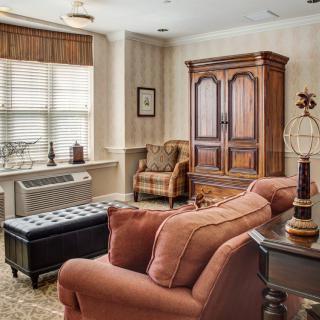
Sunrise Second Baton Rouge Assisted Living
$4,100 to $5,190 / month12.2 miles away -
from -$400 / mo

The Pearl at Jamestown
$4,200 / month14.1 miles away -
from -$554 / mo
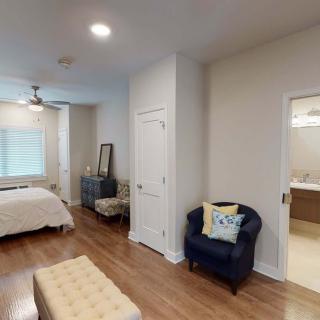
Magnolia Brook On Siegen
$4,046 to $5,695 / month14.6 miles away -
from -$650 / mo

Garden View Assisted Living
$3,950 to $5,500 / month9.2 miles away
Overall Review of House of Grace
Pros
 House of Grace is a small residential community with eight beds, enabling more one-on-one care.
- The rooms are spacious, with residents moving from semi-private to private rooms when available.
- In-house cooks prepare fresh meals, and residents eat together at two dining room tables.
- Residents socialize in a living room with recliners and a couch, fostering closeness.
- The staff provide one-on-one care, and the home is immaculate and clean.
- Meals are customized to residents' dietary needs, including diabetes directives from nurses.
- Caregivers are kind and treat residents like family, contributing to a welcoming atmosphere.
- The home offers a game room, music and singing visits, garden time, and a resident-friendly cat.
Cons
 The facility was too expensive.
- It didn’t offer as much in stimulating activities as Sunrise.
- It may be just fine for terminal patients, but the mother needs more stimulation and activities.
- The staff were not authorized to medicate patients who were unable to know what they were taking.
Review
House of Grace in Denham Springs is best suited for seniors who want a small, home-like setting where care is intensely personalized. With only eight beds, the community delivers one-on-one attention that larger facilities struggle to match. Rooms are purposefully generous, and even starting in a semi-private configuration remains comfortable, preserving dignity as schedules and needs shift. The model centers on intimate interaction, communal dining, and staff relationships that feel like family. For families prioritizing safety, predictable routines, and a nurturing, close-knit atmosphere, this small-house approach uniquely delivers.
Those who may want to consider alternatives include residents who crave a robust calendar of activities and constant stimulation, or families watching for more affordable options. While House of Grace offers social outlets such as a game room, regular music visits, and garden time, the breadth and frequency of programming appear more limited than what larger campuses provide. A higher cost can be a significant hurdle for long-term planning, especially if companionship and enrichment through busy schedules weigh heavily in the decision. For residents with complex medical needs requiring aggressive oversight, frequent medication changes, or specialized therapies, a bigger, more medically oriented campus may prove a better fit.
The strongest positives align with the core living experience. One-on-one care translates into dietary accommodations aligned with diabetes or other conditions, with meals prepared in-house and served in a communal dining setting that reinforces social bonds. The home’s cleanliness and orderliness contribute to a sense of safety and well-being, while staff responsiveness supports both independence and timely assistance. The social fabric, residents gathered in the living room rather than isolated in wheelchairs, the presence of a garden and even a resident cat, creates a comforting, lived-in atmosphere that makes daily life feel manageable rather than medical. These elements collectively offset the feeling of being in a facility by delivering genuine, personal support.
However, price remains a real consideration, and the premium may not feel justified for families prioritizing activity variety or lower ongoing costs. The activity slate, while pleasant, does not rival the scale or intensity found at some other communities, which can leave some residents seeking more frequent engagement and entertainment. A cautionary note about medication management surfaced in one review, suggesting policies around which residents can participate in decisions about their meds may affect oversight. While this does not reflect every experience, it is a factor to verify directly, confirm how medications are administered, who oversees them, and how changes are communicated to families.
For families weighing options, the decision hinges on the resident’s core needs and the household’s priorities. House of Grace excels when intimate caregiver relationships, a safe routine, and a warm, homelike environment trump broader programming. If a resident thrives on personalized attention, predictable meals, and social connection nurtured by a small community, this option deserves serious consideration. If, instead, a higher-energy schedule, frequent off-site activities, or stronger medical oversight is non-negotiable, then exploring Sunrise or other larger campuses may be the prudent move. Always validate pricing structures, inclusions, and the potential for care level escalation before committing.
Bottom line: House of Grace is a compelling choice for seniors who value a tightly knit, attentive, residential atmosphere where caregivers know names and preferences, and where meals, cleanliness, and companionship are prioritized. It earns trust through consistent, family-like care, cleanliness, and a down-to-earth, livable rhythm that many families yearn for. The pros strongly offset the cons when the loved one’s needs center on individual attention, safety, and meaningful social connection rather than expansive programming or aggressive medical management. Prospective families should arrange a visit, speak directly with the caregivers, review medication practices, and obtain a transparent, itemized cost breakdown to determine if this option aligns with the long-term plan.
 8 resident community capacity
 Assisted Living
 Board and Care Home
 Memory Care
 Activities on-site
 Air-conditioning
 Cable or satellite TV
 Devotional services on-site
 Dining room
 Fully furnished
 Garden
 Ground floor units
 Housekeeping services
 Indoor common areas
 Kitchenette
 Move-in coordination
 Outdoor common areas
 Private
 Private bathrooms
 Respite or short term stays offered
 Telephone
 Wheelchair accessible showers
 Wi-Fi/high-speed internet available
 Baton Rouge Metropolitan (12 miles away)
 24-hour supervision
 Assistance with bathing
 Assistance with dressing
 Assistance with transfers
 Diabetes diet
 Diabetic care
 High acuity care
 Incontinence care
 Meal preparation and service
 Medication management
 Special dietary restrictions
 Transportation arrangement (medical)
 Transportation to doctors appointments
 Art classes
 Bible study group
 Birthday parties
 Day trips and outings
 Live musical performances
 Resident band or musicians
 Trivia games






 Estimating the Expenses of At-Home Dementia Care: A Detailed Exploration
 Comprehensive Insights on the Late Stages of Dementia: What to Expect and How to Provide Care
 Medications Associated with Dementia Risk: A Comprehensive Overview