
1580 4th Street, Lewisport, KY 42351
To contact a resident: (270) 295-4255
For more information about senior living options: (866) 208-4318
Overall Review of The Oaks Personal Care Home - Lewisport
Pros
 It is a good facility.
- The staff were accommodating, allowing residents to charge for tea or trips to the store.
- Everyone deserves to be cared for and to seek healthcare when needed.
- The staff did their best to help residents.
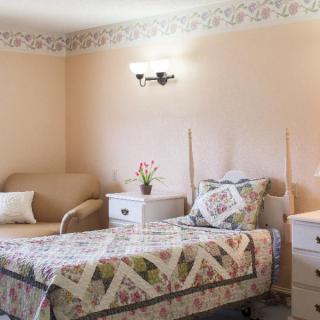
- The rooms were clean.
Cons
 The reviewer notes that people in wheelchairs struggle to exit due to no proper ramp and broken pavement, creating a safety hazard.
- The staff are described as allowing people to charge to make tea or go to the store.
- Some patients wear dirty clothes and have poor hygiene, and wheelchairs are too small for patients.
- There is a lot of stealing from certain patients.
- The reviewer warns not to send a loved one there, calling it very dangerous.
- The environment of clients was not all that great and not friendly.
- There were difficulties with staff and management, and the beds weren't big enough to sleep in for larger people.
Review
The Oaks Personal Care Home in Lewisport, KY is best suited for seniors who primarily require light supervision and indoor social engagement, and who can tolerate a home-like setting with limited outings and a few safety and maintenance gaps. It serves residents who do not demand high-touch, consistent medical oversight or formal programming, and who can navigate a facility where daily routines and access to the outdoors are constrained. This is not a facility built for residents with significant mobility challenges or those needing stringent safety measures; prospective families should recognize that dependence on staff is variable and that the environment can feel uneven in terms of safety and upkeep.
Those who may want to consider alternatives are families with residents who require reliable safety features, consistent staffing, and strict hygiene standards. If a resident relies on ramps, smooth outdoor pathways, properly fitted wheelchairs, or needs robust assistance with transfers, this is a setting where gaps are evident. Alternatives are prudent for anyone prioritizing a consistently positive, well-maintained ambience, frequent outdoor activities, and transparent, well-managed operations. For residents who value strong infection control, clear communication from management, and a consistently friendly, proactive atmosphere, other options will likely prove more dependable.
On the upside, some staff members are described as helpful when approached, and there are pockets of simple, indoor social activity, games, television, and room-time interactions, that can offer companionship and a comforting routine for residents who primarily stay indoors. Food is reported as acceptable, and there are occasional positive moments of care or engagement. These elements indicate that, in the right circumstances, personal attention from caregivers is possible and meaningful, even if they are not uniformly reliable across shifts or days. Such modest positives can provide a baseline quality of life for residents who do not demand a high-energy environment.
The downsides are pronounced and outweigh these modest benefits for most potential residents. Safety hazards stand out: inadequate outdoor access for wheelchair users due to ramps and pavement problems, creating real risk during excursions or attempts to enjoy fresh air. Small or ill-fitting wheelchairs, combined with uneven surfaces, amplify the danger. Hygiene concerns appear recurrent, with reports of dirty clothing and inconsistent cleanliness, an issue that erodes dignity and comfort. Staffing and management prove unstable in several accounts, with complaints about staff reliability, insufficient warmth or responsiveness, and a perception that leadership is not fully attentive to residents’ needs. Coupled with a perception of a less friendly environment and limited opportunities to go out, these factors collectively undermine trust and satisfaction. Additionally, memory of rooms sometimes being clean only intermittently and beds not accommodating larger individuals points to ongoing physical constraints that affect daily living.
The pros, though present, do not meaningfully offset the core drawbacks. Helpful staff moments and a basic routine of indoor activities offer some comfort, but they fail to address the central risks to safety and dignity. The modest social offerings and acceptable meals do not compensate for the persistent safety hazards, hygiene lapses, and management concerns. For families weighing options, the calculus favors looking elsewhere when a resident’s well-being hinges on reliable safety features, consistent staffing, and a consistently positive atmosphere. The Oaks may suit a very specific, low-demand scenario, but it does not deliver the predictable, high-quality experience that much of today’s assisted living landscape aspires to provide.
Bottom line: this community should be considered only if a resident can tolerate uneven safety practices, inconsistent hygiene, and limited outdoor activity, and if family oversight is prepared to supplement care and monitor issues closely. For anyone prioritizing dependable safety, clear supervision, and a consistently clean, welcoming environment, look for alternatives with stronger maintenance and staffing benchmarks. Tours and frank conversations with management are essential, focusing on specifics like ramp usability, wheelchair accessibility, routine housekeeping, and how staffing levels are scheduled to meet resident needs. If those assurances cannot be secured, steering toward a facility with a track record of stable operations and proactive care is the prudent choice.
 Assisted Living
 Activities on-site
 Devotional services off-site
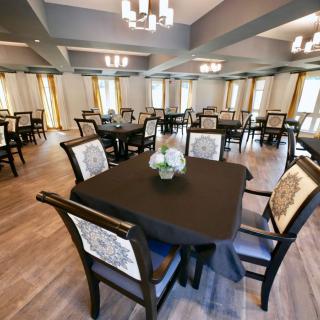
 Indoor common areas
 Ambulatory care
 Diabetic care
 Meals provided





 Social Security Benefits and Assisted Living: Navigating Options Across the U.S.
 An Extensive Exploration of the VA Aid and Attendance Benefit
 Senior Transition Services: Understanding Their Role, Cost, and Importance