
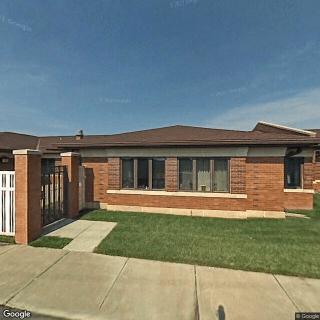
629 Holliday Street, Osage City, KS 66523
For more information about senior living options: (866) 208-4318
Overall Review of Peterson Assisted Living
Pros
 The facility is absolutely the finest.
- There has been no COVID in more than two years.
- Rooms and food are excellent.
- The staff is caring.
- The facility is very clean and feels like home for the residents.
- The staff takes excellent care and provides great hospitality.
- The owner ensures residents' needs are met and provides a safe and upbeat atmosphere.
- It is highly recommended for loved ones.
- Tricia and the team are awesome.
- Families have had a great experience with Peterson Assisted Living.
Cons
 The facility is absolutely horrible.
- They don’t follow their own rules or guidelines they present about care.
- They care only about money.
- The staff is understaffed.
- The staff are very rude, unprofessional, and disrespectful.
- They will leave a resident alone on the floor after a fall for an extended period because nobody cares.
- Residents with POA aren’t called or informed about anything.
- The place is run by a condescending, hypocritical manager who is disrespectful.
Review
Peterson Assisted Living in Osage City, Kansas, is best suited for seniors who prize a warm, home-like atmosphere, personalized attention from a small, engaged staff, and predictable daily routines that emphasize comfort and social contact over high-acuity medical care. Families seeking a sanctuary where meals feel like home, rooms feel comfortable, and staff consistently demonstrates kindness will find Peterson appealing. That said, the community may not be the first choice for residents with complex medical needs requiring aggressive supervision or tight safety systems. In those cases, alternatives with higher staffing ratios and more formal oversight deserve serious consideration.
On balance, the positives skew toward everyday quality of life and authentic care. Several reviews praise the clean environment and a welcoming, homey vibe since new leadership took the helm in 2020. The owner’s visible involvement, plus a staff team described as kind, helpful, and hospitality-minded, creates a sense of safety and upbeat energy that residents and families notice. Rooms and meals receive high marks, and the overall atmosphere tends to reinforce social connection and resident dignity. For families seeking consistent warmth, reliable routines, and accessible attention, these are meaningful advantages.
Yet a single, strongly negative report cannot be ignored. The reviewer portrays under-staffing, rude behavior, and a lack of professionalism, with serious concerns about rule adherence and resident safety, including a claim that a fall left a resident on the floor without timely help. Communications with the power of attorney were described as lacking, and the relationship with management as condescending and unprofessional. While this account may reflect a worst-case scenario or isolated incidents, it raises legitimate questions about staffing stability, responsiveness, and real-world enforcement of policies. Any decision should weigh these possibilities against the favorable experiences described elsewhere.
Those positive realities do help offset the negatives when considered in balance. A clean facility, a true home feel, satisfying meals, and a staff culture oriented toward hospitality all contribute to daily well-being when staffing is adequate and supervision is steady. If the new management continues to invest in training, clear communication protocols, and timely incident follow-through, the risk flagged by the minority review can be mitigated. The stark contrast between glowing testimonials and the harsh critique underscores how quickly resident experience can swing on staffing levels, management consistency, and the ability to deliver prompt, respectful care during emergencies.
For families weighing options, Peterson makes sense for those who are comfortable with a warm, community-centric model and can tolerate potential variability typical of smaller operations. Those with higher care demands, stringent safety expectations, or a history of falls or medical fragility may want alternatives with stronger staffing ratios or broader clinical oversight. Memory-care-focused campuses, larger assisted-living communities with formal QA processes, or facilities offering transparent metrics on staffing and incident resolution are worth evaluating if safety and predictable responses are paramount.
When evaluating Peterson, prospective residents and families should press for specifics: current caregiver-to-resident ratios across shifts, turnover rates, staff training on fall prevention and de-escalation, exact fall response procedures, and how communication with families and POAs is handled in real time. Request direct conversations with front-line caregivers as well as leadership to gauge consistency. The facility can be a strong match for the right person, one who seeks a humane, upbeat home environment and is comfortable with the possibility of variability in staffing. In the right frame, Peterson Assisted Living can deliver genuine quality of life; in the wrong frame, explore alternatives promptly.
 28 resident community capacity
 Assisted Living
 Beauty salon
 Cable or satellite TV
 Dining room
 Fully furnished
 Garden
 Housekeeping services
 Kitchenette
 Move-in coordination
 Outdoor space
 Telephone
 Wi-Fi/high-speed internet available
 Forbes (23 miles away)
 24-hour call system
 Activities of daily living assistance
 Assistance with bathing
 Assistance with dressing
 Assistance with transfers
 Diabetes diet
 Meal preparation and service
 Medication management
 Mental wellness program
 Special dietary restrictions
 Transportation arrangement (medical)
 Transportation to doctors appointments







 Assisted Living and Memory Care: Understanding Their Core Differences
 Beyond the Bingo Hall: 50+ Enriching Activities for Seniors in Assisted Living
 Understanding the Distinctions: Assisted Living and Memory Care Explained