
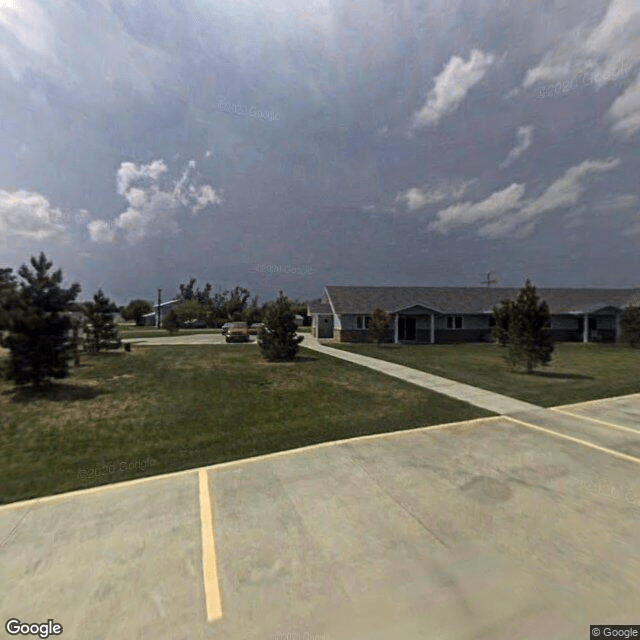
775 Diamond View Dr, Dighton, KS 67839
To contact a resident: (620) 397-5111
For more information about senior living options: (866) 208-4318
Diamond View Estates Costs & Pricing
Diamond View Estates offers competitive pricing for its accommodations compared to the broader market in Lane County and across Kansas. A studio at Diamond View Estates is priced at $3,025 per month, presenting a more affordable option than the average county rate of $3,901 and Kansas's higher figure of $4,094. Similarly, the one-bedroom units are available for $3,225, which is significantly lower than Lane County's average of $4,396 while remaining competitively priced against Kansas's $3,859. For those in need of larger spaces, Diamond View Estates' two-bedroom option is priced at $3,425 - slightly above Lane County's average of $3,020 but still more favorable than the Kansas rate of $3,562. Overall, residents can find value in the offerings at Diamond View Estates while enjoying well-appointed living environments.
| Floor plans | Diamond View Estates | Lane County | Kansas |
|---|---|---|---|
| Studio | $3,025 | $3,901 | $4,094 |
| 1 Bedroom | $3,225 | $4,396 | $3,859 |
| 2 Bedrooms | $3,425 | $3,020 | $3,562 |
Overall Review of Diamond View Estates
Cons
 They thought they would not be able to handle my dad's care based on his previous community experience.
- The staff did not want to try to give him shot that would help his behavior.
- They were not a suitable fit.
Review
Diamond View Estates in Dighton, Kansas is best suited for seniors who need routine assisted living support and do not require aggressive behavioral management or complex medical interventions. The facility appears appropriate for residents whose care needs stay within the standard assisted-living envelope, with daily living tasks, safety monitoring, and social engagement. Families should not expect this community to be a flexible fit for highly specialized or behavior-driven care, and those seeking administration of behavioral medications or intensive psychiatric management should look elsewhere. The reality from the available feedback is a gap between what some families anticipate and what the staff appear willing to deploy, so this is a decision built on alignment with relatively straightforward care routines rather than evolving clinical exigencies.
For families weighing alternatives, Diamond View Estates warrants consideration only if the loved one’s needs are stable and largely non-acute. Those with a history of challenging behaviors that might require chemical or behavioral interventions should consider other communities that demonstrate clear capabilities in handling such situations. Similarly, residents who require skilled nursing oversight, frequent physician coordination, or rapid escalation of care in response to behavioral or medical events may outgrow what this facility can reliably provide. In short, any resident whose care plan may hinge on adaptive, intensive interventions should explore options with more documented capacity for complex care management.
The reviews illuminate a fundamental risk: staff hesitation to pursue a potential behavioral management approach and a clear question about fit based on prior experiences at other communities. The sentiment expressed, that the staff did not want to try a specific intervention to address behavior and deemed the placement not suitable, signals a conservative care philosophy or a mismatch with families who expect a more proactive, individualized approach. This is not a neutral observation about comfort or kindness alone; it is a judgment about the facility’s willingness and ability to accommodate care plans that deviate from the norm. For families facing unpredictable or behaviorally challenging scenarios, that hesitancy can translate into delayed treatment, relocation, or ongoing stress.
Because the reviews offer little in the way of concrete, positive nursing or activity-program highlights, the main downside to Diamond View Estates rests on the uncertainty around care adaptability. When a community’s strength is framed as “not pursuing certain interventions,” it must be able to substitute with equally robust, person-centered alternatives. The absence of explicit evidence of strong behavioral-management capabilities or proactive medical coordination in these notes makes the risk-to-benefit balance tilt toward caution for higher-need residents. A 3-star snapshot across two reviews reinforces that this is a middle-ground option, unlikely to satisfy families seeking highly customizable or medically intensive solutions.
Decision-makers should approach with a checklist rather than assumptions. Ask direct questions about medication management policies, including the handling of behavior-modifying injections or psychotropic needs, and who authorizes such treatments. Inquire about staff training in dementia and behavioral issues, the degree of physician-on-call involvement, and how care plans are created and updated in response to changing needs. Explore the community’s threshold for escalation, emergency response protocols, and whether there are partner facilities for short-term skilled care if needs suddenly increase. A familiar way to gauge fit is to request a candid tour focusing on quiet days versus days with more intensive activities and to observe how staff respond to demonstrations of common scenarios.
The practical verdict is clear: Diamond View Estates can serve as a solid option for seniors whose care demands are moderate and predictable, where daily routines, safety, and social engagement can be managed within a standard assisted-living framework. For families confronting potential behavioral challenges or a need for aggressive, individualized medical management, alternatives should be prioritized. The question is not whether the staff are kind or capable in general, but whether their care philosophy and capabilities align with the resident’s specific needs. When in doubt, seek communities with demonstrated readiness to adapt care plans and to pursue interventions that match the resident’s best interests, even if that means a different setting or a stepped level of care.
 Assisted Living
 Activities on-site
 Air-conditioning
 Cable or satellite TV
 Devotional services off-site
 Ground floor units
 Indoor common areas
 Kitchenette
 Outdoor common areas
 Wi-Fi/high-speed internet available
 Ambulatory care
 Incontinence care
 Medication management
 Guest meals
 BBQs or picnics
 Birthday parties
 Trivia games
 Active adult 55+ community with pet-friendly policy and indoor common areas.
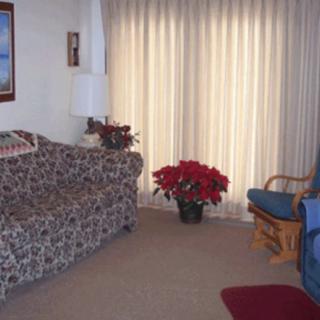



 Choosing the Right Senior Care: A Detailed Exploration of Assisted Living and Nursing Homes
 Understanding the True Cost of Assisted Living in 2025: A Comprehensive Guide
 Understanding Medicaid Coverage for Assisted Living: A Comprehensive Guide