
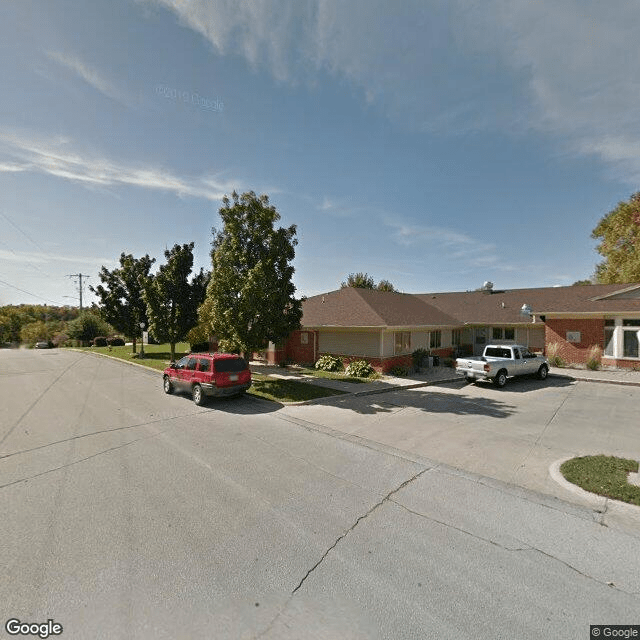
1221 N Fremont St, Iowa Falls, IA 50126
To contact a resident: (641) 648-6657
For more information about senior living options: (866) 208-4318
Overall Review of Cedar Ridge Apartments
Pros
 The family moved their mom to Cedar Ridge, and the dad can stay in the same building, which was a key positive outcome.
- Cedar Ridge offers activities like cooking, exercise classes, game nights, and outdoor picnics.
- The experience has been wonderful.
- The staff have been wonderful and supportive.
- The move was made as easy as possible, and the staff have been meeting the mom’s needs.
- Overall, it has been a very positive experience.
Review
Cedar Ridge Apartments in Iowa Falls is best suited for couples or paired residents who want to stay in the same building as one partner transitions to support services, while preserving a shared daily rhythm. The community’s independent-living roots appear to blend smoothly with ongoing social life, so a household can relocate together without forcing one member into separate housing. The practical upside is immediate: a familiar environment, continuity in routines, and a staff that can pivot to meet evolving needs while keeping both residents close. For families, this arrangement reduces the friction of moving one person while the other remains settled, creating a stable foothold during a sensitive transition.
Those who may want to consider alternatives are exactly those with brighter needs for a full-spectrum care continuum. If a resident requires more intensive on-site medical oversight, frequent nursing support, or dedicated memory-care programming, Cedar Ridge’s reviews offer no clear evidence of these offerings. Likewise, families prioritizing a broad array of specialized services, guaranteed transportation for medical appointments, or access to a larger network of healthcare providers might find it prudent to compare campuses with explicit higher-acuity capabilities. In short, this option shines for social continuity and ease of transition; it may not be the right fit for escalating clinical needs.
The strongest pros translate directly into real-world advantages. A well-regarded staff that makes the move easier and actively works with a resident to meet needs stands out as the decisive edge. The ability for a spouse to remain in the same building removes a common source of stress and disruption, enabling a smoother emotional and logistical shift. Activities such as cooking programs, exercise classes, game nights, and outdoor picnics create a vibrant, reliable social fabric that sustains motivation and reduces isolation. In practice, these elements can significantly improve day-to-day quality of life, especially when a family is balancing grief, adjustment, and the practicalities of daily care.
Yet, the absence of stated downsides in the short reviews should be read as a signal to probe further rather than a guarantee. The main con, if it exists in this setting, is the potential gap between independent living support and the need for higher levels of care. Prospects should verify what on-site medical services look like, how quickly staff can respond to new care requirements, and whether any care transitions are seamless if needs escalate. Other practical considerations, cost transparency, room configurations, and transportation options, also deserve explicit confirmation. Without these specifics, the decision rests on general impressions rather than a complete care map.
Fortunately, those solid positives can directly offset the typical concerns for many families. A responsive team and a move that preserves the family’s living arrangement can mitigate the emotional toll of aging and caregiving. The integration of in-building familiarity for both residents sustains social engagement and a sense of belonging, which often translates into fewer behavioral and mood-related challenges. When the goal is to maximize daily satisfaction and minimize upheaval during a housing transition, Cedar Ridge’s model delivers compelling value. The practical balance favors a decision rooted in lifestyle continuity and staff responsiveness, provided care needs remain within the community’s offerings.
The bottom-line recommendation is clear: Cedar Ridge is a robust fit for couples who want to stay connected in the same building while receiving supportive, people-focused care that preserves independence and social vitality. It is a particularly strong match for families prioritizing a smooth transition, predictable routines, and an activity-rich environment. Those with growing needs for medical oversight, memory-specific programming, or a broader continuum of care should enter with a concrete plan to verify available services and costs, and should compare against campuses that explicitly advertise higher-acuity options. In the end, a well-timed visit, a detailed care plan, and a transparent pricing conversation will determine whether Cedar Ridge aligns with the chart of needs for both residents.
 Assisted Living
 Activities on-site
 Devotional services off-site
 Indoor common areas
 Ambulatory care
 Diabetic care
 Meals provided


 Understanding the Distinctions: Assisted Living and Memory Care Explained
 Guiding Elderly Parents Who Refuse Assisted Living: 6 Practical Steps
 Your Comprehensive Guide to Luxury Assisted Living: Elevated Facilities, Amenities, and Costs