
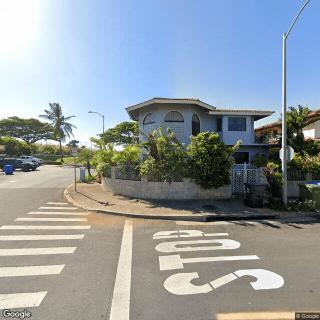
94-1035 Lumikula Street, Waipahu, HI 96797
For more information about senior living options: (866) 208-4318
Overall Review of Marina Manuel Care Home
Pros
 They appreciate the units’ natural ventilation and lack of air conditioning, which keeps the spaces comfortable.
- They value the wheelchair-accessible bathrooms and doors, enhancing mobility and accessibility.
- They find the kitchen adequate for two, suitable for their grandparents in the one-bedroom unit.
- They feel reassured by the emergency call button/cord in the bedroom and bathroom for safety.
- They note the convenient location near transit, with the rail line expected to be usable when operational and a bus depot within an easy walking distance.
Cons
 The property has limited guest parking.
- The property has no air conditioning units.
Review
Marina Manuel Care Home in Waipahu is best suited for seniors who want a compact, home‑like setting with practical accessibility features and a straightforward, one‑bedroom layout. The community prioritizes safety and simplicity: units with natural ventilation, WC‑accessible bathrooms, and doors designed to accommodate mobility aids, all of which support independent living with unobtrusive staff support. The setting has a track record of long-term residency, which signals predictable routines and steady relationships, an important factor for families seeking reliability and a quiet, manageable daily rhythm over time.
Those who may want to consider alternatives are seniors who require consistent air conditioning, more guest parking for frequent visits, or larger living spaces. If climate control is non‑negotiable, or if relatives anticipate regular, extended in‑person contacts that demand ample parking, there are other options with better on‑site cooling and more generous visitor access. Likewise, for couples who want a bigger kitchen or a second bedroom, or for residents needing more expansive programming, memory care, or rehab services, different communities will likely deliver a closer fit to needs and expectations.
The core positives align well with practical needs: natural ventilation helps keep operating costs modest and avoids reliance on centralized cooling, which can be appealing in Waipahu’s climate when managed well. Accessible bathrooms and wide doors reduce fall risk and simplify transfers, a meaningful advantage for mobility‑challenged seniors. The emergency call buttons in both the bedroom and bathroom add a reliable layer of safety, giving families confidence that help is nearby if assistance is needed. A one‑bedroom footprint paired with a small kitchen keeps daily routines straightforward and reduces maintenance tasks, while proximity to a rail line (when active) and an adjacent bus depot expands reach for independent residents and visiting guests.
Before making a move, it pays to verify how the space will actually support daily life and family visits. Ask about guest parking policies and explore nearby alternatives if parking is limited. Confirm whether temporary cooling solutions are permissible if comfort during hotter periods becomes a concern, and inquire about meal service options, staffing levels, and how care scales with changing needs. Investigate the responsiveness of the emergency system and the process for in‑room assistance so expectations for timely support are clear. These operational details will determine whether the trade‑offs support the intended level of independence and engagement.
The lived experience described by current residents points to stability and a low‑stress routine. Long‑tenured residents imply consistent staff, predictable schedules, and familiar surroundings, factors that reduce anxiety for aging loved ones and offer families a sense of continuity. Yet the parking constraint and the absence of central air remain legitimate friction points. If visits are frequent or climate sensitivity is high, these issues can overshadow otherwise solid daily life. The community’s design rewards those who value a simple, orderly environment and are comfortable coordinating around a smaller footprint and transit access.
In the end, Marina Manuel Care Home presents a pragmatic, budget‑minded option for seniors who prize an intimate, accessible setting and good transit proximity, provided climate expectations and visitor logistics align with reality. The safety features and orderly routine offset many concerns, especially for independent seniors who want predictable support without the feel of a larger institution. For families prioritizing robust climate control, abundant guest parking, or larger living space with broader service offerings, alternatives with more extensive amenities are advisable. This community suits the right buyer: a resident who wants a manageable, secure home base with straightforward care support and a focus on daily practicality.
 5 resident community capacity
 Assisted Living
 Cable or satellite TV
 Dining room
 Fully furnished
 Garden
 Housekeeping services
 Move-in coordination
 Outdoor space
 Telephone
 Wi-Fi/high-speed internet available
 Honolulu International (7 miles away)
 24-hour supervision
 Activities of daily living assistance
 Assistance with bathing
 Assistance with dressing
 Assistance with transfers
 Diabetes diet
 Meal preparation and service
 Medication management
 Special dietary restrictions
 Transportation arrangement (medical)
 Transportation to doctors appointments
 Comprehensive Insights into Activities of Daily Living (ADLs) and Their Assessment
 Medicare Coverage for Assisted Living: An In-Depth Exploration
 Choosing the Right Senior Care: A Detailed Exploration of Assisted Living and Nursing Homes