
739 Parker Street, Villa Rica, GA 30180
For more information about senior living options: (866) 208-4318
Overall Review of Hope House One - Parker St Residence
Pros
 Ashley Toecus went above her call of duty.
- She was always helpful.
- She never had an attitude.
- Ashley Toecus helped AngeliaParker.
Review
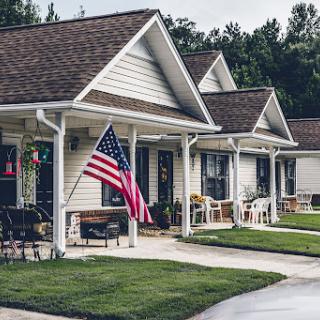
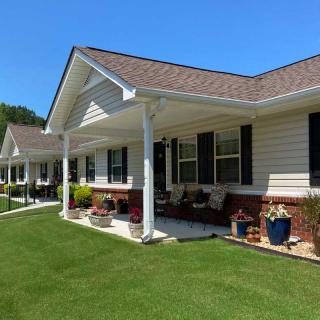
Hope House One - Parker St Residence in Villa Rica, GA is best suited for families seeking a warm, intimate assisted-living environment where frontline staff deliver personal, responsive service. The community appears to emphasize human-scale care, with residents supported by staff who cultivate close, respectful relationships in a home-like setting rather than a clinical, impersonal atmosphere. For seniors who value daily interactions, predictable routines, and the reassurance that a trusted team is paying attention to small, practical needs, this residence offers clear advantages. The standout moment in the available feedback centers on a staff member who embodies that ethos, Ashley Toecus, praised for going beyond the call of duty and maintaining a positive, can-do attitude.
That said, prospective movers should note who may want to consider alternatives. Families seeking rigorous medical oversight, complex care plans, or a wide-ranging menu of on-site therapies may find the profile here insufficient without further verification. The rating data, four out of five from two reviewers, including one five-star and one three-star, signals generally positive sentiment but also points to potential inconsistency or limited documentation of day-to-day quality. Without more reviews detailing dining quality, activities, safety practices, or care progression, decision-makers will want to approach with targeted questions rather than assumption.
Among the tangible positives, staff reliability stands out as the defining strength. The praise for Ashley Toecus, someone who maintains composure, avoids attitude, and stays consistently helpful, maps to the experience most families seek: a caregiver who makes life easier for residents and their loved ones. That kind of frontline responsiveness can translate into calmer mornings, faster resolution of requests, and a sense of security that the resident is known by name and attended to with courtesy. In a smaller community, such personal attentiveness often compensates for budgetary constraints or a lean programming calendar, making daily life feel smoother and more predictable.
Yet the main cons are not explicitly spelled out in the available feedback, which itself is a limitation. The two-review sample leaves gaps around critical dimensions: meals, housekeeping consistency, transportation options, activity variety, and the degree of clinical support available on a routine basis. The presence of a mid-level rating hints at uneven experiences somewhere along the line; potential residents should probe for specifics about staff turnover, illness management, and how quickly emerging needs are escalated. In short, the silence on several care aspects means risk that may be manageable in a warm setting, but not transparent enough to ignore.
How the positives weigh against the gaps is a matter of priorities. For families that prize a compassionate, responsive staff and a manageable, family-like environment, the strong interpersonal factor can offset some limitations in programming. Strong front-line care often reduces anxiety about day-to-day worries, improves coordination with families, and fosters a sense of belonging for residents. However, when medical acuity, memory-care specifics, or a broad activity slate are non-negotiable, the limited public evidence means considering alternatives where those features are more clearly documented and readily accessible.
Decision guidance becomes straightforward: pursue a visit and use a structured checklist focused on care level, staffing, and daily life routines. Ask to meet multiple caregivers and the administrator, request details on nurse availability, care plans, and how emergencies are managed, and request recent references from families with similar needs. If the goal is a warm, attentive environment with dependable frontline support, Hope House One - Parker St Residence stands as a practical option worth pursuing. If the desired package includes extensive clinical oversight, diverse activity programming, or transparent performance data, alternatives should be on the short list for comparison.
 21 resident community capacity
 Assisted Living
 Beauty salon
 Cable or satellite TV
 Dining room
 Fully furnished
 Garden
 Housekeeping services
 Kitchenette
 Move-in coordination
 Outdoor space
 Restaurant-style dining
 Small library
 Telephone
 Wi-Fi/high-speed internet available
 24-hour call system
 Activities of daily living assistance
 Assistance with bathing
 Assistance with dressing
 Assistance with transfers
 Diabetes diet
 Medication management
 Mental wellness program
 Special dietary restrictions



 Understanding the True Cost of Assisted Living in 2025: A Comprehensive Guide
 Understanding Medicaid Coverage for Assisted Living: A Comprehensive Guide
 How and When Medicaid May Cover Assisted Living Costs