
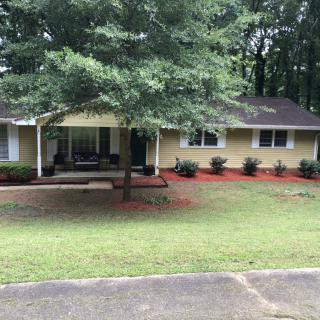
676 South Hairston Road, Stone Mountain, GA 30088
For more information about senior living options: (866) 208-4318
Overall Review of Dembure - Community Living Arrangement VIII
Pros
 They are the greatest group of people to care for loved ones, making them feel welcome.
- They make members and their families feel like part of a family, and they address concerns promptly.
- The staff provided excellent care for residents with Alzheimer's, were professional, and truly cared for their clients.
- The facility is a great place to send loved ones, with friendly people and great staff.
- It is a great place for disabled individuals, including adults and youth.
- They have caring staff who help participants gain a better hold on life.
Cons
 The reviewer states that the woman who spoke on the phone was very rude and unprofessional.
- The reviewer notes that there are bad drivers.
- The reviewer describes the place as a cattle call, implying chaos.
Review
Dembure - Community Living Arrangement VIII is best suited for families seeking a warm, home-like setting where residents are treated like members of a close-knit extended family and where daily engagement, personal attention, and a compassionate staff are the core offering. The atmosphere comes across as friendly and personally invested, with caregivers, kitchen staff, and support personnel all contributing to a sense of belonging. It reads as a place that values relationships over rigid protocol, which can be especially comforting for seniors who thrive on social connection and a feel of “being cared for.” For residents with memory challenges, the warmth from staff who have demonstrated patience and consistency in caregiving can be a decisive benefit, helping both the person and their family feel at ease about day-to-day routines.
That warmth, however, is most effective when the resident’s needs align with what the setting is designed to deliver. This community appears exceptionally well-suited for individuals who prefer a day-to-day structure built around interaction, familiar faces, and a family-style approach to care. It also seems to resonate with families whose loved ones respond positively to a cooperative, community-driven environment and who value staff who “make her feel like a member of the family.” In practice, this translates to meaningful engagement, attentive care, and a sense that concerns are heard and addressed, an important factor when dementia or other cognitive challenges are present and the family wants to see ongoing emotional support.
Yet there are important caveats that families should weigh before deciding. The collection of reviews includes recurring notes about the facility’s roots as a former daycare, which can be endearing or off-putting depending on expectations. For some residents, that origin signals a strong emphasis on social activity and caregiver warmth; for others, it hints at potential gaps in formal medical oversight or a more casual atmosphere than a traditional assisted living setting. There are also signals of inconsistency in administrative interactions, including references to rude phone conversations and variable communication. Those factors matter when evaluating whether a daily care plan will consistently meet medical and safety needs.
The major pros, genuine warmth, a sense of family, and staff who seem genuinely dedicated, often offset the drawbacks by delivering a high-quality day-to-day experience. Families that prize personal attention, flexible scheduling for visits, and a community where staff know residents well will find the positives compelling. The positive anecdotes about care for Alzheimer’s and other memory-related needs, plus stories of staff who “loved my Dad,” demonstrate that the core caregiving team can be a powerful asset. Still, the alignment between expectations and reality hinges on whether medical oversight, medication management, and structured protocols meet the resident’s requirements in the long term.
For families evaluating options, a practical decision framework is essential. If the priority is a homey environment with a strong culture of caring, this community deserves serious consideration, especially for residents who engage best in sociable, activity-rich settings. If the need is robust around-the-clock clinical care, a formal memory-care specialty, or consistent administrative responsiveness, alternatives may deliver more reassurance. It is wise to verify the availability of dedicated memory-support services, obtain a current, detailed list of services included in the arrangement, and confirm staffing ratios and nursing coverage. Also, probe transportation safety, the handling of emergencies, and the transparency of billing and contracts.
In sum, Dembure offers a compelling mix of warmth and personal attention that many families will value highly, particularly for socially engaged residents and those who respond well to a family-oriented caregiving model. The strongest case is for those who want a community where staff relationship-building translates into daily comfort and visible care. The caution, varying levels of administrative polish and the older-daycare vibe, points toward alternatives for families seeking more rigid clinical structure or specialized memory-care environments. For the right resident, this is a trusted, endearing option; for others, it may be prudent to explore facilities with a sterner emphasis on medical oversight and uniform service delivery.
 4 resident community capacity
 Assisted Living
 Cable or satellite TV
 Dining room
 Fully furnished
 Garden
 Housekeeping services
 Move-in coordination
 Outdoor space
 Telephone
 Wi-Fi/high-speed internet available
 William B Hartsfield-Atlanta International (17 miles away)
 24-hour supervision
 Activities of daily living assistance
 Assistance with bathing
 Assistance with dressing
 Assistance with transfers
 Diabetes diet
 Meal preparation and service
 Medication management
 Special dietary restrictions
 Transportation arrangement (medical)
 Transportation to doctors appointments




 An Extensive Exploration of the VA Aid and Attendance Benefit
 Senior Transition Services: Understanding Their Role, Cost, and Importance
 Exploring the Path to Senior Living: A Comprehensive Look at Independent Living and Assisted Living