
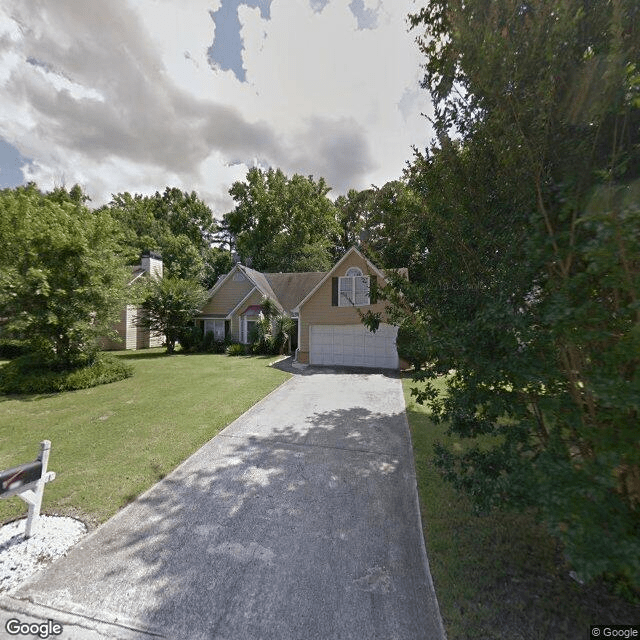
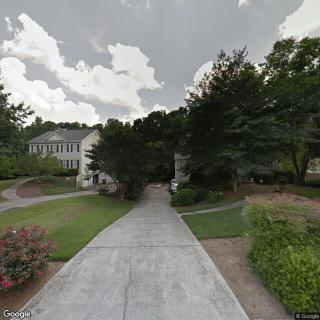
3605 Andrea Lee Court, Snellville, GA 30039
To contact a resident: (404) 484-4588
For more information about senior living options: (866) 208-4318
Home Sweet Home 2 Costs & Pricing
Home Sweet Home 2 offers competitive pricing for its residential care services, with monthly costs that reflect both the quality of care provided and the regional market. For a semi-private room, residents can expect to pay $3,500 per month, which is significantly higher than the average cost of $1,926 in Rockdale County and $2,529 across Georgia. Similarly, the private room option is priced at $4,000 per month - again above the local average of $2,363 and the state average of $2,864. These figures suggest that while Home Sweet Home 2 may charge a premium compared to its neighboring facilities and statewide averages, this investment likely reflects enhanced services or amenities designed to foster a nurturing environment for its residents.
| Floor plans | Home Sweet Home 2 | Rockdale County | Georgia |
|---|---|---|---|
| Semi-Private | $3,500 | $1,926 | $2,529 |
| Private | $4,000 | $2,363 | $2,864 |
Senior living communities with a similar price nearby
-
from -$650 / mo
Miss Willie's Manor
$2,850 to $3,250 / month24.6 miles away -
from -$500 / mo
Spout Springs Personal Care Home
$3,000 / month19.6 miles away -
from +$184 / mo
Certified Home Care of Georgia
$3,684 / month13.2 miles away -
from -$500 / mo
Living Treasures Personal Care
$3,000 to $3,200 / month6.6 miles away -
About the same
Tender Personal Care Home #2
$3,500 to $4,000 / month12.7 miles away
Overall Review of Home Sweet Home 2
Pros
 She is safety-minded and prioritizes Moma's well-being by considering mobility options.
- She recognizes fall risks and seeks safer alternatives for Moma's mobility.
- She demonstrates care by focusing on Moma's safety in daily routines.
Cons
 She would fall if she were on a walker.
- Her caregiver speaks very little English.
- The reviewer found it difficult to communicate with her.
Review
Home Sweet Home 2 in Snellville, GA is best suited for families seeking an intimate, budget-conscious assisted-living option where daily oversight and companionship are the core value. The setting appears to serve residents whose mobility and care needs are manageable with routine supervision rather than intensive clinical intervention. It favors a setup in which a resident can navigate day-to-day life with standard assistance, and where language variability among staff does not derail basic coordination. In practical terms, the community is most appropriate for those who can live comfortably with straightforward care needs and do not require highly specialized mobility support or bilingual staffing across all shifts.
Where alternatives make more sense: families facing significant mobility risk or a requirement for fluent English from caregivers should look elsewhere. The mother's situation, needing wheelchair use and concerns about walker-based transfers, points to mobility safety as a core issue. Additionally, a caregiver who speaks limited English creates a communication hurdle for care planning, updates, and emergency decisions. In such cases, facilities with robust wheelchair transfer programs and multilingual staff, access to interpreters, or more formalized care-coordination processes become essential.
From the available information, the potential benefits are not clearly demonstrated. A 3-star rating signals mixed experiences, but no compelling strengths emerge in the limited feedback. The critical drawbacks, the risk of falls when mobility tools are not perfectly matched to the resident, and persistent communication gaps with a caregiver, overwhelm any uncertain positives. Without evidence of strong safety protocols or consistent language support, the practical value proposition deteriorates for residents who depend on precise care instructions and reliable mobility assistance.
On a visit, the decisive questions center on mobility safety and communication workflows. Ask how staff assist with wheelchair transfers and fall prevention, and request a demonstration of how assistive devices are used in routine transfers. Probe staff language capabilities on every shift and insist on a clear plan for care updates that the family can follow, ideally with written summaries in the family's preferred language. Observe how caregivers interact with residents who have mobility restrictions, and assess whether there is a dependable system for escalating concerns to a supervisor or clinician.
Against this backdrop, consider alternatives that emphasize mobility safety and multilingual communication. Look for communities with higher staff-to-resident ratios, on-site translation support, and established referrals to physical or occupational therapy as needed. Facilities with more extensive accessibility features, grab bars, step-free bathrooms, non-slip flooring, and a track record of consistent, English-first communication will typically deliver safer, more predictable care for mobility-challenged seniors.
In sum, Home Sweet Home 2 presents a mixed bag where safety around mobility and clarity of communication are the deciding factors. If these issues align with the family’s risk tolerance and budget, a candid tour that probes specific safety procedures and language supports is warranted. Otherwise, it is prudent to pursue other options that promise stronger mobility management and more reliable, multilingual caregiver communication. The decision should rest on a clear, actionable care plan that addresses wheelchair use, transfer safety, and language accessibility before any commitment.
 Board and Care Home
 Private
 Ambulatory care
 Diabetic care




 Engaging Brain Games and Innovative Apps to Keep Senior Minds Active
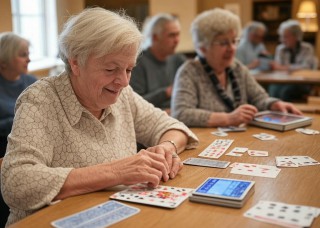 Effective Strategies for Keeping Seniors' Minds Active: A Deep Dive into Brain Games and Apps
 In-Depth Look at the VA Aid and Attendance Program