
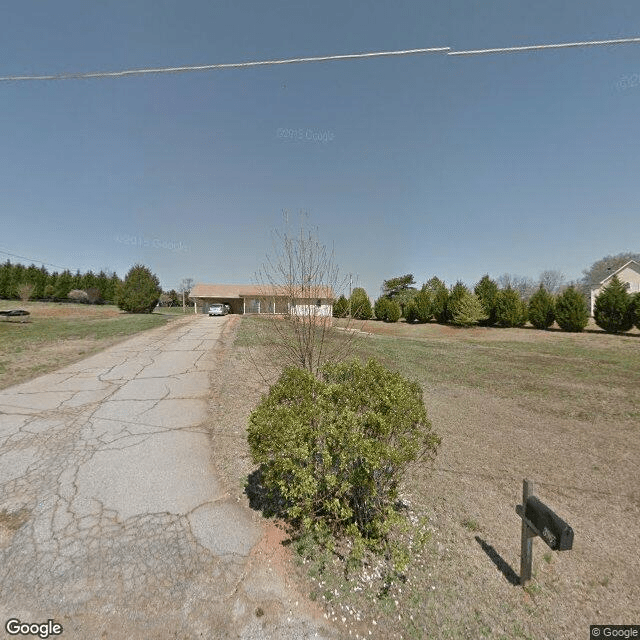
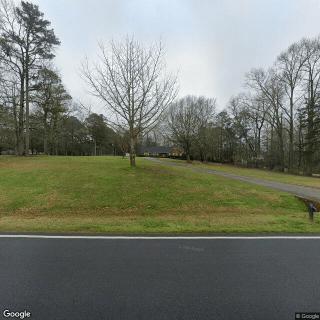
3965 Pucketts Road, Snellville, GA 30039
To contact a resident: (678) 580-7410
For more information about senior living options: (866) 208-4318
E & E Karing Hands Costs & Pricing
E & E Karing Hands offers competitive pricing for its accommodations, significantly undercutting both Rockdale County and the broader Georgia market. For a semi-private room, residents pay $1,600 per month at E & E Karing Hands, which is notably lower than the county average of $1,926 and the state average of $2,529. Similarly, private room rates at E & E Karing Hands are priced at $2,000, compared to Rockdale County's $2,363 and Georgia's $2,864. This cost structure reflects a commitment to providing quality care while ensuring affordability for families seeking supportive living options in a challenging economic environment.
| Floor plans | E & E Karing Hands | Rockdale County | Georgia |
|---|---|---|---|
| Semi-Private | $1,600 | $1,926 | $2,529 |
| Private | $2,000 | $2,363 | $2,864 |
Senior living communities with a similar price nearby
-
from -$100 / mo
Americare Group
$1,500 / month10.3 miles away -
from +$200 / mo
Lona Lisa's Assisted Living Home Inc.
$1,800 to $6,000 / month3.7 miles away -
from +$200 / mo
G & M Personal Care Home
$1,800 to $2,500 / month3.5 miles away -
from -$100 / mo
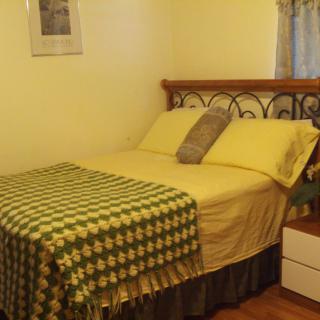
Lend A Hand Personal Care Home
$1,500 to $2,000 / month23.7 miles away -
from -$250 / mo
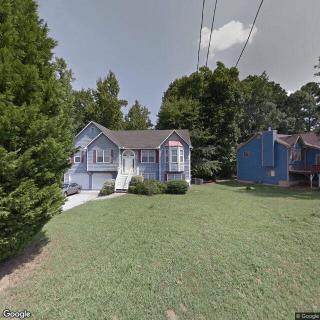
Le'glen Personal Care Home
$1,350 to $2,150 / month17.2 miles away
Overall Review of E & E Karing Hands
Pros
 There is a caregiver on site to provide support.
- A caregiver is present to assist as needed.
- The caregiver presence offers reassurance and ongoing support.
- The arrangement includes caregiver involvement to help with daily needs.
Cons
 The baths are not easily wheelchair accessible.
- Currently no one is staying in the house, leaving Moma in an almost solitary environment with only a caregiver.
- There is concern about what would happen if something happened to the caregiver.
- The step down to the patio is a fall hazard.
Review
E & E Karing Hands in Snellville is best suited for families seeking a small, caregiver-driven living arrangement where the resident can receive close, individualized attention in a home-like setting, and where social programming is not a central feature. This kind of setup tends to appeal to households prioritizing direct oversight and flexibility over the hustle of a larger, activity-filled community. It is not a fit for families chasing a bustling campus with built-in enrichment, structured outings, and ongoing peer interaction. Those who expect a traditional, fully staffed environment with abundant on-site engagement should consider alternatives from the outset.
The primary concerns here revolve around mobility, safety, and continuity of care. The one-on-one attention offered by a caregiver is a clear attraction in theory, but it is undermined by a shocking gap: there is no resident community in place at present, and the resident would be largely alone except for the caregiver. That isolation compounds risk in an emergency and creates a brittle care dynamic, what happens if something changes with the caregiver, or if the caregiver is unavailable? In a setting where social contact is limited and staffing is not robustly reinforced, a short-term absence can become a long, stressful vulnerability.
Accessibility and fall safety are the most operationally troubling elements. Baths are not easily wheelchair accessible, which directly limits independence for anyone with mobility limitations and increases the likelihood of risky, improvised transfers. This is not a minor inconvenience; it reshapes daily routines and can escalate care needs quickly. Add the step down to the patio, identified as a fall hazard, and the risk profile becomes acute for someone with balance challenges or who relies on support devices. These design and layout weaknesses translate into real-world barriers to safe, dignified living.
In evaluating the trade-offs, one must weigh the potential for highly personalized, intimate care against the lack of essential infrastructure. The single caregiver model can feel reassuring, yet it also creates a single point of failure. There is little redundancy if the caregiver is absent or if the resident requires more than one type of support at once. For families considering this option, it is crucial to verify not only the caregiverā€™s qualifications but also what contingencies exist for downtime, illness, or vacation coverage, and to request a clear plan for medical or safety emergencies. Without those safeguards, the perceived intimacy can quickly become a risky, fragile arrangement.
Families should enter discussions with concrete questions and a practical checklist. How will mobility needs be addressed in the bathroom, are there accessible fixtures, grab bars, appropriate shower setups, and non-slip surfaces? What is the plan if the caregiver cannot attend, are there backup staff or on-call professionals? What safety measures exist to mitigate fall risk on the patio and other entryways? It is essential to tour with a mobility device in hand, ask to see the actual physical layout, and request demonstrations of any assistive devices or safety features. Clarify ongoing social opportunities or structured activities, and insist on a realistic sense of daily rhythms rather than aspirational statements.
In the end, this community serves a very particular profile: a senior who values privacy and one-on-one attention, accepts a quieter, potentially solitary environment, and whose family is prepared to manage significant safety considerations and care planning gaps. For most families, especially those needing consistent, 24/7 staffing, accessible bathrooms, and meaningful social engagement, alternatives are a wiser investment. Larger assisted living communities with proven safety infrastructure, regular staff presence, and comprehensive resident programming, or home-based arrangements with formal caregiver support, will typically deliver more reliable safety, mobility support, and meaningful daily activity.
 Board and Care Home
 Activities off-site
 Bath tubs
 Devotional services off-site
 Outdoor common areas
 Private
 Wheelchair accessible showers
 William B Hartsfield-Atlanta International (25 miles away)
 Ambulatory care
 Diabetic care
 Incontinence care
 Meals provided
 Christian services



 Encouraging Participation in Adult Day Care: A Guide to Supporting a Hesitant Parent
 Comprehensive Exploration of Living Wills and Other Advance Directives
 A Detailed Exploration of Living Wills and Advance Directives