

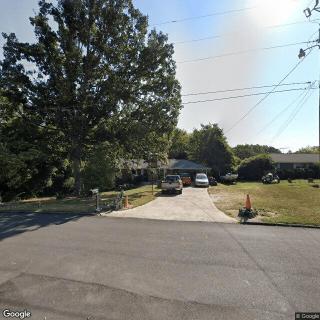
6183 Burnt Hickory Rd, Powder Springs, GA 30127
To contact a resident: (770) 309-0698
For more information about senior living options: (866) 208-4318
Malamav Personal Care Home Costs & Pricing
Malamav Personal Care Home offers competitive pricing for its private rooms, with a monthly cost of $2,500. This rate is notably more affordable than the average in Paulding County, which stands at $2,634 per month, and significantly lower than the statewide average in Georgia of $2,864. By providing quality care at this price point, Malamav Personal Care Home positions itself as an attractive option for individuals seeking personal care services without compromising on value. This financial advantage can be particularly appealing to families looking for reliable and high-quality care solutions within their budget.
| Floor plans | Malamav Personal Care Home | Paulding County | Georgia |
|---|---|---|---|
| Private | $2,500 | $2,634 | $2,864 |
Senior living communities with a similar price nearby
-
from -$400 / mo
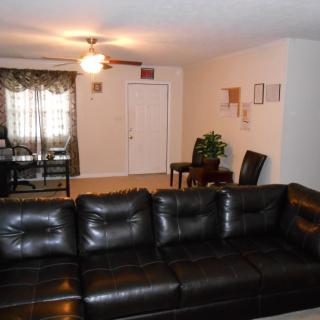
Premium Personal Care Home
$2,100 to $2,850 / month8.2 miles away -
About the same

Serenity Living Personal Care Home
$2,500 to $4,050 / month2.8 miles away -
from -$200 / mo
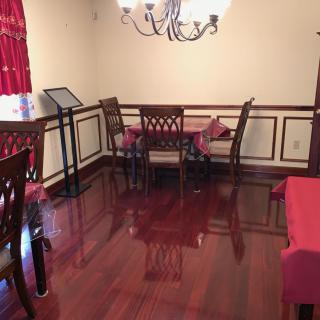
Dalia Precious Memories
$2,300 / month22.8 miles away -
About the same
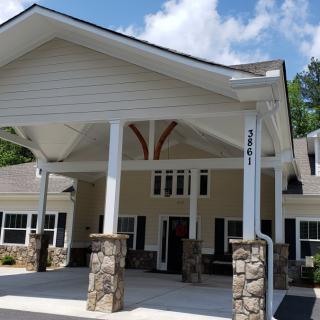
Green Park at Kennesaw
$2,500 to $5,500 / month17.6 miles away -
About the same
Love Touch Personal Care Home
$2,500 / month24.6 miles away
Overall Review of Malamav Personal Care Home
Pros
 They love the work they do, and the owner even more.
- They are amazing; everyone is super friendly and they take great care of loved ones.
- The place is amazing, and it takes great care of loved ones.
Cons
 They spent weeks trying to contact the place for a tour, but no one was available to help.
- They fault the business’s staffing and question why there isn’t anyone to assist.
- They urge the business to hire better staff.
Review
Malamav Personal Care Home in Powder Springs, GA is best suited for families seeking a small, intimate setting where caregivers form meaningful relationships with residents and the owner provides hands-on leadership. It excels for seniors who want a warm, home-like atmosphere and personalized attention, delivered with a sense of continuity that can come only from a closely connected team. This is the kind of community where staff know residents by name, daily routines feel familiar, and a trusted owner is visibly involved in daily care decisions. It is particularly well-suited for families prioritizing personal warmth and a strong, caregiver-driven approach over large-scale operations.
Those weighing alternatives should consider options that emphasize streamlined admissions and larger administrative infrastructures. If a family requires rapid scheduling, predictable front-desk responsiveness, or a more standardized admissions process, a bigger assisted living community or a facility with a more formalized tour and intake system may be preferable. For families that prioritize process efficiency and uniformity in administrative interactions, the smoother pathway of a larger operation could reduce friction that occasionally arises here.
The strongest pros center on the care quality and the human touch. Reviewers repeatedly describe staff as welcoming, caring, and genuinely engaged, with several noting that caregivers take great care of loved ones. The owner’s involvement is a clear differentiator, signaling accountability, visible leadership, and a culture where residents’ comfort and daily wellbeing are prioritized. In practice, this translates into a setting where residents likely experience attentive routine care, consistent warmth, and a sense of safety that comes from a small-team, hands-on model.
However, the main drawbacks are concrete enough to warrant serious consideration. A recurring concern is difficulty in reaching the facility for tours and inquiries, suggesting gaps in administrative responsiveness and scheduling efficiency. A few reviewers explicitly call for stronger staffing or more reliable front-office support, implying that communication and onboarding processes may not be as smooth or predictable as families would like. These issues do not negate the care quality, but they do raise the risk of frustration during the critical decision and transition phases.
The Pros offset the Cons most meaningfully for families who are able to tolerate some administrative friction in exchange for a proven, care-first environment. Where the day-to-day experience emphasizes personal attention, quick rapport with caregivers, and the confidence that the owner stands behind the operation, the downsides become more manageable. Prospective residents should seek a dedicated point of contact for admissions, request a concrete tour schedule in writing, and verify how staffing assignments are managed day-to-day. If those mitigations are achievable, the strength of the intimate culture often outweighs the booking headaches.
In practical terms, this community fits best for families prioritizing relationship-based care in a compact, neighborly setting and who are comfortable navigating occasional administrative bumps. It is less well suited for those who need a seamless, highly predictable admissions process or a facility with a large, built-out front desk operation. The overall rating, strongly favorable among the majority of reviewers, signals real satisfaction, but the presence of a minority of lower ratings underscores the importance of an in-person visit to assess whether the day-to-day environment aligns with expectations. A thoughtful, on-site assessment should include meeting the care team, speaking with the owner, and observing interactions during a move-in or trial period.
Ultimately, Malamav Personal Care Home delivers standout, tender care in a welcoming, home-forward setting. The decisive factor is whether a family can embrace a highly relational model with a willingness to engage with the administrative process at a human scale. For those who can, the trade-off is worthwhile: a trusted team, genuine warmth, and a resident-centered approach that can translate into meaningful peace of mind for loved ones. If that aligns with priorities, proceed with a targeted tour and clear expectations; if not, closures in scheduling and front-office responsiveness suggest evaluating other options that emphasize administrative efficiency and scale.
 Board and Care Home
 Private
 William B Hartsfield-Atlanta International (21 miles away)
 Diabetic care
 Christian services



 Fecal Incontinence in Older Adults: A Comprehensive Guide
 Recognizing the Journey: Understanding and Navigating Anticipatory Grief
 Encouraging Participation in Adult Day Care: A Guide to Supporting a Hesitant Parent