
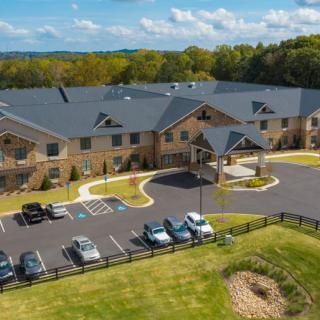
1826 Harmony Drive, Powder Springs, GA 30127
For more information about senior living options: (866) 208-4318
Overall Review of Changing Lives Today- Harmony
Pros
 The staff treated him with respect.
- A staff member moved him so he could enter.
- The company is great.
Cons
 Some staff members argued with him.
- One staff member asked him to prove he was telling the truth.
- He had bugs in his room and one crawled on him.
- The place needed to be shut down for good.
- A staff member abused another resident.
- He felt he was given the runaround about employment.
- The company had broken promises that wasted his time.
Review
Changing Lives Today- Harmony in Powder Springs is best suited for adults with disabilities who favor a small, home-like, group‑home setting and rely on close, day-program oriented supervision. The model here leans toward highly personal attention and ongoing staff contact, which can be a fit for families that want hands-on oversight and a sense of daily continuity. It works best for households willing to stay actively involved, asking pointed questions, and monitoring how care is delivered day to day rather than seeking a large, institutional campus with formal aging-in-place infrastructure.
That said, potential residents or their families should seriously consider alternatives if safety, reliable staffing, and clear boundaries are non-negotiables. Programs that can demonstrate consistent, respectful treatment across all shifts, transparent incident reporting, and strong, professional boundaries may better align with needs where trust and predictability are essential. Larger operators with documented QA processes, verifiable licensing compliance, and formal complaint resolution mechanisms often provide a more stable framework for long-term care, especially when complex behaviors or medical needs are involved.
The positives here, where they exist, center on the presence of staff who treat residents with respect and on the intent behind a compact, community-focused setting. The day program component can be a meaningful structure, offering routine, engagement, and opportunities for social interaction. However, these perceived advantages are eclipsed by the most consequential issues raised in multiple accounts: serious safety concerns, inconsistencies in staff conduct, and a pattern of broken promises that undermine trust. In a setting designed to safeguard vulnerable adults, reliability and safety must outrun any sense of warmth or flexibility; here they do not consistently do so.
The most troubling red flags revolve around health and safety, and the way residents are treated and managed. Reports describe pests in rooms, which signals hygiene and maintenance gaps, and more disturbing allegations of abuse or neglect of residents living in the same home. Coupled with incidents suggesting staff may prioritize getting residents to activities or out of the way over safe, respectful interaction, these concerns erode confidence in the facility’s ability to maintain a secure, well-supervised environment. A pattern of staff disagreements and confrontational dynamics further undermines the stability families expect from a trusted caregiver.
Organizational reliability also shows up in less dramatic but real terms: promises made about employment or devoted outcomes that fail to materialize. This signals a broader issue of accountability and follow-through that can foreshadow inconsistent care in daily operations. Even when the company concept is sound, a lack of dependable management and clear escalation pathways raises the risk that problems remain unresolved or recur. For families weighing options, this facet matters as much as direct care quality because it affects how quickly and effectively concerns are addressed.
In practical terms, the decision to pursue Changing Lives Today- Harmony should be conditioned on a rigorous due diligence plan. Insist on a face-to-face meeting with the administrator and direct care leadership, request written policies on safety, incident reporting, and corrective action, and obtain copies of any licensing inspections or corrective plans. Ask to observe a shift in multiple units, interview frontline staff about supervision and training, and speak with current residents or families about real experiences beyond the marketing narrative. Before move-in, demand a detailed care plan, a built-in grievance process, and a clear contingency plan if safety or staffing indicators deteriorate. Above all, require visible, verifiable evidence that pests, hygiene, and resident welfare receive ongoing, proactive attention. If these assurances cannot be documented with confidence, this community is not the right match and alternatives should be pursued with greater degree of certainty.
 3 resident community capacity
 Assisted Living
 Cable or satellite TV
 Dining room
 Fully furnished
 Garden
 Housekeeping services
 Move-in coordination
 Outdoor space
 Telephone
 Wi-Fi/high-speed internet available
 William B Hartsfield-Atlanta International (24 miles away)
 24-hour supervision
 Activities of daily living assistance
 Assistance with bathing
 Assistance with dressing
 Assistance with transfers
 Diabetes diet
 Meal preparation and service
 Medication management
 Special dietary restrictions
 Transportation arrangement (medical)
 Transportation to doctors appointments



 Senior Transition Services: Understanding Their Role, Cost, and Importance
 Exploring the Path to Senior Living: A Comprehensive Look at Independent Living and Assisted Living
 Is Assisted Living Deductible on Your Taxes? Understanding the Complexities of Assisted Living Expenses and Deductions