

3047 Johnson Road, Loganville, GA 30052
To contact a resident: (678) 863-0126
For more information about senior living options: (866) 208-4318
Southern Escapes Assisted Living Costs & Pricing
Southern Escapes Assisted Living offers competitive pricing for its residents compared to the broader market in Walton County and across Georgia. For semi-private accommodations, residents can expect to pay $1,200 per month, significantly lower than the county average of $2,304 and the state average of $2,529. In the case of private rooms, Southern Escapes charges $1,500 monthly, which again stands out against Walton County's average of $2,643 and Georgia's average of $2,864. This pricing structure not only underscores Southern Escapes' commitment to affordability but also positions it as an attractive option for those seeking quality assisted living services without the financial burden typically associated with such care.
| Floor plans | Southern Escapes Assisted Living | Walton County | Georgia |
|---|---|---|---|
| Semi-Private | $1,200 | $2,304 | $2,529 |
| Private | $1,500 | $2,643 | $2,864 |
Senior living communities with a similar price nearby
-
About the same

Serenity Gardens Personal Care Home
$1,200 to $2,000 / month23.3 miles away -
About the same

Kelly Lake Manor PCH
$1,200 / month21.6 miles away -
About the same

Ebenezer Family Home
$1,200 to $1,500 / month20.5 miles away -
from +$150 / mo

Le'glen Personal Care Home
$1,350 to $2,150 / month23.7 miles away -
About the same

Felicia's Personal Care home
$1,200 to $1,500 / month10.5 miles away
Overall Review of Southern Escapes Assisted Living
Pros
 They liked this place a lot.
- They liked this place a lot.
Cons
 Not comfortable having Mom there with all those men.
- Not comfortable having Mom there with all those men.
Review
Southern Escapes Assisted Living in Loganville, GA is best suited for families seeking a compact, intimate assisted-living option where routines are predictable and staff can deliver highly personalized attention in a low-traffic setting. The current resident mix is all male (three residents), which creates a single-cohort environment rather than a traditional, balanced community. This dynamic makes it a practical fit for a senior who is comfortable with a small, close-knit living arrangement and does not require a diverse peer group to stay engaged. For a female loved one or a family hoping for broad social interactions, this environment should be weighed carefully before committing.
Those who prioritize a mixed-gender social fabric, a larger resident pool, or a bustling activity calendar should consider alternatives. The absence of female peers and the very small population limit spontaneous social encounters and the breadth of programming that typically comes with more robust communities. Families should compare the daily rhythm, group activities, and guest opportunities here against larger facilities to ensure the social needs of a potential resident are met. If variety and ongoing peer connection are top criteria, other options are likely more suitable.
The most evident strength is the warmth implied by the reviewers who liked the place a lot. In a small setting, that warmth often translates into personalized care rhythms, easier staff-resident communication, and a calmer, less overwhelming daily environment. Prospective residents can expect closer staff oversight and the chance for highly tailored routines. For someone who thrives on predictability and a home-like atmosphere, these elements can provide real value and reduce anxiety around transitions.
The primary drawback centers on the gender composition. With three male residents and no female peers, a female resident could feel out of place or have limited companionship, which diminishes social balance and may affect comfort levels, privacy, and overall satisfaction. That single issue does not merely tint impression; it directly shapes daily experiences, from casual conversations to shared activities. In other words, the main con here is not just aesthetic, it’s practical, affecting how freely a resident can engage with peers and how the community is experienced over weeks and months.
The favorable aspects of an intimate setting do offset some risk, but not fully neutralize the core concern. A small, consistent staff-to-resident ratio tends to yield reliable responsiveness and a steady routine, which supports residents who prize stability and gentle supervision. The home-like feel can promote dignity and independence for those who do not require a broad program slate. However, the absence of a gender-diverse peer group and the limited overall resident pool tend to cap social fulfillment, especially for a resident who would otherwise benefit from more varied interactions and shared experiences throughout the day.
To decide with confidence, families should approach a tour with a focused, practical checklist. Ask to see the current floor plan and common spaces to assess how easy it would be to join activities or dine with peers. Inquire about the exact gender mix, roommate policies, and whether any changes in the resident roster are possible or planned. Clarify staffing patterns, including daily care hours, on-site availability for emergencies, and how medications and health changes are managed. Finally, request recent references or speaking with families who have residents there long-term, so the reality of day-to-day life can be weighed against the favorable impressions. This approach ensures a decision that aligns with the resident’s social needs, comfort level, and long-term well-being.
 Board and Care Home
 Activities off-site
 Bath tubs
 Devotional services off-site
 Indoor common areas
 Outdoor common areas
 Private
 Private bathrooms
 Respite or short term stays offered
 Wheelchair accessible showers
 Ambulatory care
 Diabetic care
 High acuity care
 Incontinence care
 Meals provided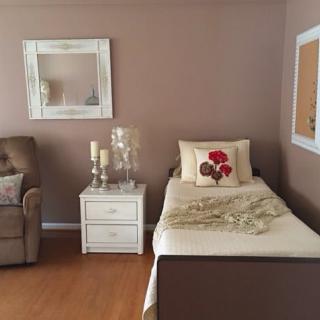






 Compassionate Conversations: How to Comfort Someone Who Is Grieving
 Home Health Care Aides: Understanding Their Role and Supporting Your Family
 Urinary Tract Infections in Older Adults: Comprehensive Insights on Symptoms, Treatment, and Prevention