
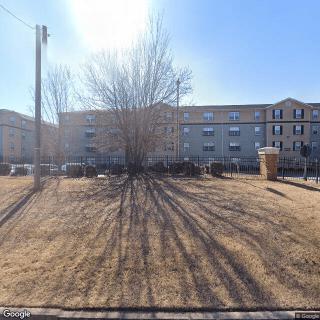
2604 Tolliver Drive, Ellenwood, GA 30294
For more information about senior living options: (866) 208-4318
Overall Review of Art Of Living - Community Living Arrangement V
Pros
 The experience with Art of Living has been a pleasant surprise.
 - David loves the day program.
- The program offers lots of activities and road trips.
- Joi has been a huge help with MARTA and acclimation.
- Hassan is living his best life at Art of Living, loving the day program and his roommates.
- The staff at Art of Living are exceptional, patient, helpful, and professional.
Cons
 One of the caregivers was openly yelling at an exceptional adult, loud enough to be overheard on a phone call.
- The same caregiver was yelling at them to slow down and then to keep up.
- This is completely unacceptable; people with exceptionalities have the right to be spoken to and treated with respect and dignity, not humiliated in public.
- If you don't have the patience to work with people with exceptionalities, please find another line of work.
- They have a different caregiver every week to come care for my mom.
- Their turnover rate is high; one wonders why that is.
- They must not treat employees right, or the company isn't good.
- The owners are accused of being liars and will hold pay checks or cut days when you can't do favors.
- RUN FOR THE HILLS—unprofessional, rude, careless, bogus as a company.
Review
Art Of Living - Community Living Arrangement V in Ellenwood, GA is best suited for adults with developmental disabilities who thrive on a structured day program, small-scale residential living with roommates, and active engagement in the wider community. The model pairs a supportive, supervised environment with three-roommate homes and a calendar-driven day program that prioritizes independence, life skills, and real-world participation. Families seeking a setting where daily activities are purposefully aligned with self-reliance will find notable resonance here. Those who want an ultra-controlled, low-variation environment with minimal staffing changes may want to compare alternatives, because the program’s strength rests on ongoing engagement and social immersion rather than rigid routine alone.
From multiple accounts, the day program delivers plentiful activities and road trips that broaden experiences beyond basic care. The ability to select activities from a monthly calendar and to participate in community life appears to be a core strength, not an afterthought. Staff are described as exceptionally patient and communicative, guiding residents toward independence instead of completing tasks for them. Notable examples include assistance with navigating MARTA and helping residents acclimate to new routines, with caregivers and program leaders earning praise for their practical, hands-on approach. The residential setup reinforces this by embedding life-skills practice into everyday living, creating a coherent continuum from home to community.
Families consistently highlight the safety and security of the environment and the quality of daily interactions with staff. The culture is described as supportive, with providers who “go over and above” to achieve positive outcomes, and with regular updates that keep families in the loop. For residents who respond best to calm, steady guidance, the model translates into meaningful gains in independence and social participation. The practical effect is a predictable framework in which residents gain confidence through choices, supported living, and regular opportunities to practice essential tasks in a community setting.
Yet, no community operates in perfect harmony, and several concerns warrant scrutiny. An off-site incident at a local store involving a caregiver shouting at an exceptional adult raises legitimate questions about frontline supervision and the degree of training and behavioral standards expected of staff. While this occurred outside the center, it underscores the importance of robust supervision, escalation protocols, and ongoing staff coaching to protect residents’ dignity and safety. Additionally, a strongly negative review highlights perceptions of high caregiver turnover and questions about management practices. Those viewpoints are not universal, but they reflect real tensions around consistency, staff retention, and trust in leadership that families should address directly during tours and intake conversations.
These risks must be weighed against the positives. The structure, emphasis on independence, and daily life-skills support offer a compelling value proposition for families willing to accept some staffing variability in exchange for growth opportunities and community integration. Prospective residents and families should probe staffing ratios, the cadence of caregiver assignments, and the supervision framework to ensure continuity of care. It is also wise to inquire about incident reporting, corrective actions, and how family communication is maintained. For those who prioritize an ultra-stixed, uninterrupted caregiver team, alternatives with longer-tenured staff may be preferable; for those who prize active engagement, practical independence training, and a dynamic, community-centered day program, Art Of Living provides a solid, actionable path forward.
In deciding, the target fit is clear: this community suits individuals who respond well to an activity-rich day program, enjoy living with a small, compatible group, and benefit from steady, patient staff who can guide real-world independence. It is less ideal for families seeking guaranteed caregiver consistency without turnover or for those who require zero risk of off-site behavioral concerns. The prudent move is to visit, observe interactions, and talk to current families about specific experiences with staffing continuity, supervision, and how incidents are handled. Request a sample monthly calendar, ask about current caregiver tenure, and solicit references who can speak to day-to-day reliability. With clear expectations and deliberate questions, the decision will align with a concrete path to safer, more independent living and meaningful community participation.
 3 resident community capacity
 Assisted Living
 Cable or satellite TV
 Dining room
 Fully furnished
 Garden
 Housekeeping services
 Move-in coordination
 Outdoor space
 Telephone
 Wi-Fi/high-speed internet available
 William B Hartsfield-Atlanta International (8 miles away)
 24-hour supervision
 Activities of daily living assistance
 Assistance with bathing
 Assistance with dressing
 Assistance with transfers
 Diabetes diet
 Meal preparation and service
 Medication management
 Special dietary restrictions
 Transportation arrangement (medical)
 Transportation to doctors appointments



 Understanding Medicaid Coverage for Assisted Living: A Comprehensive Guide
 How and When Medicaid May Cover Assisted Living Costs
 A Detailed Exploration of Assisted Living Medicaid Waivers Across the United States