

3888 Saddlecreek Drive, Douglasville, GA 30135
To contact a resident: (678) 715-4988
For more information about senior living options: (866) 208-4318
Lucille's Resting Nest Costs & Pricing
Lucille's Resting Nest offers competitive pricing for its accommodations compared to both Douglas County and the broader state of Georgia. For a semi-private room, residents can expect to pay $1,995 per month, which is significantly lower than the county average of $2,318 and the state average of $2,529. Similarly, for those seeking more privacy, the cost for a private room at Lucille's is set at $2,495 - again more affordable than both Douglas County's average of $2,587 and Georgia's average of $2,864. These pricing structures highlight Lucille's commitment to providing high-quality care in an accessible manner.
| Floor plans | Lucille's Resting Nest | Douglas County | Georgia |
|---|---|---|---|
| Semi-Private | $1,995 | $2,318 | $2,529 |
| Private | $2,495 | $2,587 | $2,864 |
Senior living communities with a similar price nearby
-
from +$105 / mo
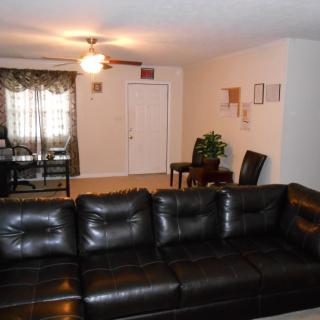
Premium Personal Care Home
$2,100 to $2,850 / month13.8 miles away -
from +$305 / mo
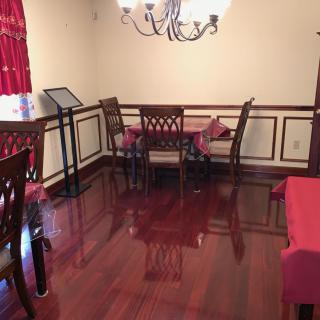
Dalia Precious Memories
$2,300 / month17.6 miles away -
from -$295 / mo
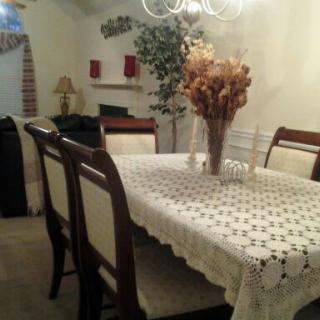
Rose's Premier Personal Care Home
$1,700 / month16.9 miles away -
from -$195 / mo
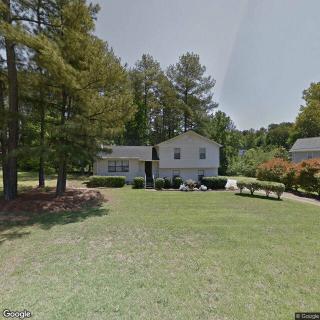
Agape Haven Personal Care Home
$1,800 to $2,000 / month8.7 miles away -
from -$295 / mo
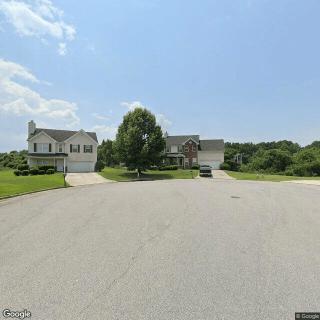
Around the Clock Personal Care Home, LLC
$1,700 to $2,200 / month14.5 miles away
Overall Review of Lucille's Resting Nest
Pros
 The residential home is working well for the resident's mother.
- There are only five residents, and the mom likes being there.
- The staff are very good with the residents.
- The mom enjoys sitting in the TV room and visiting with others.
- Residents can eat in their chairs if they want.
- All meals are homemade, and the mom is eating three meals a day.
- The home offers a visiting nurse and on-site physical therapy.
- The changes in the mom since moving there are positive.
- The owner is passionate about care.
- The owner has extensive experience caring for patients with dementia.
- There is a stair lift chair, so stairs are not a problem.
- The house provides transportation to doctor appointments and outings via a van.
- Pricing is fair and cheaper than assisted living.
Cons
 The reviewer felt the prices were a little high.
- The reviewer thought the nice lady seemed desperate to have someone, which was a red flag.
- The curb appeal was lacking.
- The house is not suitable for a person in a wheelchair; bi-level with upstairs access only.
- The reviewer believed mom would be confined to the downstairs only.
Review
Lucille’s Resting Nest in Douglasville is best suited for families seeking an intimate, home-like senior setting where care is highly personalized and staff familiarity with residents is the norm. The community shines for residents who prefer a small-group atmosphere (about five residents in one home) and value consistent, hands-on attention from caregivers. In this environment, daily life centers on routine, familiar surroundings, and simple comforts: homemade meals, the option to dine in chairs in living areas, and easy access to outdoor spaces like a screened porch and a courtyard. The presence of a visiting nurse and the ability to arrange on-site physical therapy reinforce a practical blend of everyday support with medical oversight, making it a strong choice for someone who doesn’t require a high-rise, hospital-like facility but does need dependable daily care.
Those who should consider alternatives are the ones who require full accessibility across the entire residence or insist on private rooms, large-scale programming, or a facility with a more traditional assisted-living footprint. The home’s bi-level design and stairs present a clear barrier for wheelchair users, and there is no elevator. In a scenario where mobility is gradually diminishing or a private room is non-negotiable, other options with single-story layouts and more expansive accessibility may be safer and more comfortable. Additionally, curb appeal is not a strong suit in several observations, and pricing conversations suggest variability; for families prioritizing a polished campus feel or aggressively competitive pricing, further exploration is warranted.
The strongest pros center on intimate care dynamics and practical amenities. Families consistently note that staff interact warmly and effectively with the resident, creating a sense of safety and companionship. Home-cooked meals help with appetite and daily routines, and meeting basic needs, like sitting together in common spaces and enjoying outdoor time, appears to support emotional well-being. The on-site accessibility of services such as a visiting nurse and potential in-house physical therapy reduces the burden of coordinating external care. Transportation for doctor visits, a mobile beautician, and even the stair lift chair demonstrate a thoughtful approach to mobility and self-care within a smaller, controllable environment.
Yet the main cons cannot be ignored when evaluating fit. The residence’s bi-level layout and upstairs-access-only design limit mobility for someone who cannot navigate stairs, even with a stair lift. Several reviewers describe the setting as “okay” with prices that feel high relative to the experience, suggesting limited value for families seeking more robust programming or upscale presentation. Curb appeal is noted as lacking, and one reviewer flagged a red flag regarding the owner’s apparent desperation to fill beds, which can provoke concerns about reliability and professionalism. Taken together, these factors point to a place that may work brilliantly for some, while underserving others with higher or different care needs.
The pros do offset the cons when the decision centers on daily living quality and emotional safety in a compact, caregiver-led environment. For residents who can remain downstairs and thrive on routine, the small, family-like atmosphere can deliver stability, companionship, and attentive care that larger facilities sometimes struggle to maintain. On-site medical touches, visiting nursing, potential PT, and prompt access to transportation, help avoid fragmented care. The stair lift, while not a substitute for full accessibility, reduces friction for residents who can manage stairs with assistance. Pricing may skew toward the higher end in some comparisons, but for families prioritizing warmth, continuity, and a highly attentive staff, the value proposition strengthens considerably.
In the end, Lucille’s Resting Nest is a practical, advisory choice for families prioritizing intimate, personalized care in a low-key setting. It is a particularly strong fit for residents who can comfortably stay on the main floor, relish homemade meals, and benefit from on-site nursing support and mobility aids. Prospective movers should verify current accessibility arrangements, confirm what private or shared accommodations are available, and request a clear breakdown of what is included in the price. A candid conversation with the owner about care philosophy, staffing, and future care plans is essential, as is a first-hand visit to observe daily routines, speak with current families, and assess whether the warmth and familiarity align with long-term needs. If the resident demands comprehensive wheelchair-accessible space, a more traditional, purpose-built setting may be the safer long-term bet.
 Board and Care Home
 Activities on-site
 Air-conditioning
 Bath tubs
 Cable or satellite TV
 Devotional services on-site
 Indoor common areas
 Outdoor common areas
 Private
 Private bathrooms
 Respite or short term stays offered
 Wi-Fi/high-speed internet available
 William B Hartsfield-Atlanta International (17 miles away)
 Ambulatory care
 Diabetic care
 Incontinence care
 Medication management
 Low / no sodium
 Art classes
 Birthday parties
 Day trips and outings
 Stretching classes



 Navigating the Tax Landscape of Caregiving: Credits, Deductions, and Beyond
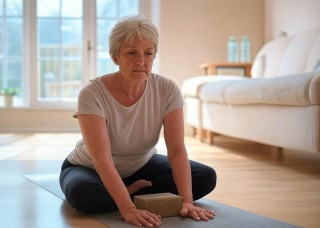 Highly Beneficial Low-Impact Exercises for Senior Living Residents
 Is In-Home Healthcare Tax Deductible? Your Comprehensive Guide