For more information about senior living options: (866) 208-4318
4 from 30 reviews
5 stars
20
4 stars
3
3 stars
0
2 stars
2
1 stars
5
Hawthorn House Costs & Pricing
Hawthorn House offers competitive pricing for its residents, particularly when compared to the surrounding Okaloosa County and the broader state of Florida. For a semi-private room, Hawthorn House is priced at $3,770 per month, which is slightly above the county average of $3,700 but significantly higher than the state average of $3,009. In terms of one-bedroom accommodations, their rate stands at $3,850 - positioned just below Okaloosa County's average of $4,088 while remaining very close to Florida's overall average cost of $3,864. This pricing structure reflects Hawthorn House's commitment to providing quality care and amenities that cater to the needs of its residents while remaining mindful of local market trends.
Floor plans
Hawthorn House
Okaloosa County
Florida
Semi-Private
$3,770
$3,700
$3,009
1 Bedroom
$3,850
$4,088
$3,864
Memory care communities with a similar price nearby
Dining is a frequent bright spot, with residents describing meals they genuinely enjoy.
Many reviewers comment on the food in positive terms, including praise for a chef and that residents seem to like what’s served. Several also mention dining as convenient, with options such as eating in a dining facility on each floor and the ability to choose a café option. One review even compares the dining setup to a restaurant-style experience rather than a cafeteria.
common14 reviews mention this
Staff care is a core theme
Residents and families consistently describe attentive, knowledgeable staff members.
Across multiple reviews, families describe staff as kind, caring, and responsive to daily needs. Reviewers also mention staff being helpful with transitions and staying engaged with residents, including keeping people included in activities and day-to-day support. A few reviewers contrast other communities they’ve tried, saying the care here matched or exceeded expectations.
common6 reviews mention this
Activities and community life
Residents have on-site activities that keep daily life from feeling limited.
Several reviewers mention scheduled on-campus activities like sing-alongs and bingo, plus group events that help residents socialize. Others describe trips to town or other outings as part of the routine, and at least one notes the staff’s effort to keep things going creatively when outside activities were limited. A separate review also highlights that there’s typically something for residents to take part in each day.
differentiator4 reviews mention this
Memory care layout matches assisted living
The memory care wing is described as designed to feel similar to assisted living.
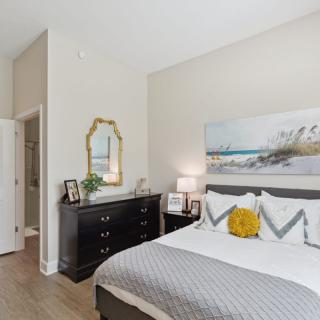
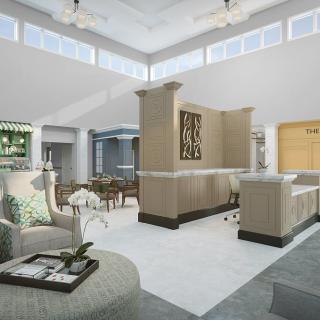
Reviewers who mention memory care say the memory care wing apartments are structured similarly to the assisted living setup, which they view as a positive. Some also refer to a specific memory-care hall and describe staff attention to residents with Alzheimer’s-related concerns. The on-site chapel and community gathering spaces also come through as part of making the experience feel more like a home.
caveat7 reviews mention this
Care concerns and staffing stress
Some families report care problems that made them worry about follow-through and support.
A recurring downside in the reviews is that some residents did not receive the level of assistance that families expected, including concerns about feeding support and whether care plans were followed. Other reviews describe stress around staffing—especially on weekends or at night—and say residents didn’t get enough help. There are also comments about communication problems and, in at least one case, a serious concern tied to patient rights and discharge processes.
caveat3 reviews mention this
Costs feel high to some
Pricing is a concern for some families, who describe the community as somewhat expensive.
At least one reviewer directly calls out the cost as expensive and also mentions distance as part of the decision. The pricing range provided for units suggests rates are above both the county and state benchmarks, which aligns with the concern about affordability. Another review brings up the waiting list separately, but the general cost/value question shows up alongside that overall fit concern.
How we summarize
Counts show how many written reviews mention each theme; a review can touch several themes, and only frequently mentioned themes are displayed.
Features
Types of Care
Assisted Living
Memory Care
Amenities
Activities on-site
Devotional services off-site
Indoor common areas
Transportation
Eglin Air Force Base (3 miles away)
Care Services
Ambulatory care
Diabetic care
Dining
Meals provided
Activities
Activities on-site
Devotional activities offsite
Nearby Places of Interest
Restaurants
Subway (1.3 miles)
peppers Mexican grill (1.6 miles)
Corner Cafe (2.7 miles)
Burger King (3 miles)
Wendy's (3 miles)
AJ's on the Bayou (3 miles)
Stewby's Seafood Shanty (3.5 miles)
Pharmacies
CVS Pharmacy (2 miles)
Winn-Dixie (3.6 miles)
Walgreens (3.7 miles)
Genoa-Qol Healthcare Co. (3.8 miles)
Winn-Dixie (3.8 miles)
Walgreens (4.7 miles)
Physicians
Dress Cosmectic Surgery P.A. (2.4 miles)
Family Eyecare Center (2.5 miles)
Donald Whitaker (3 miles)
Jason R Boole, MD (3.1 miles)
Interventional Pain Center (3.2 miles)
White Wilson General Surgery (3.2 miles)
Robert P Feldman, MD - Florida Institute of Neuroscience (3.2 miles)
Hawthorn House offers competitive pricing for its residents, particularly when compared to the surrounding Okaloosa County and the broader state of Florida. For a semi-private room, Hawthorn House is priced at $3,770 per month, which is slightly above the county average of $3,700 but significantly higher than the state average of $3,009. In terms of one-bedroom accommodations, their rate stands at $3,850 - positioned just below Okaloosa County's average of $4,088 while remaining very close to Florida's overall average cost of $3,864. This pricing structure reflects Hawthorn House's commitment to providing quality care and amenities that cater to the needs of its residents while remaining mindful of local market trends.
Transitioning from assisted living to memory care is driven by an individual's cognitive decline and specific needs, requiring careful evaluation of indicators like increased confusion and wandering. The process involves consulting medical professionals, researching suitable communities, considering financial and legal aspects, and ensuring effective communication for personalized care plans.
The article differentiates between assisted living and memory care, explaining that assisted living supports seniors with daily activities while promoting independence, whereas memory care provides specialized services for individuals with dementia, focusing on secure environments and cognitive support. It also addresses staff training, safety considerations, costs, family involvement, and transition strategies for families navigating these care options.
The article outlines effective communication strategies for interacting with loved ones with dementia, highlighting the need for empathy, patience, and understanding while emphasizing supportive approaches like using simple language, minimizing distractions, and focusing on feelings over facts to maintain dignity and foster connection. It also suggests seeking professional guidance when needed as communication challenges evolve.
Get PricingAsk A QuestionSchedule A TourContact Senior Advisor
By clicking submit, you agree to our Partner's Terms of Use. You
also consent to receive calls and texts, which may be autodialed, from our Partner. Your consent is not a condition to
using our Partner's service. Please visit our Partner's Privacy Policy for information about their privacy practices.

 Assisted Living
 Memory Care
 Activities on-site
 Devotional services off-site
 Indoor common areas
 Eglin Air Force Base (3 miles away)
 Ambulatory care
 Diabetic care
 Meals provided
 Memory care with on-site activities and meals in a supportive community.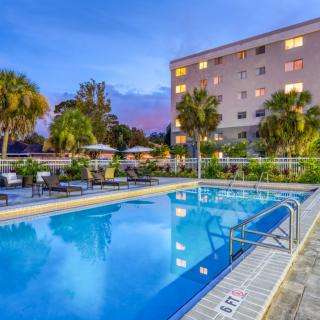
 When to Transition from Assisted Living to Memory Care: Key Indicators, Steps, and Finding the Right Community
 Understanding the Distinctions: Assisted Living and Memory Care Explained
 How to Communicate with a Loved One Living with Dementia: 10 Supportive Strategies