

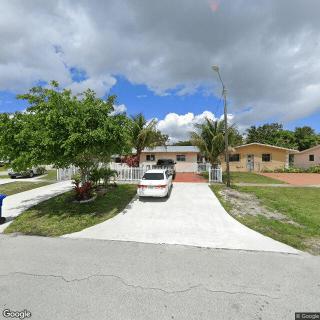
1595 NE 145th St, North Miami, FL 33161
To contact a resident: (305) 947-3416
For more information about senior living options: (866) 208-4318
Overall Review of North Miami Retirement Living
Pros
 The facility provides good care to the residents.
- The care is provided 24 hours a day.
- The nurses are sensitive to residents' needs.
- Residents can do most things for themselves, with assistance as needed.
- The staff are warm and friendly.
- The facility is clean, tidy, and people-friendly.
- The facility is clean and convenient for visitation.
- Residents feel respected and happy there.
Cons
 The company is fraudulent and disgusting.
- The facility is horrible and poorly represents retirement facilities.
- The staff keep their clients overly medicated.
- The air conditioning is inoperative.
- The mattresses are dirty and the sheets filthy, forcing clients to sleep on them.
- There are no recreational activities for the clients.
- The owner is not hands-on.
- There are no mechanical lifts to safely transfer residents; the aides, many not certified, do the lifting, which is unsafe.
Review
North Miami Retirement Living is best suited for seniors who want a close-to-home, family-friendly setting with reliable daily support, provided they do not require extensive medical intervention. It serves residents who can participate in everyday activities with assistance for baths, medications, and mobility, and who value easy visitation and a neighborhood feel in North Miami. The environment is described as clean and welcoming, with staff that makes visits comfortable for relatives. For those needing hospital-grade nursing, complex rehabilitation, or high-level clinical oversight, alternatives will be a better fit.
Explicitly, those with advanced dementia or complex medical needs requiring certified nurses, lifting equipment, and rigorous safety protocols should consider alternatives. A recurring concern in the family feedback is the absence of certified aides and the lack of mechanical lifts, which raises safety questions for heavier residents. Understaffing or limited hands-on management from ownership were cited as factors that could leave residents under-supervised. Families should be wary if a loved one requires constant medical monitoring, frequent transfers, or high levels of infection control and specialized therapies that exceed the facility’s typical offerings.
The best-case picture rests on notable pros: round-the-clock care and a staff described as warm and attentive, plus a clean, home-like setting that supports frequent family visits. Residents can maintain independence with appropriate assistance, and nurses are perceived as responsive to individual needs. The proximity to family and a welcoming, conversation-friendly atmosphere are consistently highlighted as major advantages. These positives create a sense of dignity and normalcy for many residents, but their durability hinges on steady staffing and active on-site leadership.
However, the more troubling accounts outline tangible safety and maintenance failures. Allegations range from medication practices that may over-medicate to privacy concerns, an inoperative air system, and dirty bedding with compromised plumbing creating unsanitary conditions. Descriptions of only one staff member on shift for roughly a dozen residents, with aides who may lack certification, imply overextension and potential risk for both residents and caregivers. While not universal, these reports illustrate how quickly basic quality can deteriorate when day-to-day operations slip, and they should not be dismissed by anyone evaluating a move here.
On balance, there are credible, repeated notes of warmth, respect, and cleanliness in many family experiences, with residents described as well cared for and well groomed, and with visitation described as convenient and comfortable. The most positive stories emphasize 24-hour care and a responsive nurse presence, along with a sense that the facility can feel like a home where elders are treated with kindness. Yet these strengths rest on steady leadership and reliable staffing; when those elements falter, the darker reviews loom larger. The facility can deliver a reassuring, neighborly living arrangement for some, but not for all.
Practical steps for families evaluating this community include a thorough on-site tour at different times, careful inspection of room and bathroom conditions, and direct testing of HVAC performance and plumbing systems. Request current disclosures on staffing ratios, licensure, and recent inspections, and verify the availability of certified aides and licensed nurses for the required level of care. Probe the dementia care plan if memory support is needed, and demand an active activities program that matches the resident’s interests. Compare with nearby nursing homes or memory-care facilities for higher levels of clinical oversight, using North Miami Retirement Living as a baseline to judge whether warmth and convenience justify the risks identified in some reviews.
 Assisted Living
 Activities on-site
 Devotional services off-site
 Indoor common areas
 Miami International (11 miles away)
 Ambulatory care
 Diabetic care
 Meals provided






 When to Transition from Assisted Living to Memory Care: Key Indicators, Steps, and Finding the Right Community
 Assisted Living and Memory Care: Understanding Their Core Differences
 Beyond the Bingo Hall: 50+ Enriching Activities for Seniors in Assisted Living