
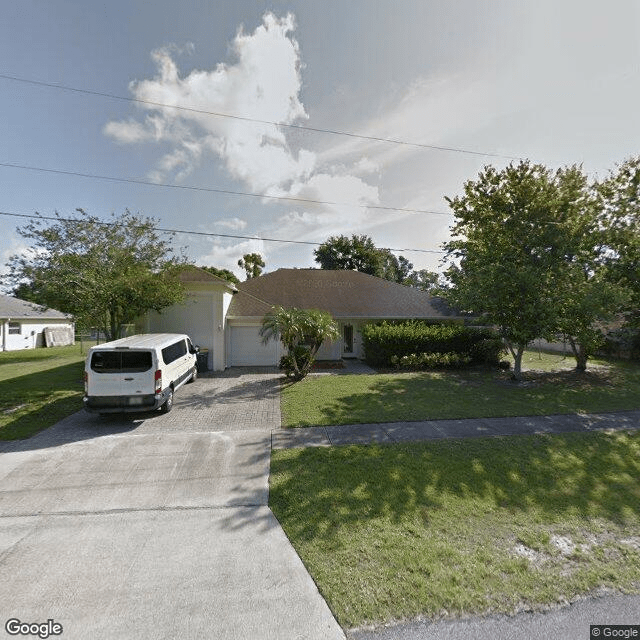
3401 Lakewood Drive, Melbourne, FL 32904
To contact a resident: (321) 508-5514
For more information about senior living options: (866) 208-4318
Grammy's House Costs & Pricing
At Grammy's House, the monthly costs for accommodation reflect a competitive pricing structure in comparison to Brevard County and the broader state of Florida. For a semi-private room, residents can expect a fee of $3,000, which is slightly lower than the county average of $3,027 and the state average of $3,009. When it comes to private rooms, Grammy's offers a range from $3,500 to $4,995 - this pricing is competitive against Brevard County's average of $3,663 and Florida's overall average of $3,699. This range provides potential residents with options that accommodate varying budgetary needs while ensuring quality care in a welcoming environment.
| Floor plans | Grammy's House | Brevard County | Florida |
|---|---|---|---|
| Semi-Private | $3,000 | $3,035 | $3,009 |
| Private | $3,500 to $4,995 | $3,672 | $3,699 |
Senior living communities with a similar price nearby
-
from -$430 / mo

The Residences at Zon Beachside
$2,570 to $4,500 / month7.3 miles away -
About the same
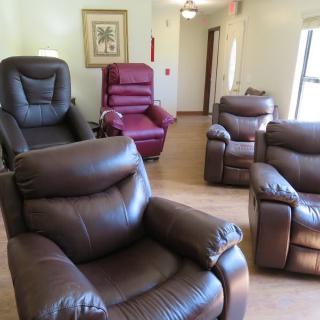
Caring Manor
$3,000 to $3,800 / month4.6 miles away -
from -$250 / mo
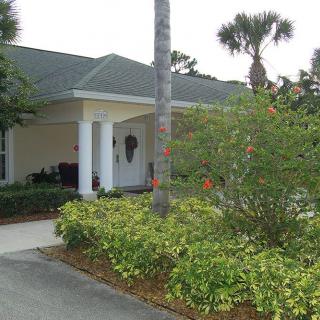
Pelican Garden Assisted Living
$2,750 to $3,500 / month23.4 miles away -
from +$500 / mo
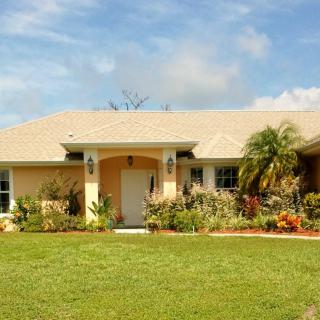
R and C Ultimate Care
$3,500 to $4,000 / month10.1 miles away -
from -$500 / mo
Good Heavens AFCH
$2,500 / month22.8 miles away
Overall Review of Grammy's House
Pros
 Val, the owner and administrator, is highly responsive and ensures the plan of care is calibrated just right with the team working cohesively for residents.
- The staff, including Skarling, May, Glenny and Teres, are part of a caring team that supports residents.
- Weekly activities include massages, manicures, pedicures, art and music therapy for residents.
- Medications are administered accurately with no mishaps.
- The setting is a very personal, intimate home-like environment, reminiscent of the Golden Girls, where a resident can feel at ease.
- Grammy's house is highly recommended as an ideal place for a parent to live out their final years.
- The homey atmosphere encourages residents to participate and fosters a sense of community, with family members welcome to join activities and outings.
- There is no additional charge for these features.
Cons
 The reviewer in the medical field would not recommend the facility, noting it favors self-care clients and suggests moving a loved one elsewhere when more care is needed.
- They allege that the staff have no nursing background and lack common sense.
- They claim medications were given to the loved one without informing the family, which increased memory issues.
- They report finding their loved one soiled in a pull-up during visits, requiring cleanup.
- They say the facility would complain about providing increased care and urge families to find another home.
Review
Grammy's House in Melbourne, Florida is best suited for seniors who want a genuine, home-like living experience with highly attentive, hands-on oversight from a small leadership team. The setting feels intimate rather than institutional, a place where daily routines resemble a well-loved home, not a hospital corridor. Families seeking meaningful daily interaction, personalized care plans, and coordinated support across caregivers will find this community aligns with that vision. The model works especially well for residents who appreciate scheduled activities and social engagement as core elements of daily life and who are comfortable with family members participating in outings and enrichment experiences alongside staff. In short, this community targets older adults who prize warmth, familiarity, and a sense of belonging over clinical efficiency alone.
Alternatives should be considered for loved ones with higher medical or nursing needs. The model described here emphasizes a home-like approach with tailored plans, but it is not positioned as a facility with full-time licensed nursing oversight or advanced continence management. Families facing frequent medication adjustments, complex wound care, or significant incontinence needs may require a setting with stronger clinical staffing, on-site nursing, and more comprehensive medical protocols. Similarly, residents who require routine, professional monitoring for memory issues or behavior challenges may not receive the level of clinical redundancy some caregivers expect in a larger facility. These factors point toward exploring other options when intensive medical support is essential.
Where Grammy's House earns trust is in the day-to-day reliability and personal attention. The owner and administrator are described as highly responsive, and the care plan is adjusted as needed to fit each resident, with the wider caregiving team working in concert to implement those changes. Activities are a regular feature, weekly massages, manicures, art and music therapy, that add value beyond basic supervision and create a meaningful rhythm to the week. The setting lends itself to fewer transfers, more continuity, and a sense that the resident is seen as a person rather than a task. Medication management, at least in several accounts, is smooth and well-documented, contributing to overall confidence in the operation when a family cannot be physically present every day.
However, the negatives cannot be ignored. A skeptical perspective notes a lack of nursing expertise on-site and suggests that the facility may deprioritize residents who require substantial increased care. Allegations of staff lacking clinical judgment and scenes of care gaps, such as delayed or undisclosed medication changes and a resident ending up soiled, raise questions about how contingency needs would be handled in a real health crisis. These concerns imply that, when the resident's condition worsens or new medical orders arrive, the home may redirect care planning back toward the family rather than scaling up professional support. That risk is nontrivial and must be weighed against the positives when a high bar for clinical oversight is non-negotiable.
From a practical standpoint, Grammy's House rewards families who want a tightly knit community with predictable routines and visible staff involvement. The lack of a formal clinical footprint is offset somewhat by the owner’s proactive communication, the cohesive team approach, and the clear value placed on social and therapeutic activities that keep residents engaged. For families who cannot, or choose not to, outsource every aspect of daily living, the hands-on model reduces friction and confusion. Costs around activities tend not to be a separate hurdle, which can translate into straightforward budgeting. Still, the decision should rest on the comfort level with care intensity and the capacity to step in when medical or behavioral needs escalate.
Bottom line: Grammy's House is a compelling choice for families prioritizing an intimate, home-like atmosphere, strong resident engagement, and active family involvement, provided the loved one does not require aggressive medical management. It is ideal for those who value consistent personal attention, predictable routines, and a setting that feels more like a family home than a care facility. For anyone facing ongoing incontinence care demands, complex medication regimens, or the need for licensed nursing staff on-site, alternatives with deeper clinical resources should be explored. Prospective families should schedule a thorough on-site assessment, ask for a detailed plan of care, verify nurse staffing levels, and discuss contingency plans for rapid escalation of medical needs before making a commitment.
 Board and Care Home
 Activities off-site
 Bath tubs
 Devotional services off-site
 Indoor common areas
 Outdoor common areas
 Private
 Private bathrooms
 Respite or short term stays offered
 Melbourne International (2 miles away)
 Ambulatory care
 Diabetic care
 Incontinence care
 Medication management
 Kosher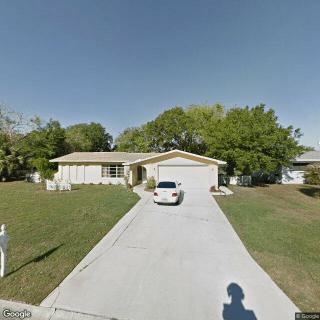


 6 Crucial Ways an Elder Law Attorney Assists Families
 Navigating the Tax Landscape of Caregiving: Credits, Deductions, and Beyond
 Highly Beneficial Low-Impact Exercises for Senior Living Residents