
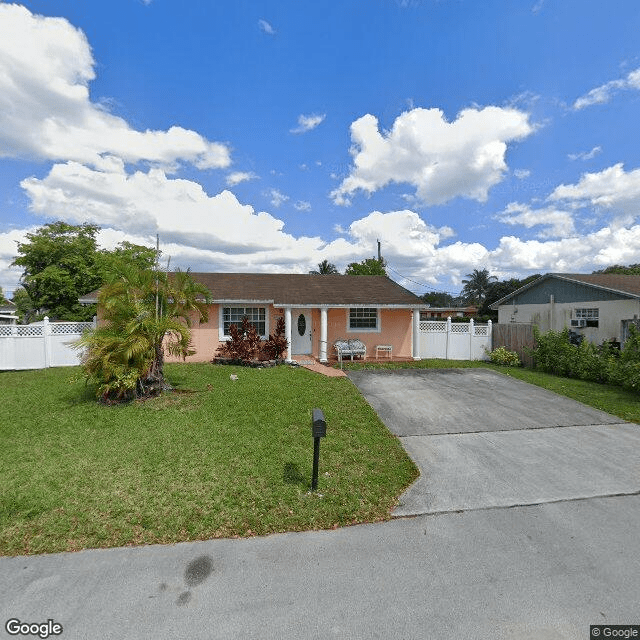
1813 SW 96th Ave, Miramar, FL 33025
To contact a resident: (954) 401-4198
For more information about senior living options: (866) 208-4318
Overall Review of Englishanne's Prestige Care, Inc
Pros
 Prestige Care offers highly individualized, home-like care that meets each resident’s needs.
- Roman and the staff are described as amazing, compassionate, and dedicated to residents.
- The facility is small, cozy, clean, and well-maintained, enabling personalized attention.
- Residents and families note rapid improvements in well-being and happiness under Prestige Care.
- The home feels like family, with staff treating residents with love, respect, and empathy.
- The care team communicates clearly with families about medical and daily needs.
- Prestige Care is repeatedly praised as one of the best ALFs in the area and is highly recommended.
- The environment is welcoming, safe, spacious, and pleasant, with appealing outdoor areas and views.
Cons
 Her needs were not adequately addressed, and her health rapidly declined at the previous facility.
- The other facilities she visited never took the time to care for him properly or be as involved in his care.
- A reviewer notes a con: he is “too nice,” and the pay is an issue.
- Before moving to Prestige, she was in bed 24 hours a day.
Review
Englishanne’s Prestige Care in the Miramar/Aventura area is best suited for families seeking an intimate, home-like assisted living experience where care is highly personalized and led by a hands-on owner. This community shines for residents who benefit from a small, boutique setting, where staff attention feels continuous and tailored rather than routinized by a large campus. It suits seniors whose needs are significant but not yet best served by a hospital-like environment, and for families that value transparent communication, frequent updates, and a sense of family involvement in daily caregiving.
There are clear alternatives worth considering for families whose loved ones require different dynamics. Larger assisted living facilities may offer broader activity calendars, more on-site medical staff, or dementia-specific programming that this small operation does not emphasize. For those needing intensive clinical oversight, advanced wound care, or memory-care specialization with dedicated rooms and staff, a bigger campus could be a better match. Families seeking a more institutional atmosphere or residents who crave frequent social events on a busier campus may also prefer other options.
The strongest pros center on deeply personalized, compassionate care delivered in a warm, residential vibe. The owner, Roman, is repeatedly described as hands-on, accommodating, and genuinely invested in each resident’s well-being. Families report that care extends beyond basic duties, with staff who treat residents as part of a caring family rather than as mere beds. The home-like setting, clean, bright, and with a pleasant outdoor space, bolsters dignity and comfort. Residents are frequently seen thriving under daily encouragement, and families note meaningful improvements when transitioning from larger facilities. Regular updates, sometimes with photos, give families confidence in ongoing support for medical and daily needs.
These strengths offset potential drawbacks because the boutique model hinges on vigilance, communication, and flexibility. The small footprint enables rapid adjustments to a loved one’s routine, diet, and activity level, and it makes the care team unusually accessible to families who wish to stop by unannounced or to receive candid progress reports. The down side of a smaller operation is the limited pool of on-site medical resources and a lighter cadre of specialists compared with bigger campuses. Yet the owner’s proactive involvement and the staff’s reported consistency help mitigate those gaps; families feel seen, heard, and empowered to participate in care decisions, which is precisely the offset that matters most for many seniors and their loved ones.
In practice, the decision comes down to matching expectations with the reality of a small, attentive environment. Prospective families should verify staff-to-resident ratios, assess the severity of any memory or medical needs, and observe how the team handles urgent questions or transitions. Interview current families or residents about how care plans are communicated, how often medical updates arrive, and whether meals and activities align with the loved one’s preferences. A tour should emphasize the home’s cleanliness, safety features, and whether the outdoor space supports meaningful interactions and quiet respite. One notable note from the community is that while compassion is abundant, pay discussions hint at a more modest overhead versus larger operators, an operational reality that appears unlikely to undermine daily care, but worth understanding in terms of staffing stability.
The bottom-line recommendation is clear. Englishanne’s Prestige Care is the top pick for families seeking a truly intimate, affection-driven setting where owners and staff behave like a close-knit family and where residents receive individualized attention in a comfortable home environment. It is less suitable for families needing extensive medical architecture, broad clinical programs, or dementia-specific infrastructures found in larger campuses. For those weighing options in the Miramar area, a focused tour should be scheduled with Roman to gauge how well the atmosphere, responsiveness, and daily rhythms align with a loved one’s needs. When the goal is steady, compassionate care delivered with transparency and a genuine sense of belonging, this community stands out as a practical, experienced, and dependable choice.
 Board and Care Home
 Fort Lauderdale-Hollywood International (9 miles away)

 Understanding the Sandwich Generation: Stress and Responsibilities for Multigenerational Caregivers
 8 Essential Assistive Devices for Older Adults
 Navigating the Financial Road to Nursing Home Care: In-Depth Guidance and Resources