
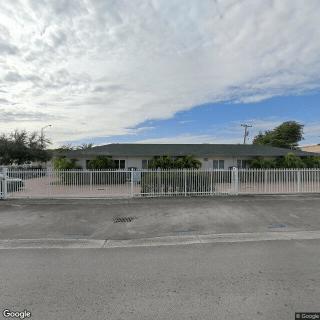
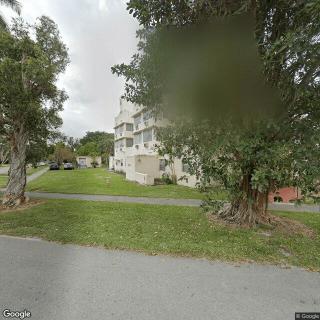
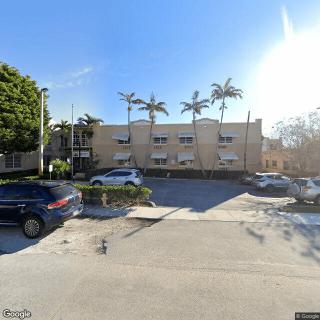
182 West 9Th Street, Hialeah, FL 33010
For more information about senior living options: (866) 208-4318
Overall Review of Villa Rosa I
Pros
 Amanda and her staff are attentive and caring toward residents' needs.
- The facility's cleanliness is outstanding and beyond description.
- The care provided helps residents thrive.
- Villa Rosa 1 is highly recommended for families seeking care.
- The staff consistently goes the extra mile.
- The facility is described by reviewers as the best Assisted Living Facility by far.
Cons
 Some of the nurses are amazing, but not all.
- The workers don't understand her dietary needs after the gastric bypass and treat her like every other resident.
- They won't let her have a small refrigerator in her room simply because it is not a private room.
- Her insurance doesn't cover a private room.
- The private room costs around 4,000 dollars, which she can't afford.
- She has never been able to work because of her disability.
- It is not fair how they treat others who receive bigger checks more favorably.
Review
Villa Rosa I in Hialeah is best suited for families that want a hands-on, caregiver-led atmosphere where cleanliness and personal attention are non-negotiable. It works well for residents who respond positively to an administrator who is visibly involved in daily operations and who trust a staff culture that consistently goes the extra mile. The community rewards those who are comfortable with standard room configurations and value a warm, tightly managed environment over a glossy, impersonal setting.
Those considering alternatives are likely to be families with strong preferences for guaranteed private rooms, or for residents whose needs hinge on flexible room policies and highly specialized accommodations. The most telling caveat is inconsistency in staffing perceptions, one reviewer notes that some nurses shine while others do not, coupled with rules about private-room status that constrain simple conveniences, such as in-room refrigeration for medical or dietary needs. For families relying on private-room access funded by insurance, or for residents who require constant, uninterrupted privacy and rapid, tailored responses to complex medical or dietary schedules, other Communities may deliver more predictable outcomes.
On balance, the positives at Villa Rosa I carry substantial weight. Admired leadership and a palpable culture of care translate into high resident morale and a reassuring sense of safety for families. Cleanliness is repeatedly highlighted as outstanding, creating an environment where daily life feels orderly and dignified. The sentiment that “this is the best Assisted Living Facility by far” for many speaks to a core strength: a team that tends to residents with genuine attentiveness and a willingness to exceed expectations. These factors help offset some of the friction that can arise from room-policy constraints and occasional staff variation.
However, the main drawbacks cannot be dismissed. The most publicized concern is the room policy itself, the cost and availability of private rooms, and policy restrictions that limit practical needs for individuals with medical or dietary requirements. When a resident has a recent gastric bypass and needs to eat on a strict schedule, the inability to secure a small refrigerator in a non-private room becomes a tangible obstacle. Additionally, the financial hurdle associated with upgrading to private accommodations, reported around several thousand dollars, adds a barrier that can undercut a family’s sense of fair treatment and access to necessary comforts. These issues signal that the care experience at Villa Rosa I hinges as much on policy flexibility and financial fit as on caregiver excellence.
To make a sound decision, families should verify several practical points before committing. First, confirm what private-room options exist, what is included in base pricing, and whether exceptions can be made for medically necessary equipment. Second, assess how the facility handles dietary and medical exceptions, and whether staffing patterns ensure consistent quality across shifts. Third, request an opportunity to meet the administrator and multiple care staff across different days and times to gauge consistency and communication. Finally, observe and question how policies impact daily living, refrigeration, meals, and privacy, so the chosen path aligns with the resident’s needs and the family’s budget.
Bottom line: Villa Rosa I stands out as a compelling choice for families prioritizing leadership, cleanliness, and a compassionate, high-touch care culture. It excels where residents thrive under attentive oversight and a respectful, well-maintained environment. Yet it is less ideal for those requiring guaranteed private accommodations or seamless accommodation of medical/dietary needs within a shared room framework, especially when budget constraints loom. When the family’s values center on strong leadership and a warm, orderly setting, and the plan accounts for private-room realities and associated costs, the community offers a trustworthy, practical home where residents can truly flourish.
 40 resident community capacity
 Assisted Living
 Activities on-site
 Beauty salon
 Cable or satellite TV
 Devotional services off-site
 Dining room
 Fully furnished
 Garden
 Housekeeping services
 Indoor common areas
 Kitchenette
 Move-in coordination
 Outdoor space
 Telephone
 Wi-Fi/high-speed internet available
 Miami International (3 miles away)
 24-hour call system
 Ambulatory care
 Assistance with bathing
 Assistance with dressing
 Assistance with transfers
 Diabetes diet
 Diabetic care
 Meal preparation and service
 Medication management
 Mental wellness program
 Special dietary restrictions
 Transportation arrangement (medical)
 Transportation to doctors appointments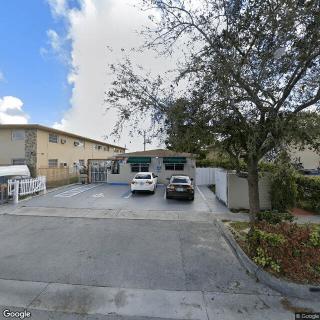



 Exploring the Contrasts Between Assisted Living and Skilled Nursing
 8 Key Indicators That Suggest It May Be Time to Transition from Assisted Living to Skilled Nursing Care
 Vibrant Senior Living: A Comprehensive Guide for Active Older Adults