
6609 North Us Highway 1, Fort Pierce, FL 34946
For more information about senior living options: (866) 208-4318
Aurora Of The Treasure Coast Costs & Pricing
Aurora Of The Treasure Coast offers competitive pricing for its various room types compared to both St. Lucie County and the broader state of Florida. For a semi-private room, residents can expect to pay $2,600 per month, which is notably lower than the county average of $2,717 and the state average of $3,009. In terms of one-bedroom accommodations, Aurora's rate of $3,800 is slightly above the county's average of $3,747 but remains comparable to the state rate of $3,864. Additionally, the studio option at Aurora costs $4,400 per month - this is higher than both the county's average of $3,880 and Florida's average of $3,823. Overall, while certain room types may be on the higher end in relation to local averages, Aurora Of The Treasure Coast still presents a compelling choice for potential residents seeking quality care in a welcoming environment.
| Floor plans | Aurora Of The Treasure Coast | St. Lucie County | Florida |
|---|---|---|---|
| Semi-Private | $2,600 | $2,717 | $3,009 |
| 1 Bedroom | $3,800 | $3,747 | $3,864 |
| Studio | $4,400 | $3,880 | $3,823 |
Assisted Living communities with a similar price nearby
-
from +$400 / mo
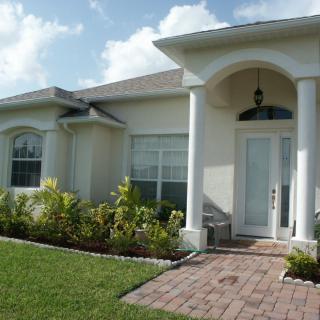
A Touch of Class Adult Care
$3,000 to $3,500 / month11.8 miles away -
from +$150 / mo
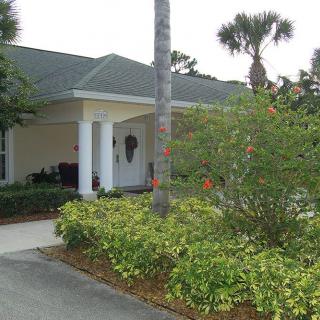
Pelican Garden Assisted Living
$2,750 to $3,500 / month23.1 miles away -
from -$300 / mo
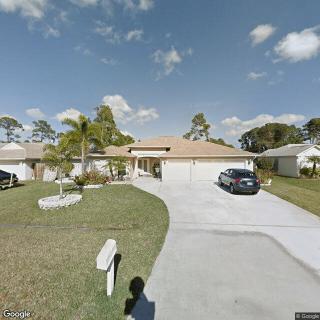
Nelisha Family Home
$2,300 to $4,500 / month16.4 miles away -
from -$335 / mo

Indian River Estates East
$2,265 to $2,490 / month15.8 miles away -
from -$274 / mo
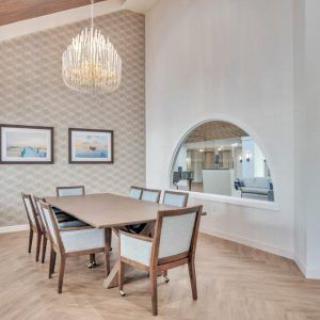
Discovery Village Vero Beach
$2,326 to $3,400 / month14.8 miles away
Overall Review of Aurora Of The Treasure Coast
Pros
 They cater strictly to APD clients.
- Residents have chosen to live there for over 10 years.
- This place is amazing.
Cons
 They claim the place caters strictly to APD clients.
- They criticize the exclusivity toward APD clients as a drawback.
- They feel that catering exclusively to APD clients makes the place less welcoming.
Review
Aurora Of The Treasure Coast in Fort Pierce is best suited for adults with developmental disabilities or related needs who require long-term, highly structured residential support. The community’s niche is clearly APD clients, and the resident profile shows remarkable longevity, most people stay for a decade or more by choice. For families who prize consistency, reliable routines, and caregivers who speak the language of APD-support, this facility delivers a remarkably stable home base. The upside is a level of predictability that makes daily life easier to navigate for someone who benefits from clear expectations, familiar staff personalities, and a shared culture of care.
Those without APD needs or those seeking flexible, casual, or highly varied programming should look at alternatives. If the goal is to maximize independence, accommodate a wider range of activities, or shorten the commitment horizon, other communities designed for general assisted living or memory care may better fit. Aurora’s strength is a deep, service-specific focus; its constraints are the natural corollaries of that specialization. Families must weigh the comfort of a specialized environment against the desire for broader social adventures or shorter, more modular care plans.
Where the positives shine, the practical impact is clear: staff trained in APD-specific care, dependable routines, and a resident cohort that understands and reflects the same supportive expectations. Long-tenured residents create a built-in peer network that reduces isolation and fosters belonging, which in turn lowers daily stress for both residents and families. The result is a foundation that makes day-to-day living smoother, less chaos, fewer transitions, and more time for caregivers to focus on meaningful tasks rather than repetitive onboarding. In this sense, the program’s focus itself becomes a meaningful advantage.
Those advantages, however, must be weighed against the reality of a narrower service envelope. The same APD orientation that sustains stability can translate into slower adoption of new activities or optional programs that appeal to a broader audience. Families should expect a caregiving approach that prioritizes predictable routines, safety, and adherence to established care plans over bold, improvisational programming. The trade-off is straightforward: reduced novelty and flexibility in exchange for clearer expectations, fewer family-initiated surprises, and a higher likelihood that staff know exactly how to respond to a resident’s unique patterns.
Nevertheless, the core drivers, reliability, continuity, and a focused care framework, tend to offset these potential drawbacks. A strongly APD-aligned staff team can anticipate needs, coordinate with agencies, and maintain a steady cadence of tasks that supports independence within defined boundaries. Residents remain where they feel seen and understood, which often translates into better mood, greater participation in daily activities, and less caregiver turnover than would be expected in a more general setting. For families, this translates into peace of mind about safety, routine, and the quality of daily interactions.
Decision-makers should approach Aurora Of The Treasure Coast with a clear checklist: confirm the scope of APD services and staffing ratios, request a day-in-the-life sample, and talk through house rules, autonomy levels, and discharge planning. Compare this with nearby options that offer broader programming or shorter commitment horizons if those factors are critical. If APD-aligned support, stability, and a tight-knit community matter most, this Fort Pierce community stands out as a disciplined, trustworthy choice. It is not a generic assisted-living option; it is a targeted environment built around a specific resident profile, and for families aligned with that profile, it can be an exceptionally sound decision.
 16 resident community capacity
 Assisted Living
 Cable or satellite TV
 Dining room
 Fully furnished
 Garden
 Housekeeping services
 Move-in coordination
 Outdoor space
 Telephone
 Wi-Fi/high-speed internet available
 24-hour supervision
 Activities of daily living assistance
 Assistance with bathing
 Assistance with dressing
 Assistance with transfers
 Diabetes diet
 Meal preparation and service
 Medication management
 Special dietary restrictions
 Transportation arrangement (medical)
 Transportation to doctors appointments

 Comprehensive Insights into Activities of Daily Living (ADLs) and Their Assessment
 Guiding Elderly Parents Who Refuse Assisted Living: 6 Practical Steps
 Your Comprehensive Guide to Luxury Assisted Living: Elevated Facilities, Amenities, and Costs