
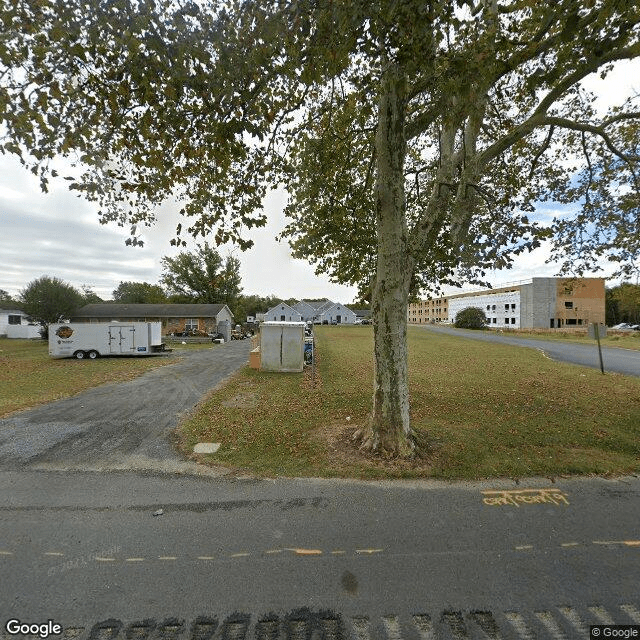
26900 Lewes Georgetown Highway, Harbeson, DE 19951
To contact a resident: (302) 684-4002
For more information about senior living options: (866) 208-4318
Overall Review of Peach Tree Acres Assisted Living
Pros
 The family notes that their son, a traumatic brain injury survivor, fell in love with Peach Tree and with its staff and clients.
- He now has a room there and is very happy to be on his own.
- The family has nothing but praise for the staff, the clients, and the overall facility.
- The place is described as great, clean, and safe for a loved one.
- The parents believe letting him grow and be happy at Peach Tree was the right choice.
Cons
 The parents found it hard to let go of their son.
- Letting go caused emotional hardship for the parents as they tried to balance growth and happiness for him.
- The transition was emotionally challenging for the family.
Review
Peach Tree Acres Assisted Living in Harbeson, Delaware is best suited for an adult who can live with independence while thriving in a small, supportive, and social community. The clearest takeaway from the available experience is that a Traumatic Brain Injury survivor found the environment appealing and sustaining: the resident connected with both peers and staff, moved into a room, and embraced a level of autonomy described as being “on his own.” That combination, clean surroundings, a safety-focused atmosphere, and a welcoming, engaged caregiver team, creates a practical home for someone who values companionship and a stable daily rhythm without requiring full-time skilled nursing.
Families should consider alternatives if a loved one needs higher medical acuity or specialized cognitive care. The single glowing report does not address memory-care specific programming, 24/7 nursing oversight, or complex medical needs. For residents who require intensive supervision, frequent rehabilitation services, or dementia-focused support, other communities with larger staffs and more formal medical pathways may be a better fit. It’s prudent to compare Peach Tree Acres against facilities that explicitly advertise higher levels of medical oversight and structured cognitive-care plans.
The strongest pros lie in the basics: a clean, safe setting; attentive staff; and a small, neighborly resident mix that lends itself to social engagement. The reviewer’s praise for the staff, clients, and overall facility points to a lived experience where daily life feels manageable and companionable. The resident’s reported happiness with living “on his own” signals that autonomy is respected here, while the presence of friendly, engaged peers and reliable daily routines helps anchor independence in a real, lived environment.
Given those advantages, the main trade-off becomes obvious. An assisted-living setting like Peach Tree Acres typically emphasizes independence with supportive services rather than heavy medical or rehabilitative care. For a family weighing options, the implied balance is favorable for residents who are stable, sociable, and capable of self-care with light assistance, but less suitable for those who need continuous medical monitoring, extensive therapy, or memory-dense programming. The absence of explicit downsides in the review should be interpreted with caution: a single perspective offers a positive but narrow snapshot.
From a practical decision-making perspective, prospective residents or their families should pursue a firsthand visit and targeted questions. Confirm room options, discuss meal programming, activity calendars, and transportation arrangements, and probe the staff-to-resident ratio during peak hours. Inquire about medication management, emergency procedures, and what levels of nursing support are available on site. If the loved one has a history of behavioral complexities or requires structured cognitive activities, seek clarity on memory-care offerings and whether staff are trained to handle those needs.
In the end, Peach Tree Acres stands out as a strong match for families seeking a clean, safe, and personable home that supports independence within a warm community. The best-fit resident is the individual who values social connection, can manage daily living with light assistance, and benefits from a devoted staff that treats residents with respect and attentiveness. For those whose loved ones require more intensive clinical care, it is wise to explore alternatives with explicit medical and cognitive-care capabilities. A direct visit, guided by a clear list of priorities, will reveal whether Peach Tree Acres aligns with the specific care trajectory and budget, and whether its demonstrated strengths translate into sustained peace of mind.
 19 resident community capacity
 Assisted Living
 Board and Care Home
 Activities on-site
 Cable or satellite TV
 Devotional services off-site
 Dining room
 Fully furnished
 Garden
 Housekeeping services
 Indoor common areas
 Move-in coordination
 Outdoor space
 Telephone
 Wi-Fi/high-speed internet available
 24-hour supervision
 Ambulatory care
 Assistance with bathing
 Assistance with dressing
 Assistance with transfers
 Diabetes diet
 Diabetic care
 Meal preparation and service
 Medication management
 Special dietary restrictions
 Transportation arrangement (medical)
 Transportation to doctors appointments

 Comprehensive Insights into Activities of Daily Living (ADLs) and Their Assessment
 Medicare Coverage for Assisted Living: An In-Depth Exploration
 Choosing the Right Senior Care: A Detailed Exploration of Assisted Living and Nursing Homes