

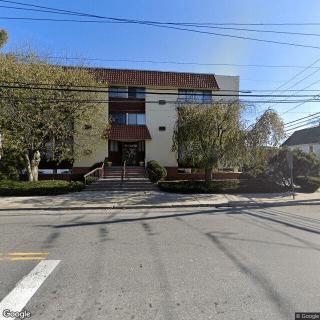
68 Southfield Ave., 2nd Floor, Stamford, CT 06902
To contact a resident: (203) 348-1900
For more information about senior living options: (866) 208-4318
Overall Review of Maxim Healthcare
Pros
 It is a great spot for meetings.
- They offer nice customer service.
- Business owners can run their business there and feel completely comfortable.
Cons
 The tenant management is poor.
Review
Maxim Healthcare in Stamford, CT is best suited for families seeking a flexible, service-driven environment where care coordination happens with ease. It is ideal for visiting caregivers, clinicians, and family members who need a convenient, non-institutional setting to meet, discuss plans, and align on home-health services. This is not a traditional residential campus; it functions more as a hub that supports external care teams and private conversations while remaining accessible to clients and their families who value straightforward access and professional ambiance.
Positive attributes show through in the reviews: the space is described as welcoming, with strong customer service and a comfort level that makes professionals feel at ease. A recurring takeaway is that staff responsiveness and courtesy help families feel supported during the often stressful process of arranging home-health support. The ability to host meetings or private consultations comfortably enhances coordination, reduces back-and-forth, and helps align expectations among family members, the agency, and any medical professionals involved. For families navigating complex care plans, this environment can materially reduce friction and speed up decisive conversations.
Yet the standout drawback is a singular but pointed concern about management of tenants or space, flagged as “poor tenant management” by one reviewer. That warning suggests potential gaps in consistency, scheduling reliability, or upkeep that can erode confidence over time. For families relying on predictable access for regular visits or for sessions that require a stable, well-organized environment, this weakness can translate into missed appointments, delays, or friction in care planning. It is the kind of issue that compounds risk when care decisions hinge on timely coordination and dependable space access.
How the positives balance against the negatives hinges on the core need: if the priority is effortless access to empathetic staff and a business-friendly venue for coordinating care, the strengths can significantly offset the drawbacks. The welcoming atmosphere and high level of service reduce the cognitive load on families and providers alike, helping to establish trust quickly. However, the reliability problem cannot be dismissed; it undercuts the very purpose of a centralized care coordination point, potentially forcing families to chase updates or seek alternatives when schedules drift. In practical terms, care planning hinges on a predictable rhythm, and that rhythm may be imperfect here.
Families who should consider alternatives are those needing a more conventional assisted-living environment: on-site housing, around-the-clock care, structured daily programming, and transparent management of residents and leases. If the plan is to rely on the space as a hub for external caregivers, that may work, but only if management demonstrates consistent occupancy and operations. For seniors requiring predictable routines, safety supervision, medication oversight, and a longstanding on-site presence, traditional assisted living communities with established on-site staff and clearer tenancy policies are worth exploring. The contrast matters when long-term housing stability and daily structure are non-negotiable.
Practical next steps include arranging visits at different times to observe how the space functions in practice, asking pointed questions about what “tenant management” covers, and requesting references from other families who used the site for care coordination. Clarify what services are actually provided on site versus via partner agencies, confirm hours for meetings and visits, and review any contracts or usage agreements for transparency on costs and responsibilities. Taken together, Maxim Healthcare offers a compelling, service-focused option for care coordination, but decision-makers should weigh the ease of access and supportive service against the risk of inconsistent management and plan accordingly or compare with other traditional assisted-living options.
 Westchester Cty (9 miles away)





 Fecal Incontinence in Older Adults: A Comprehensive Guide
 Recognizing the Journey: Understanding and Navigating Anticipatory Grief
 Encouraging Participation in Adult Day Care: A Guide to Supporting a Hesitant Parent