
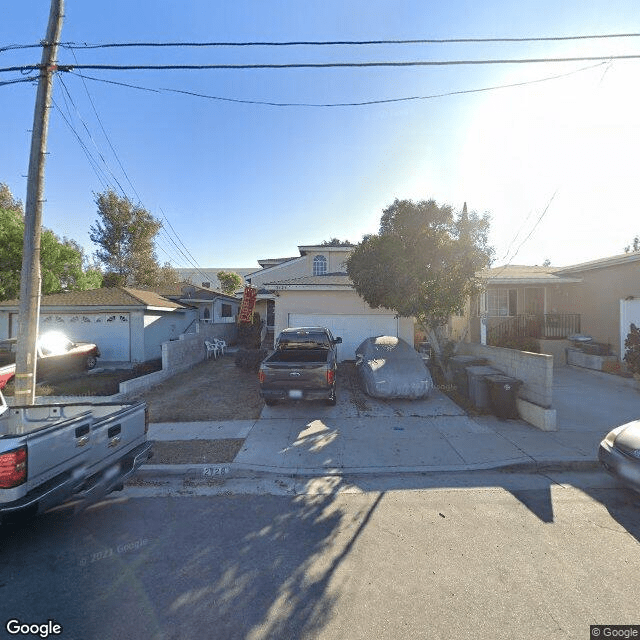
2128 Del Amo Blvd, Torrance, CA 90501
To contact a resident: (310) 328-2733
For more information about senior living options: (866) 208-4318
Overall Review of Spirit Home Health Care
Pros
 Spirit's staff understands brain injuries.
- Amanda, the Speech-Language Pathologist, forms a priceless relationship with Ellen and makes therapy valuable.
- Brian, the physical therapist, and Brandi, the occupational therapist, are educated and thoughtful.
- Spirit Home Health provides special care that supports Ellen's recovery toward independence.
- Amanda, the SLP, is especially effective in working with Ellen on aphasia.
Cons
 They found substantial incompetence and an inability to understand brain injury patients' care at University of Cincinnati, Drake LTAC, and Encompass inpatient rehab.
- The facilities were perceived as lacking understanding of brain injury patients' needs, reflecting poor care.
- The care described was marked by incompetence and a failure to understand how to care for brain injury patients.
Review
Spirit Home Health Care in Torrance is best suited for adults emerging from brain injury who need purposeful, hands-on rehabilitation delivered at home. The care team shown in the experience is not generic or clinic-bound; it is deeply knowledgeable about brain injuries and focused on building meaningful therapeutic relationships. The standout is the Speech-Language Pathologist, Amanda, who takes time to connect with Ellen, treating aphasia with more than cookie-cutter exercises and a clipboard full of prompts. That same level of attention extends to Brian, the physical therapist, and Brandi, the occupational therapist, whose education and thoughtful approach translate into therapy that feels valuable rather than routine. For families seeking progress through personalized, brain-injury–savvy therapy in a familiar setting, Spirit is a clear fit.
Those who should consider alternatives are families needing heavier 24/7 supervision or a more traditional, facility-based rehab track. If the patient requires an on-call medical team around the clock, or if a robust inpatient continuum with constant medical oversight is essential, a hospital-based or LTAC setting may be more appropriate. Additionally, if the plan calls for concentrated, high-intensity rehab milestones that benefit from a larger in-person network and more frequent clinical rotations, an in-clinic program could be a better match. In short, Spirit excels when home-based, specialized brain-injury rehab is the priority; for a model leaning more on 24/7 facility resources, alternatives deserve consideration.
The strongest pro, the deep, specialized brain-injury therapeutic capacity, readily offsets the typical drawbacks of home health. The care team’s ability to understand brain injuries goes beyond surface-level expertise, turning therapy into a targeted, theory-driven process rather than mere routine exercises. The relationship-driven approach matters: Amanda’s rapport with Ellen makes therapy intrinsically more engaging and meaningful, which in turn drives better outcomes in language and cognitive-recovery goals. The therapists’ willingness to tailor sessions, avoiding overreliance on computer programs or generic printouts, further compounds the benefit, turning daily sessions into purposeful steps toward independence rather than stopgap care.
Amanda, Brian, and Brandi exemplify a therapy triad that prioritizes real-world relevance and patient- and family-centered goals. The SLP’s focus on aphasia, the PT’s practical mobility work, and the OT’s functional adaptations converge to support a recovery arc that feels personal and achievable. This is not a program that measures progress only in checkboxes; it is a dynamic process where therapists adjust tasks to Ellen’s evolving strengths and challenges. The result is a home-based plan that preserves autonomy, reduces frustration, and conveys genuine optimism about what independence could look like in daily life.
The impact on the family and daily planning is palpable. The reviewer contrasts Spirit’s care with experiences elsewhere, implying a level of competence and empathy that was missing in inpatient settings, thereby amplifying confidence in continuing home-based rehab. That sense of consistency and partner-ship matters for long-term outcomes: it lowers caregiver stress, clarifies expectations, and creates a reliable pathway toward meaningful recovery in a familiar environment. Torrance’s location also means convenient access for families in the greater Los Angeles area, minimizing the burden of frequent, disruptive transitions.
In sum, Spirit Home Health Care stands out for adults with brain injury who crave a home-based, highly skilled, and relationship-centered rehab experience. The core message is practical and precise: when the objective is genuine progress toward independence through brain-injury–savvy therapy performed in a patient’s own home, Spirit’s team delivers. Families should verify the clinicians’ brain-injury credentials, request a clear, goal-oriented care plan, and discuss how therapy will adapt as needs evolve. For those whose needs lean toward intensive inpatient environments or round-the-clock medical supervision, alternatives should be weighed carefully; for others, Spirit offers a compelling, credible path back toward independence, grounded in expert care and committed relationships.
 Los Angeles International (8 miles away)


 Home Health Care Aides: Understanding Their Role and Supporting Your Family
 Urinary Tract Infections in Older Adults: Comprehensive Insights on Symptoms, Treatment, and Prevention
 California's Form 602A: An In-Depth Examination of Senior Care Assessment