
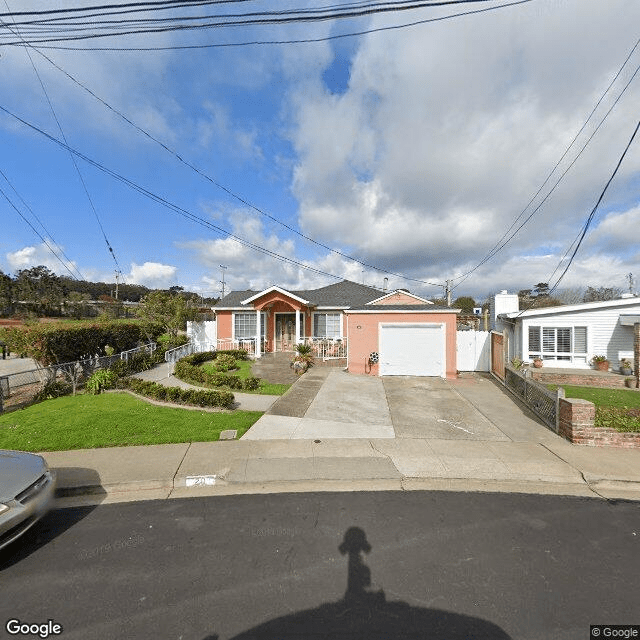
20 Elkwood Drive, South San Francisco, CA 94080
For more information about senior living options: (866) 208-4318
The Winston Manor Home Costs & Pricing
The Winston Manor Home offers competitive pricing for its services compared to both San Mateo County and the broader state of California. For semi-private rooms, residents pay $2,600 per month, significantly lower than the county average of $3,830 and the state average of $3,333. Similarly, private rooms at Winston Manor are priced at $3,000, which is more affordable than the San Mateo County rate of $4,281 and trails the California average of $3,939. Studio accommodations also reflect this value-oriented approach, with a monthly cost of $3,000 - well below San Mateo County's average of $5,178 and the state's average of $4,145. Overall, The Winston Manor Home stands out as an attractive option for those seeking quality care without compromising their budget in comparison to local and statewide competitors.
| Floor plans | The Winston Manor Home | San Mateo County | California |
|---|---|---|---|
| Semi-Private | $2,600 | $3,830 | $3,333 |
| Private | $3,000 | $4,281 | $3,939 |
| Studio | $3,000 | $5,178 | $4,145 |
Memory care communities with a similar price nearby
-
from -$100 / mo

San Carlos Elms
$2,500 to $5,880 / month15.5 miles away -
from -$100 / mo
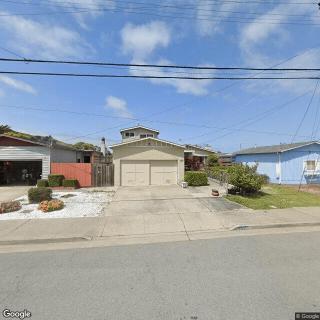
Oceanside Board and Care II
$2,500 to $3,000 / month3.7 miles away -
from +$200 / mo

Nobis Care Homes
$2,800 to $3,200 / month4.9 miles away -
from +$200 / mo

Peninsula Reflections
$2,800 to $9,040 / month0.5 miles away -
from +$400 / mo

Woodside Residential Care Facility For Elderly
$3,000 to $4,000 / month21.1 miles away
Overall Review of The Winston Manor Home
Pros
 They were very pleased with the home, the director, and the staff.
- The house was full of daylight.
- Everything was clean and organized.
- It was a very nice place.
Review
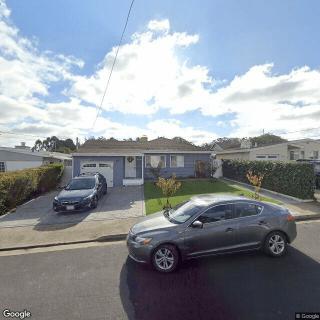
The Winston Manor Home in South San Francisco is best suited for seniors who prize a warm, home-like atmosphere with attentive, visible leadership and a bright, orderly living environment. The two published impressions consistently highlight a daylight-filled house, well-kept common spaces, and a sense of calm that most families associate with predictable daily life. For residents who want a small-community feel where staff visibility and a clean, organized setting are a daily reality, this community fits the bill. It is especially appealing to those who value a well-maintained home ambiance over sprawling campuses or highly specialized medical programming.
Those weighing alternatives should note that the limited feedback pool matters. With only two reviews and a 4-star overall rating, prospective families should be cautious about assuming a full picture of resident experience. Individuals seeking extensive social programming, comprehensive medical oversight, or specialized memory-care services may want to compare Winston Manor against larger facilities or those with documented programs in those areas. The absence of negative remarks in the current feedback does not automatically translate to universal satisfaction, more data, more perspectives, and a longer track record are prudent before making a final choice.
The most compelling pros are the obvious daily-life strengths: daylight as a defining feature of the home, a clean and organized environment, and a staff landscape that appears caring and professional under stable leadership. Daylight is not a cosmetic perk here; it supports mood, orientation, and activity engagement, which matters for seniors who spend a lot of time in common spaces or in light-filled private rooms. Cleanliness and organization are tangible safety accelerants, easy-to-navigate layouts, predictable housekeeping routines, and clear routines lower stress for residents and reduce caregiver strain. The presence of a capable director and attentive staff further strengthens reliability, offering a sense of accountability and consistent communication for families. Taken together, these elements form a practical, non-negotiable foundation that makes everyday living smoother and more dignified.
Where the narrative often leads to questions is in the absence of explicit drawbacks. The two favorable reviews provide no concrete grievances, but that silence should be interpreted as a caution rather than a guarantee. The real-world implications of a small sample size include potential gaps in meal variety, activity depth, and the nuance of care planning that only longer-running operations tend to reveal. For families evaluating Winston Manor, this means probing beyond surface impressions: inquire about resident-to-staff ratios across shifts, the specificity of daily schedules, the availability of transportation or in-house therapy services, and how emergency routines are exercised. It also demands direct conversations with the director about how care plans adapt to changing needs and how residents with different activity levels are accommodated.
To make a well-informed decision, visitors should structure a visit around practical tests and conversations. Observe one or two meals to gauge nutrition quality and portion sizes as well as flavor, texture, and meal pacing. Request a tour of a resident room and a peek at the private or semi-private accommodation, note lighting, ease of access to the bathroom, and ease of personal customization. Meet the director and several frontline staff, and ask for typical responses to common situations (disruptions, medical needs, or schedule changes). Review a sample care plan and ask about the process for updating it, as well as what benchmarks trigger referrals to higher levels of care. Finally, talk to current residents or families about perceived responsiveness and the consistency of daily routines.
The verdict for Winston Manor centers on a clear value proposition: a bright, clean, well-managed home that feels welcoming and well-staffed. It is a strong fit for seniors who want a peaceful, orderly environment with reliable leadership and a sense of daily normalcy. For families with higher needs, advanced medical oversight, intensive memory-care services, or a broader spectrum of daily activities, alternatives may be more appropriate, and those options should be explored early in the decision process. In short, Winston Manor offers solid daytime life, strong stewardship, and a compelling home atmosphere, but it warrants careful vetting for families whose loved ones require more specialized care or richer programmatic offerings.
 6 resident community capacity
 Assisted Living
 Board and Care Home
 Memory Care
 Cable or satellite TV
 Dining room
 Fully furnished
 Garden
 Housekeeping services
 Move-in coordination
 Outdoor space
 Private
 Respite or short term stays offered
 Telephone
 Wheelchair accessible showers
 Wi-Fi/high-speed internet available
 San Francisco International (6 miles away)
 24-hour supervision
 Activities of daily living assistance
 Assistance with bathing
 Assistance with dressing
 Assistance with transfers
 Diabetes diet
 Diabetic care
 High acuity care
 Incontinence care
 Meal preparation and service
 Medication management
 Special dietary restrictions
 Transportation arrangement (medical)
 Transportation to doctors appointments



 Estimating the Expenses of At-Home Dementia Care: A Detailed Exploration
 Comprehensive Insights on the Late Stages of Dementia: What to Expect and How to Provide Care
 Medications Associated with Dementia Risk: A Comprehensive Overview