
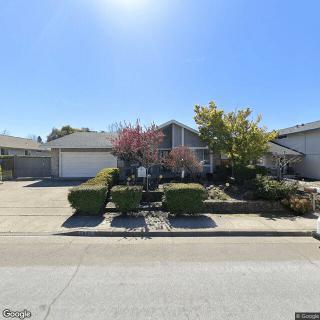
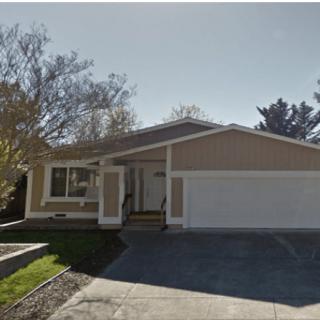
5705 Corbett Circle, Santa Rosa, CA 95403
For more information about senior living options: (866) 208-4318
Overall Review of Dolly's Manor
Pros
 He was moved to a much better facility.
- He ended up in a much better facility.
- The move marked a positive improvement in his care.
Cons
 The caregiver labeled him as mean and ignored him.
- He had dementia and the staff were not adequately trained to handle such patients.
- There was no emergency plan in place for him during a fire emergency, and the owner insisted someone pick him up to take care of him.
- The caretaker was on the phone or watching TV during visits and refused to take him out for a short walk when asked.
- Medications mailed to the residence were lost on more than one occasion.
- Unless someone visited, he was stuck in the house, very lonely, and not a priority to the staff.
Review
Dolly’s Manor in Santa Rosa is best suited for residents who are largely independent and require minimal daily supervision, with families who are willing to provide active oversight and advocacy. The account available paints a picture of a facility that struggles to deliver reliable dementia care or consistent support for residents who need ongoing supervision. For anyone with cognitive impairment, memory care needs, or a history of agitation, wandering, or responsiveness to routine, this community is unlikely to meet the core expectations of safe, compassionate care.
Those evaluating care options should explicitly consider alternatives if dementia care, predictable routines, and reliable safety measures are non-negotiable. Prospective families must be candid about the level of oversight they can provide and the extent to which staff responsiveness can be expected in daily life. If training in dementia-specific techniques, prompt incident response, and meaningful engagement are priorities, other communities with documented memory-care programs and trained staff will likely be a better fit.
In terms of balancing strengths against weaknesses, the review provides little in the way of redeeming factors. The absence of clearly stated positives makes it hard to justify this choice on any upside. The main concerns, staff that appears inattentive or distracted, a lack of structured activities or outdoor time, and a fragile approach to safety and emergencies, overwhelm any potential convenience of location or cost. Without visible advantages to counterbalance these flaws, the risk profile remains unacceptable for most families seeking steady, respectful care.
The most troubling aspects center on daily care and safety. A caregiver reportedly described a dementia patient as “mean” and then failed to engage, suggesting insufficient training in handling challenging behaviors. An emergency scenario revealed a glaring gap: there was no effective plan to manage a fire or other urgent event for a resident who requires supervision. The pattern of staff being preoccupied with personal calls or television rather than supervising residents further undermines safety, while medication that was mailed to the residence was lost more than once. Loneliness and isolation emerge as persistent themes, with residents seemingly relegated to the home unless a visitor is physically present.
From a decision-making standpoint, this review underscores concrete action points for families: verify staff training and competency in dementia care, demand a documented and practiced emergency plan, scrutinize daily activity programs and outdoor access, require reliable medication handling procedures, and observe staff interactions during regular visits. It is essential to speak with leadership about staffing ratios, turnover, and the facility’s approach to resident engagement. Cross-check licensing and complaint history, and compare with memory-care-focused communities in the area that offer structured routines, purposeful engagement, and clear accountability.
Ultimately, the verdict is decisive: Dolly’s Manor should be avoided by families seeking dependable, safety-forward dementia care or comprehensive assistance with daily living. The combination of inadequate behavioral management, unreliable emergency readiness, limited social engagement, and inattentive daily supervision creates a high-risk environment for vulnerable residents. If the priority is peace of mind and a care plan that can adapt to cognitive impairment, stronger options exist elsewhere. For families compelled to choose this community, prepare for rigorous oversight, frequent visits, and a willingness to intervene promptly to protect safety and well-being.
 6 resident community capacity
 Assisted Living
 Board and Care Home
 Cable or satellite TV
 Dining room
 Fully furnished
 Garden
 Housekeeping services
 Move-in coordination
 Outdoor space
 Telephone
 Wi-Fi/high-speed internet available
 24-hour supervision
 Activities of daily living assistance
 Assistance with bathing
 Assistance with dressing
 Assistance with transfers
 Diabetes diet
 Meal preparation and service
 Medication management
 Special dietary restrictions
 Transportation arrangement (medical)
 Transportation to doctors appointments



 Exploring the Contrasts Between Assisted Living and Skilled Nursing
 8 Key Indicators That Suggest It May Be Time to Transition from Assisted Living to Skilled Nursing Care
 Vibrant Senior Living: A Comprehensive Guide for Active Older Adults