
698 Zink Avenue, Santa Barbara, CA 93111
For more information about senior living options: (866) 208-4318
Overall Review of Abundant Care II
Pros
 The facility provides the best service and a personal approach for each resident.
- Abundant Care's staff are very nice and take excellent care of the residents.
- A visiting musician comes to play piano for the residents.
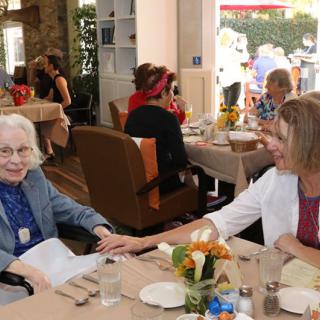
- The facility is lovely, with a beautiful outdoor area, and each room has its own bath and patio.
- Each room has its own control for heating and cooling.
- The meals satisfy residents, with no negative comments about the food.
- The facility is well run and receives no notable negative feedback.
Cons
 There is little for the six residents to do due to the small resident population.
- The caregiver-to-patient ratio appears low, with only one or two caregivers for six patients.
Review
Abundant Care II in Santa Barbara is best suited for seniors who want a truly intimate living arrangement where every decision feels personalized. With only six residents, care can be tuned to individual rhythms, preferences, and routines, without the noise and bustle of larger campuses. Residents enjoy private accommodations, each room includes its own bath and a patio, and climate control that can be adjusted room by room. The setting is pleasant: a well-kept facility with an inviting outdoor area where light activity can be pursued at a gentle pace. Staff are described as genuinely nice and caring, and the presence of a regularly scheduled piano musician keeps the atmosphere from feeling sterile. This combination makes it a strong match for someone who values predictability, dignity, and close staff relationships over breadth of programming.
That intimate scale, while a strength, also narrows the social calendar. With just six residents, opportunities for peer interaction can be limited, and days can feel quiet or repetitive unless family members or staff bring in outside activities. The reviews note a lean staffing model, typically one or two caregivers for six residents, so the day-to-day tempo can hinge on those few people. For a resident who thrives on constant stimulation, frequent group activities, or more robust social outlets, this setting may feel containing. For someone with demanding medical or mobility needs, or a desire for a built-in, on-site continuum of care, alternatives that offer larger teams and richer programming would likely be preferable.
Yet the positives are tangible and meaningful. The small community fosters a level of attentiveness rarely found on bigger campuses: caregivers can learn preferences, routines, and dietary quirks and honor them consistently. The staff’s demeanor matters here, polite, patient, and dependable, because residents stay more than a year in many cases. The property’s features, private in-room baths and patios, individual climate control, and a welcoming outdoor environment, translate into real daily comfort. The occasional live piano performance adds a human touch that often disappears in larger communities. Added up, these factors create a living experience aligned with seniors who prize dignity, quiet legitimacy, and a home-like atmosphere over high-energy amenity packages.
However, the main drawback centers on opportunity and readiness. The tiny scale can translate into slow response times during busy periods, as staff juggle multiple residents with limited hands. The staffing ratio appears fragile, one or two caregivers for six people is workable but not expansive, and this can affect supervision, medication administration, and timely assistance. The program menu and organized activities may be more modest than what comes with mid-size assisted living campuses, which can leave residents seeking variety feeling under-stimulated. In practice, emergencies or complex care needs may demand transitions to a facility with more clinical support and a wider array of ongoing services.
Decision-makers should weigh the personalization against the potential for social or programmatic constraints. If the resident values a close-knit circle, consistent care, privacy, and the comfort of a neighborhood-like feel, Abundant Care II delivers where larger operators may fall short. The quiet outdoor spaces and private suites add to the sense of autonomy and ease of living. On the other hand, for families hoping for frequent group activities, structured outings, or memory-care specialized programming, the case for exploring alternatives strengthens. Evaluations should focus on direct observations of staff responsiveness, a review of weekly schedules, and a candid discussion about how any changes in care needs would be handled within the current staffing model.
For families choosing Abundant Care II, the path forward is practical and disciplined. Schedule a trial period or a short-term stay to test the rhythm, call it a clinical 'live-in demo' to observe how staff allocate time and energy across six residents. Request a copy of the weekly activity calendar, a sample meals plan, and a written outline of care tasks (med administration, dressing assistance, mobility help) with expected response times. Confirm that on-call clinical support exists and identify who coordinates medical appointments. Finally, ensure alignment between expectations and reality by inviting a trusted family member to participate in routine care planning meetings. When those boxes are checked, Abundant Care II stands out as a rare, hands-on sanctuary for the right senior.
 6 resident community capacity
 Assisted Living
 Board and Care Home
 Cable or satellite TV
 Dining room
 Fully furnished
 Garden
 Housekeeping services
 Move-in coordination
 Outdoor space
 Telephone
 Wi-Fi/high-speed internet available
 Santa Barbara Municipal (3 miles away)
 24-hour supervision
 Activities of daily living assistance
 Assistance with bathing
 Assistance with dressing
 Assistance with transfers
 Diabetes diet
 Meal preparation and service
 Medication management
 Special dietary restrictions
 Transportation arrangement (medical)
 Transportation to doctors appointments


 Assisted Living Support for Veterans: A Complete and Detailed Overview
 Exploring the Contrasts Between Assisted Living and Skilled Nursing
 8 Key Indicators That Suggest It May Be Time to Transition from Assisted Living to Skilled Nursing Care