
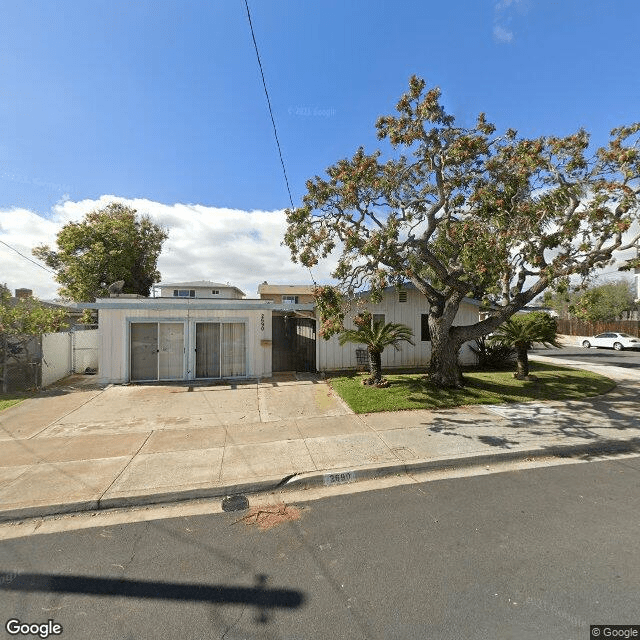
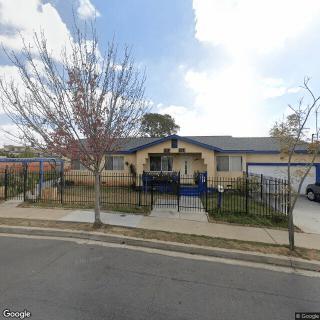
2690 Cowley Way, San Diego, CA 92110
For more information about senior living options: (866) 208-4318
Donlen Guest Home Costs & Pricing
Donlen Guest Home offers competitive pricing for its accommodations compared to broader market rates in San Diego County and the state of California. For both private rooms and one-bedroom units, the cost at Donlen Guest Home is set at $2,500 per month, significantly lower than the county average of $3,939 for a private room and $4,315 for a one-bedroom unit. Furthermore, this pricing remains favorable when considered against the statewide averages - $3,939 for private rooms and $4,340 for one-bedrooms. This positions Donlen Guest Home as an attractive option for those seeking quality care without the premium price typically associated with similar facilities in the region.
| Floor plans | Donlen Guest Home | San Diego County | California |
|---|---|---|---|
| Private | $2,500 | $3,939 | $3,939 |
| 1 Bedroom | $2,500 | $4,315 | $4,340 |
Memory care communities with a similar price nearby
-
from +$350 / mo
Alpine View Lodge
$2,850 to $3,550 / month23.2 miles away -
from +$300 / mo
Carecenter at Home for Elderly
$2,800 to $3,500 / month11.0 miles away -
About the same
Casa De Las Campanas
$2,542 to $25,000 / month19.2 miles away -
from +$400 / mo
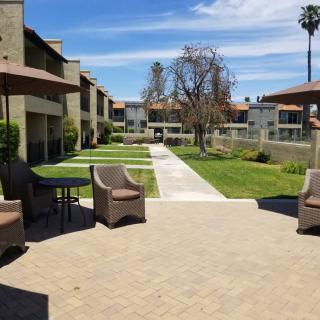
Pacifica Senior Living Escondido
$2,900 to $3,200 / month24.8 miles away -
from +$435 / mo
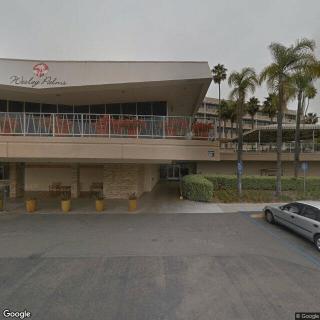
Wesley Palms
$2,935 to $6,320 / month2.7 miles away
Overall Review of Donlen Guest Home
Pros
 The experience has been great.
- Mom has been doing well there.
- They were willing to take Mom's dog.
- They were the only place willing to accept Mom and her dog.
- The food is Mom's favorite thing about the place.
- The staff are great.
- There are no complaints.
- They would definitely recommend them.
Cons
 They decided to take Mom out of the place.
Review
Donlen Guest Home in San Diego is best suited for seniors who want a warm, home-like assisted living experience that foregrounds pet companionship, approachable staff, and satisfying meals. The community stands out for accepting a resident with a beloved dog, a factor that can be decisive for families reluctant to part a senior from a cherished pet. The emphasis on comfort, routine, and a friendly, attentive caregiving team makes this option particularly appealing to households where animal companionship is a core part of daily life and emotional well-being.
Those weighing alternatives should consider residents whose needs extend beyond what Donlen’s current profile emphasizes. If a senior requires more intensive medical oversight, memory care specialization, or a higher level of skilled nursing, other communities with pronounced clinical programming may be a better fit. Additionally, families facing strict budget constraints, stricter pet policies, or a preference for a different location or campus atmosphere may find stronger alignment elsewhere. Donlen’s strengths do not automatically translate into suitability for every care trajectory.
The standout pros are tightly interwoven with the resident experience. The ability to keep a dog on premises removes a major source of stress and disruption for both the resident and the family, and it signals a culture of flexibility and personalized care. Staff appear to be consistently capable and supportive, which translates into reliable daily assistance and a sense of security for caretakers back home. Food emerges as a memorable daily benefit, described as the resident’s favorite aspect, which enhances appetite, mood, and overall quality of life. In practice, these factors create a caregiving environment that feels less transactional and more like a trusted, local home.
Because the review landscape presents no explicit drawbacks, the main con here is the absence of detail on certain dimensions that matter in decision-making. Prospective families should independently verify how Donlen handles medical acuity, levels of independence, activity programming, and cost structure. The lack of explicit negatives in the narrative means the true test lies in deeper inquiry: what happens when medical needs escalate, how robust are round-the-clock supports, what is the pace and variety of daily activities, and how transparent are billing practices? These unknowns carry equal weight in choosing a community once the pet-friendly appeal is acknowledged.
Nonetheless, the positive attributes do not merely offset potential gaps; they redefine the decision calculus for the right resident. A pet-friendly policy reduces emotional strain and preserves cherished routines, which in turn sustains appetite, sleep, and social engagement. A motivated, caring staff can compensate for modest gaps in formal programming by adapting schedules and offering warm, individualized attention. Strong meals complement this dynamic by supporting stamina for daily activities and socializing, reinforcing a sense of belonging. In short, the Donlen model rewards families seeking steadiness, warmth, and a caregiver network that treats the resident as a valued member of a small community.
The bottom-line takeaway is practical and directional: Donlen Guest Home serves best for seniors who prize pet inclusion, consistently kind staffing, and dependable meals within a relaxed, neighborly setting. It is less well-matched for residents needing intensive clinical oversight, memory-care specialists, or options with more aggressive programming. For families evaluating Donlen, a targeted visit is essential, confirm pet-related terms, tour meal service, preview resident activity calendars, and question cost bases and escalation policies. If the resident’s priorities align with companionship, simple, reliable daily routines, and a canine-friendly home atmosphere, Donlen offers a compelling, if not definitive, solution.
 6 resident community capacity
 Assisted Living
 Board and Care Home
 Memory Care
 Respite Care
 Cable or satellite TV
 Dining room
 Fully furnished
 Garden
 Housekeeping services
 Move-in coordination
 Outdoor space
 Private
 Telephone
 Wi-Fi/high-speed internet available
 San Diego International-Lindbergh (4 miles away)
 24-hour supervision
 Activities of daily living assistance
 Assistance with bathing
 Assistance with dressing
 Assistance with transfers
 Diabetes diet
 Diabetic care
 Incontinence care
 Meal preparation and service
 Medication management
 Special dietary restrictions
 Transportation arrangement (medical)
 Transportation to doctors appointments


 How and When Medicaid May Cover Assisted Living Costs
 A Detailed Exploration of Assisted Living Medicaid Waivers Across the United States
 Exploring the Contrasts Between Assisted Living and Skilled Nursing