
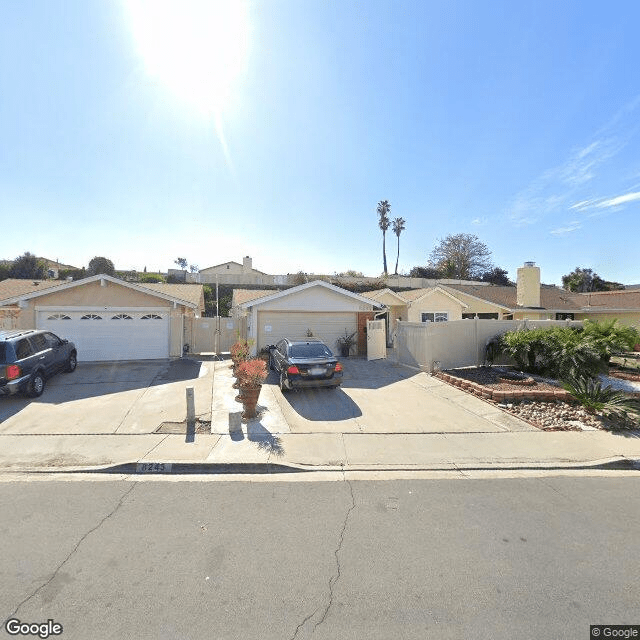
8235 Hydra Lane, San Diego, CA 92126
For more information about senior living options: (866) 208-4318
Ambassador Senior Retreat I Costs & Pricing
Ambassador Senior Retreat I offers competitive pricing for senior living accommodations when compared to both San Diego County and the broader California market. For those seeking semi-private rooms, the monthly cost is $1,300, which significantly undercuts the county average of $3,518 and the state average of $3,333. Similarly, private rooms at Ambassador Senior Retreat I are priced at $2,000 per month, providing a substantial savings relative to the uniform rate of $3,939 found in both the county and statewide averages. This favorable pricing presents an appealing option for families considering quality care within a budget-friendly framework in the San Diego area.
| Floor plans | Ambassador Senior Retreat I | San Diego County | California |
|---|---|---|---|
| Semi-Private | $1,300 | $3,518 | $3,333 |
| Private | $2,000 | $3,939 | $3,939 |
Assisted Living communities with a similar price nearby
-
from +$200 / mo
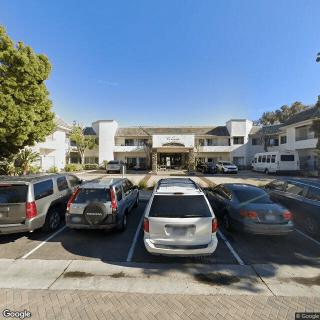
Autumn Senior Living-SOLD
$1,500 to $3,800 / month15.7 miles away -
from -$200 / mo
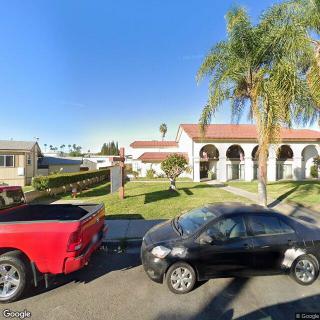
Casa El Cajon
$1,100 / month14.7 miles away -
from +$200 / mo
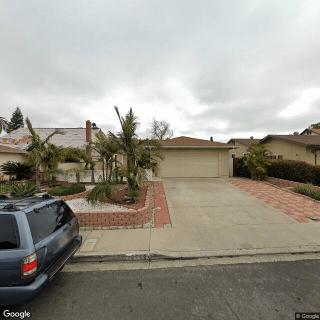
Nir Community I
$1,500 to $2,500 / month1.2 miles away -
from +$200 / mo
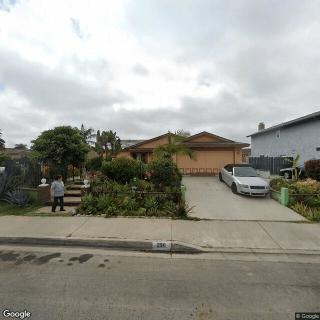
Roxies Elderly Homes I
$1,500 to $2,000 / month24.9 miles away -
from +$50 / mo
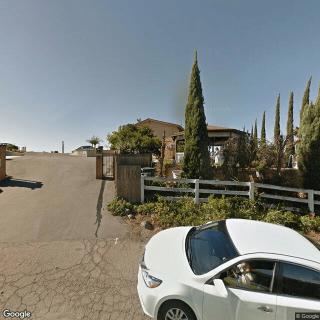
Alta View Manor
$1,350 to $4,500 / month15.7 miles away
Overall Review of Ambassador Senior Retreat I
Pros
 Psalm 23 is a six-bed residential home run by Irma, who is caring, competent, and effective.
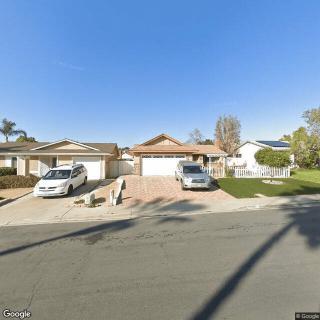
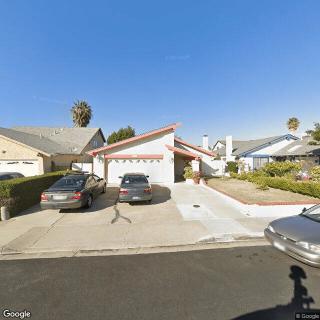
- The home is clean, cute, and has a sunny back yard with roses.
- The staff are charming, loving, educated, and highly professional.
- Josie is careful and alert to residents' needs and is always one step ahead, helping residents feel safe.
- The staff seek to know residents well so they can provide personalized care.
- Ambassador Senior Retreat is very nice and very clean.
- It houses six residents, offering a small, intimate setting, and hospice care can be brought onsite.
- The staff are fantastic and provide around-the-clock care.
- There is a nice area for sitting out in the back.
Cons
 None detected in the provided reviews.
Review
Ambassador Senior Retreat I in San Diego is best suited for families seeking an intimate, home-like living arrangement where six residents share a daily life that is meticulously supervised. This is a setting where the caregiver team truly knows each resident’s routines, preferences, and needs, and where the environment feels more like a well-kept house than a traditional care facility. The owner, Irma, runs the operation with a hands-on, caring, competent touch, and the staff blend warmth with professional judgment. The atmosphere reads as clean, cheerful, and secure, with a sunny back yard that invites light and personal interaction, an important factor for anyone prioritizing comfort and dignity in everyday life.
That said, this is not a fit for everyone. Families seeking a larger community with a robust activities calendar, broader social opportunities, or on-site medical capabilities beyond what a tight-knit home can provide may want alternatives. The six-bed model inherently limits capacity and scale, which can translate into waitlists and fewer chances for residents to engage with a wider peer group. For seniors whose needs require more specialized, on-site medical teams or a more formalized daily program, a larger assisted living facility or a memory-care-focused community could deliver the extra breadth of services and activities that a bigger operation typically offers. The bottom line: Ambassador Senior Retreat I excels at personalized, relationship-driven care, but its size means it’s less aligned with scale and diversity of offerings.
On the strength side, the proximity of residents to caregivers yields an exceptional level of attentiveness. The reviews repeatedly highlight staff as “fantastic,” “charming, loving, educated and highly professional,” with a clear commitment to knowing each loved one in order to tailor care. The 24-hour staffing model eliminates gaps in supervision and reduces the likelihood that cues go unnoticed, translating into safer, steadier days for residents. The caregiving team’s proactive posture, being ahead of needs rather than reacting to crises, creates consistency in routines and a sense of security that is hard to replicate in larger settings. When combined with Irma’s steady leadership, this creates a culture of proactive, dignity-preserving care rather than episodic, transactional check-ins.
The home environment itself constitutes another consequential advantage. With only six residents, the setting stays peaceful, uncluttered, and easy to navigate, which supports privacy, meaningful conversations, and intimate daily interactions. Cleanliness and care for the physical space are evident, and the back yard’s sunlit, rose-studded appeal adds a restorative touch that benefits mood and engagement. The ability to coordinate hospice services on-site is a practical convenience that eases family logistics while ensuring comfort-focused support is readily available. The small scale means residents experience fewer transitions and a more predictable, reassuring daily rhythm, reinforcing a sense of belonging and continuity that families often seek for aging in place.
Yet the intimate scale inevitably introduces trade-offs. The limited footprint can constrain the breadth of activities and the range of social experiences typical of larger communities. The upside, deep, consistent relationships with caregivers, often offsets this by delivering a high-touch, high-trust environment where residents feel genuinely known and valued. For residents with complex medical needs, the on-site hospice access is a meaningful advantage, though it may still fall short of the full spectrum offered by bigger facilities with multispecialty teams, specialized programs, and on-call experts. The key question for families is whether the resident’s care trajectory benefits more from high personalization and a calm, controlled environment or from a wider menu of programming and more extensive medical resources.
In the final assessment, Ambassador Senior Retreat I represents a clear win for families prioritizing intimate, highly supervised, home-like living. It is ideally matched to seniors who thrive on steady routines, personal attention, and seamless access to on-site hospice coordination within a clean, comfortable, secure small-house setting. For those who require a more expansive social ecosystem, broader programming, or a full continuum of medical services on site, alternatives should be explored and weighed against the value of the close-knit care experience this home delivers. Prospective residents should meet Irma and the caregiving team, tour the house, and observe a typical day to gauge whether the rhythm aligns with the resident’s pace and preferences. Confirm vacancy timing, visit frequency, and transfer plans to ensure a smooth transition that preserves dignity, autonomy, and continuity of care.
 6 resident community capacity
 Assisted Living
 Board and Care Home
 Cable or satellite TV
 Dining room
 Fully furnished
 Garden
 Housekeeping services
 Move-in coordination
 Outdoor space
 Private
 Telephone
 Wi-Fi/high-speed internet available
 San Diego International-Lindbergh (13 miles away)
 24-hour supervision
 Activities of daily living assistance
 Assistance with bathing
 Assistance with dressing
 Assistance with transfers
 Diabetes diet
 Diabetic care
 Meal preparation and service
 Medication management
 Special dietary restrictions
 Transportation arrangement (medical)
 Transportation to doctors appointments



 Securing Financial Support for Assisted Living: A Comprehensive Overview
 Social Security Benefits and Assisted Living: Navigating Options Across the U.S.
 An Extensive Exploration of the VA Aid and Attendance Benefit