

3305 Hudson Court, Pleasanton, CA 94588
For more information about senior living options: (866) 208-4318
Juliet's Care Home Costs & Pricing
At Juliet's Care Home, the monthly costs for both semi-private and private rooms reflect a commitment to providing a high standard of care and amenities. Specifically, residents can expect to pay $4,500 for a semi-private room and $5,000 for a private room. These rates are notably higher than the average costs in Contra Costa County, where semi-private rooms average around $3,471 and private rooms approximately $4,088. Furthermore, when compared to the broader state averages in California - $3,333 for semi-private rooms and $3,939 for private accommodations - the pricing at Juliet's Care Home underscores its distinctive offerings and quality of service. This premium reflects not just the space itself but also the quality of care that residents receive in this nurturing environment.
| Floor plans | Juliet's Care Home | Contra Costa County | California |
|---|---|---|---|
| Semi-Private | $4,500 | $3,471 | $3,333 |
| Private | $5,000 | $4,088 | $3,939 |
Assisted Living communities with a similar price nearby
-
from +$500 / mo

Blessing Home
$5,000 to $6,000 / month11.5 miles away -
from -$500 / mo
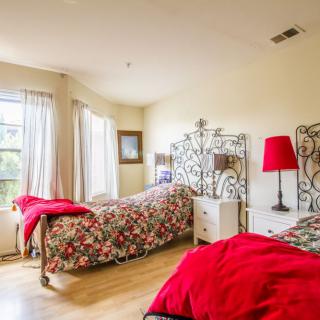
Golden Age Of Channing Way
$4,000 to $5,000 / month21.4 miles away -
About the same
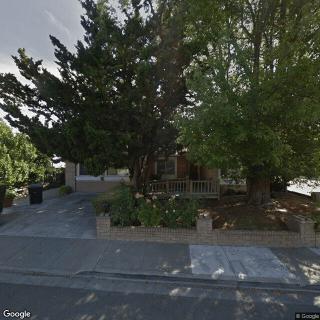
Pleasanton Senior Care Villa
$4,500 / month3.1 miles away -
from +$500 / mo

Harmony Care Home
$5,000 to $6,500 / month19.6 miles away -
About the same
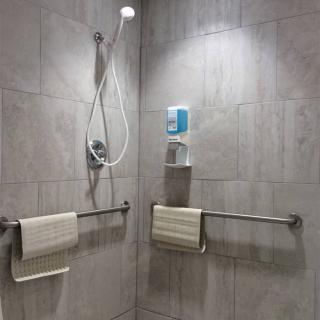
Milan Villa Senior Living
$4,600 to $9,200 / month4.7 miles away
Overall Review of Juliet's Care Home
Pros
 Juliet and her husband are very loving to their residents and provide excellent care.
- They are eager to please and really listen to ensure that each resident receives care specific to their needs.
- Juliet continues to improve on the variety and quality of meals and will cater to special meals suggested by the family.
- The caretakers at Juliet's home work very hard to ensure their residents feel safe, clean, and offer daily exercise.
- They have caregivers 24 hours a day.
- The rehab part is great; the owner is fabulous with helping residents move around, and his rehab skills are excellent.
- The home is nice and comfortable.
- The home offers amenities such as music, a large TV, and Sunday communion brought to the house.
Cons
 The food is terrible.
- The food quality is not good; there are a lot of prepackaged things.
- The food is becoming a big issue.
- The home felt a little cramped.
- They may not be able to handle the level of care the mom needed.
- The facility was not an option for the reviewer’s mom.
Review
Juliet's Care Home in Pleasanton is best suited for families seeking a small, home-like setting where care is deeply personalized and delivered with genuine warmth. The community excels at listening to individual needs and tuning the care plan accordingly, with Juliet and her husband actively involved in residents’ daily routines. The environment prioritizes safety, cleanliness, and steady physical activity, offering around-the-clock caregiving and a tangible commitment to keeping residents engaged through daily exercise and social contact. The rehab capability, highlighted by positive remarks about the owner’s mobility assistance, stands out as a practical advantage for residents aiming to maintain independence or slow decline. Meals are prepared on-site and can be adjusted to family preferences, reinforcing trust in the continuity of daily life.
Those evaluating alternatives should note that this is a smaller operation, where space can feel cramped and room configurations may involve sharing. For residents who require more expansive accommodations, private rooms, or a broader continuum of medical services, this setting can feel restrictive. Dining quality emerges as a variable factor in overall satisfaction; while some praise the on-site kitchen and menu flexibility, others cite poor quality or a reliance on prepackaged items. If a resident benefits from private rooms, expansive common areas, or consistently restaurant-level dining, families may want to look at larger communities that can offer those amenities and a wider spectrum of medical support.
The core strength lies in the caregiver team: attentive, responsive, and committed to tailoring routines to each resident. The staff’s diligence translates into a sense of safety and a clean, orderly living environment, with daily movement and activity routines that help maintain function. Families consistently describe a warm, non-institutional atmosphere where staff are eager to please and family input into meals and activities is welcomed. The rehab-oriented capabilities, particularly in helping a resident move and maintain mobility, can be a meaningful differentiator for seniors who do not yet require hospital-level care but benefit from ongoing physical support.
Food quality, however, remains the thorniest drawback. Reviews are mixed, with several notes about subpar dining experiences, ranging from limited variety to prepackaged items, and this inconsistency can undermine overall satisfaction, even when other aspects are strong. In practice, meals can improve with family suggestions and ongoing adjustments, but the variability means that nutrition and comfort may not be guaranteed daily. The small home format compounds this concern for families whose loved one places a high priority on consistently appealing, varied, and well-prepared meals as part of their daily well-being.
For families actively vetting this option, practical steps can translate intent into confidence. Request a current sample menu and, if possible, a meal during a visit to gauge quality and variety. Talk directly with the lead caregiver or owner about rehab services, including availability, scheduling, and how mobility goals are integrated into daily routines. Inspect living spaces to confirm whether private or shared rooms are available, and verify the actual footprint of common areas, bathrooms, and straight-line accessibility. Finally, have candid conversations about risk management, emergency care, and the staffing ratios to ensure the level of medical oversight aligns with the resident’s needs.
In the end, Juliet's Care Home delivers a compassionate, intimate option for seniors who value a familial, attentive atmosphere and practical rehab-focused support within a compact footprint. It is particularly well-suited for families who prize listening, responsiveness, and individualized meal planning over expansive space or high-end dining. Those whose loved one requires more robust medical oversight, larger private accommodations, or consistently superior meals should consider alternatives that can provide a broader service spectrum. The choice hinges on aligning the resident’s priorities with the home’s core strengths and accepting the trade-offs that come with a small, person-centered environment.
 6 resident community capacity
 Assisted Living
 Board and Care Home
 Air-conditioning
 Cable or satellite TV
 Dining room
 Fully furnished
 Garden
 Housekeeping services
 Indoor common areas
 Move-in coordination
 Outdoor space
 Private
 Private bathrooms
 Respite or short term stays offered
 Telephone
 Wheelchair accessible showers
 Wi-Fi/high-speed internet available
 Metropolitan Oakland International (20 miles away)
 24-hour supervision
 Activities of daily living assistance
 Ambulatory care
 Assistance with bathing
 Assistance with dressing
 Assistance with transfers
 Diabetes diet
 High acuity care
 Incontinence care
 Meal preparation and service
 Medication management
 Special dietary restrictions
 Transportation arrangement (medical)
 Transportation to doctors appointments
 Birthday parties
 Catholic services
 Day trips and outings
 Forever fit






 Is Assisted Living Deductible on Your Taxes? Understanding the Complexities of Assisted Living Expenses and Deductions
 Assisted Living Support for Veterans: A Complete and Detailed Overview
 Exploring the Contrasts Between Assisted Living and Skilled Nursing