For more information about senior living options: (866) 208-4318
3.3 from 40 reviews
5 stars
17
4 stars
6
3 stars
3
2 stars
0
1 stars
14
Rose Garden Board And Care Costs & Pricing
Rose Garden Board and Care offers competitive pricing for its accommodations compared to the broader market in Orange County and California. For semi-private rooms, residents can expect a monthly cost of $3,000, which is notably lower than the county average of $3,431 and the state average of $3,333. Similarly, private rooms at Rose Garden are priced at $3,500, making them more affordable than both the county's average of $4,104 and the state's average of $3,939. For those seeking one-bedroom options, Rose Garden remains an attractive choice at $3,500 per month - substantially less than the county's average of $4,380 and slightly below California's overall cost of $4,340. This pricing highlights Rose Garden as a value-oriented option for families considering quality care in a comfortable setting without compromising financial stability.
Floor plans
Rose Garden Board And Care
Orange County
California
Semi-Private
$3,000
$3,431
$3,333
Private
$3,500
$4,104
$3,939
1 Bedroom
$3,500
$4,380
$4,340
Overall Review of Rose Garden Board And Care
caveat10 reviews mention this
Dementia care is a mixed bag
Residents describe dementia-focused care that can feel inconsistent.
Several families mention Alzheimer’s or dementia and describe the redirection, supervision, and dementia-related training they were looking for. Other reviewers, however, report unmet basic needs and unsafe or stressful experiences in a memory-care setting, including incidents involving other residents and follow-through on day-to-day care. A few comments also frame the experience as dependable caregiving, but the negative accounts are detailed enough that dementia-specific support seems to vary by resident and situation.
caveat12 reviews mention this
Cleanliness and room condition concerns
Cleanliness is praised in some reviews and sharply criticized in others.
A number of reviewers describe a clean home and mention visiting rooms that look orderly. At the same time, multiple residents and families report strong cleanliness failures—dirty rooms, wet or soiled clothing, missing items, and odors—along with worries that personal care needs were not handled consistently. Taken together, the reviews suggest the cleanliness experience can swing widely rather than staying steady.
common15 reviews mention this
Caring staff shows up in praise
Many residents’ families describe caregivers as loving and attentive.
Positive reviews repeatedly highlight loving, caring caregivers who help residents feel supported and safe. Some families specifically note meaningful communication and follow-through, and a few credit caregivers with helping residents stay engaged with activities and daily routines. However, other reviews contradict this with accounts of poor care and difficulty getting help, so staff quality appears uneven across residents’ experiences.
common4 reviews mention this
Open grounds are a standout feature
The outdoor grounds and courtyard get recurring mention.
Multiple reviews call out the exterior grounds and open layout, describing it as something residents enjoy and families appreciate on visits. Even among very negative reviews, commenters often single out the grounds as the only positive aspect. That contrast suggests the outdoor environment may be stronger than some other day-to-day elements described in the reviews.
caveat3 reviews mention this
Difficult access and responsiveness
Several reviews say it can be hard to reach the community.
Some families report challenges with responsiveness, including difficulty getting calls returned and limited flexibility around visits. Other comments describe being blocked from entering or needing arrangements during planned times, adding to the friction during already stressful situations. While tours and some staff interactions are described positively, access and responsiveness come through as a recurring frustration in a few reviews.
How we summarize
Counts show how many written reviews mention each theme; a review can touch several themes, and only frequently mentioned themes are displayed.
Features
Housing
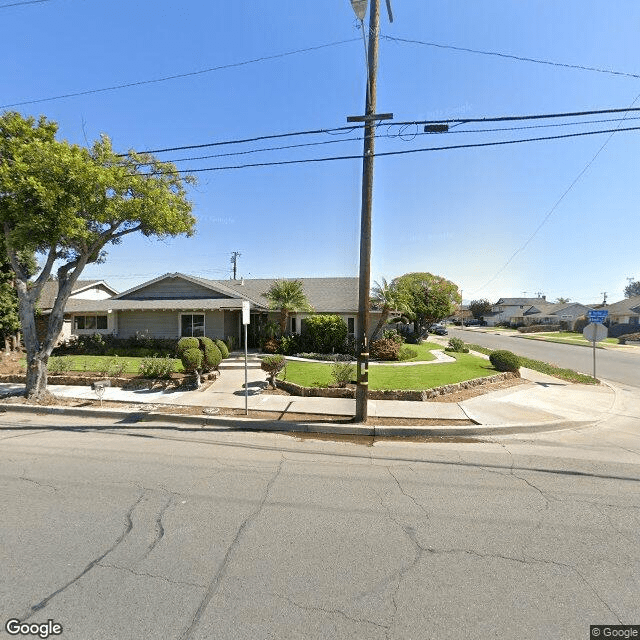
6 resident community capacity
Types of Care
Assisted Living
Board and Care Home
Memory Care
Amenities
Cable or satellite TV
Dining room
Fully furnished
Garden
Housekeeping services
Move-in coordination
Outdoor space
Private
Telephone
Wi-Fi/high-speed internet available
Transportation
John Wayne Orange Co (7 miles away)
Long Beach (Daugherty) (19 miles away)
Ontario International (23 miles away)
Care Services
24-hour supervision
Activities of daily living assistance
Ambulatory care
Assistance with bathing
Assistance with dressing
Assistance with transfers
Coordination with health care providers
Diabetes diet
Incontinence care
Meal preparation and service
Medication management
Special dietary restrictions
Transportation arrangement (medical)
Transportation to doctors appointments
Dining
Diabetes diet
Special dietary restrictions
Activities
Community-sponsored activities
Scheduled daily activities
Nearby Places of Interest
This area of Orange, California offers a convenient and diverse range of amenities for seniors looking to settle down. With multiple cafes such as Starbucks, Kean Coffee, and Tru Bru Organic Coffee nearby, there are plenty of options for socializing and enjoying a good cup of coffee. Pharmacies like Walgreens and CVS Pharmacy are also easily accessible for any medical needs. In terms of healthcare, there are reputable physicians at Cardiology Specialists of Orange County and Kaiser Permanente Tustin Medical Offices in close proximity. Additionally, Choc hospital is located just 2.3 miles away for any emergency medical care. For recreation, there are various parks like Peters Canyon and Irvine Regional Park where seniors can enjoy outdoor activities. The area also boasts a range of restaurants including Orange Hill Restaurant & Events and BJ's Restaurant & Brewhouse for dining out options. Finally, easy access to transportation hubs like Artic and Hertz Rent A Car make it convenient for seniors to get around the city. Overall, this area provides a comfortable and vibrant setting for senior living in Orange, California.
Cafes
Starbucks (1 miles)
Kean Coffee (2.4 miles)
Tru Bru Organic Coffee (3.4 miles)
Starbucks (3.8 miles)
Starbucks (4 miles)
Starbucks (4.1 miles)
Orobae (5.4 miles)
Pharmacies
Walgreens (1 miles)
CVS Pharmacy (1.2 miles)
CVS Pharmacy (1.2 miles)
Walgreens (1.8 miles)
Walgreens (2.1 miles)
CVS Pharmacy (2.1 miles)
CVS Pharmacy (2.4 miles)
Physicians
Cardiology Specialists of Orange County (1.7 miles)
Kaiser Permenente Tustin Medical Offices (3.9 miles)
The 200 Building (3.9 miles)
Hoag Tustin Legacy (4.3 miles)
Hoag Medical Group (4.3 miles)
Kaiser Permanente Medical Building 1 (5.4 miles)
Hospitals
Choc (2.3 miles)
Restaurants
Orange Hill Restaurant & Events (2.5 miles)
McDonald's (3.5 miles)
Golden Road Brewing (3.6 miles)
BJ's Restaurant & Brewhouse (3.9 miles)
Lazy Dog Restaurant & Bar (3.9 miles)
McDonald's (4 miles)
Chick-Fil-A (4.1 miles)
Parks
Peters Canyon (3.4 miles)
Tustin Sports Park (3.8 miles)
Resort at the Groves (4.3 miles)
Irvine Regional Park (4.5 miles)
Steve Ambriz Memorial Park (4.6 miles)
Plaza Park (5.9 miles)
Eastwood Village Park (6 miles)
Theaters
Century Theatres (3.4 miles)
AMC Movie Theater (3.8 miles)
Amc Tustin 14 At The District (5.4 miles)
Transportation
Artic (3.5 miles)
Hertz Rent A Car (5.1 miles)
Drr Tomorrowland Station (5.7 miles)
Disneyland Monorail (5.8 miles)
Drr Toontown Station (5.9 miles)
DLRR New Orleans Station (6 miles)
Disneyland Monorail - Downtown Disney District Station (6.1 miles)
Rose Garden Board and Care offers competitive pricing for its accommodations compared to the broader market in Orange County and California. For semi-private rooms, residents can expect a monthly cost of $3,000, which is notably lower than the county average of $3,431 and the state average of $3,333. Similarly, private rooms at Rose Garden are priced at $3,500, making them more affordable than both the county's average of $4,104 and the state's average of $3,939. For those seeking one-bedroom options, Rose Garden remains an attractive choice at $3,500 per month - substantially less than the county's average of $4,380 and slightly below California's overall cost of $4,340. This pricing highlights Rose Garden as a value-oriented option for families considering quality care in a comfortable setting without compromising financial stability.
The range of features provided by Rose Garden Board And Care is essential for effectively supporting residents with dementia or Alzheimer's disease. Assistance with dressing and bathing helps maintain personal hygiene and dignity, while 24-hour supervision ensures safety and immediate help in case of confusion or wandering. Medication management is critical to adhering to prescribed treatments, preventing complications from missed doses. The meal preparation and service not only deliver nutritional needs but also cater to specific dietary requirements, enhancing overall well-being. Transportation arrangements facilitate access to medical appointments, ensuring continuity of care, while coordination with healthcare providers streamlines communication about the residents' health status. Activities of daily living assistance fosters independence where possible and enhances quality of life through meaningful engagement. Incontinence care is also a vital aspect of comfort and dignity for residents facing these challenges, creating an environment that promotes their physical and emotional health. Together, these services create a holistic approach tailored to meet the unique needs of individuals dealing with cognitive impairments.
Nearby Communities
Madison Home Care 2
Orange, CA
4.9 from 16 reviews
$2,500 to $2,800 / month
Proximity to family members.
Madison Home Care II
Orange, CA
$2,500 to $3,400 / month
Competitive pricing relative to local averages with comprehensive care and a home-like environment.
Just Like Home III
Orange, CA
5 from 1 review
Intimate six-bed community offering personalized care, round-the-clock supervision, and move-in coordination.
A1 Elder Care
Orange, CA
5 from 2 reviews
Comprehensive care with 24-hour supervision and diabetes-friendly dining.
Gentle Care Home
Orange, CA
5 from 5 reviews
Small, furnished board-and-care with 24/7 supervision, meals, activities, medication management, and transportation.
Care Juliet 1
Orange, CA
Comprehensive assisted living with 24/7 supervision, ADL support, medical coordination, diabetes-friendly meals, medication management, transport to appointments, and furnished apartments.
Nikki's Loving Care Home
Tustin, CA
5 from 2 reviews
$5,500 / month
Small, intimate setting with hands-on, round-the-clock care and a warm, family-like atmosphere.
Park Plaza
Orange, CA
4.6 from 116 reviews
$3,795 to $5,225 / month
Caring, attentive staff in a clean, welcoming community with engaging activities and fresh dining.
New Orange Hills
Orange, CA
4.4 from 102 reviews
Dedicated nursing staff and effective physical therapy.
The transition from assisted living to skilled nursing care is often prompted by complex medical needs that assisted living cannot meet, with key indicators including frequent health declines, increased falls, severe memory issues, and caregiver burnout. Families should recognize these signs early to discuss options with healthcare providers and prepare for the emotional and logistical aspects of moving to a facility that offers comprehensive medical support.
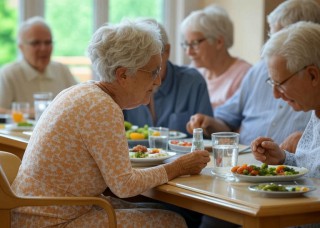
Dementia is characterized by cognitive decline, with nutrition playing a vital role in brain health; while no specific diet can prevent or reverse it, a nutrient-dense diet rich in antioxidants and healthy fats may support cognitive function. The MIND diet, which emphasizes beneficial foods and limits processed items, along with proper hydration and individualized meal strategies, can enhance the well-being of dementia patients.
Dementia affects memory and cognitive function in older adults, presenting challenges for caregivers due to behavioral changes such as confusion and mood swings. Compassionate, person-centered care that considers individual history and preferences, along with effective communication and environmental modifications, is essential for supporting both patients and their caregivers.
Get PricingAsk A QuestionSchedule A TourContact Senior Advisor
By clicking submit, you agree to our Partner's Terms of Use. You
also consent to receive calls and texts, which may be autodialed, from our Partner. Your consent is not a condition to
using our Partner's service. Please visit our Partner's Privacy Policy for information about their privacy practices.

 6 resident community capacity
 Assisted Living
 Board and Care Home
 Memory Care
 Cable or satellite TV
 Dining room
 Fully furnished
 Garden
 Housekeeping services
 Move-in coordination
 Outdoor space
 Private
 Telephone
 Wi-Fi/high-speed internet available
 John Wayne Orange Co (7 miles away)
 24-hour supervision
 Activities of daily living assistance
 Ambulatory care
 Assistance with bathing
 Assistance with dressing
 Assistance with transfers
 Diabetes diet
 Incontinence care
 Meal preparation and service
 Medication management
 Special dietary restrictions
 Transportation arrangement (medical)
 Transportation to doctors appointments
 Proximity to family members.


 8 Key Indicators That Suggest It May Be Time to Transition from Assisted Living to Skilled Nursing Care
 Nourishing the Mind: Essential Dietary Approaches for Dementia
 Understanding Dementia Behaviors: Practical Insights and Strategies for Caregivers