
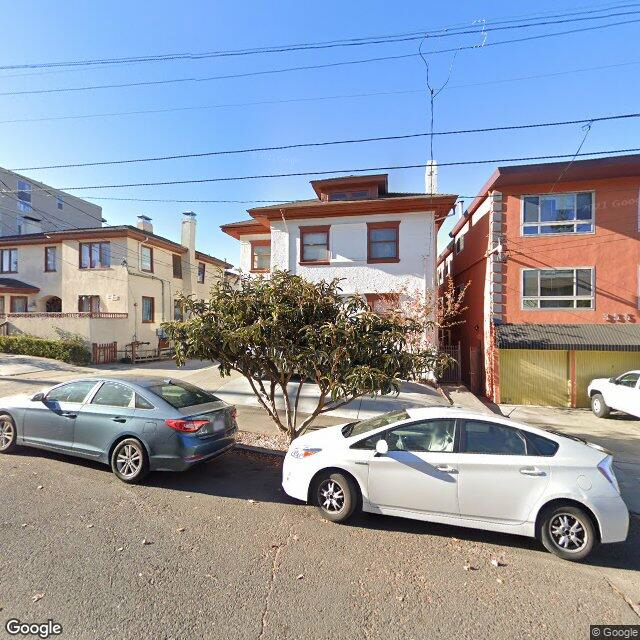
365 Staten Ave, Oakland, CA 94610
To contact a resident: (510) 893-5308
For more information about senior living options: (866) 208-4318
Overall Review of Grand Lake Rest Home I
Pros
 The route is easy to navigate.
- The destination is easy to reach.
- The experience is smooth.
Cons
 There is concern that residents living here may not have adequate support.
- A number of residents wander the streets.
- Police visit the location about once a week.
Review
Grand Lake Rest Home I in Oakland is best suited for independent seniors who prize a straightforward, low-ruffle living arrangement in a convenient location and who can rely on family or friend networks for daily oversight. This community appears to work best for residents who do not require constant hands-on care, who can manage basic daily needs, and who value being near accessible services and transportation options. The setting is practical rather than lavish, and the emphasis seems to be on ease of access and a simple, predictable routine rather than extensive clinical support. Families looking for a no-frills, visit-friendly base near urban amenities may find it aligns with their logistics even if care needs are modest.
It is essential to explicitly recognize who should seriously consider alternatives. Those whose loved ones require continuous 24/7 supervision, intensive medical oversight, or specialized memory-care programming will want to look elsewhere. The available information hints at limited on-site supervision, with safety concerns that could escalate for residents who wander or experience cognitive or mobility challenges. In practice, this translates into a mismatch for residents needing secure environments, robust monitoring, or proactive interventions for falls, behavioral changes, or wandering risks. Prospective residents in need of dementia care, fall-prevention services, or high-engagement activities will likely feel underserviced here.
From a practical standpoint, the strongest visible advantage is the ease of access. A nearby, easy destination profile makes visits and errands less taxing for families and caregivers, and it reduces the friction of daily life for residents who value straightforward routines. The environment tends to be uncomplicated, which can minimize confusion and stress for individuals who prefer predictability. This kind of setting can support social interaction at a comfortable pace and make it simpler to establish a familiar daily rhythm, especially for those who already have built-in support networks outside the facility.
The most significant downside, supervision gaps, cannot be ignored. The repeated note of residents wandering, combined with regular police visits, signals a red flag for safety. When staff coverage or security measures are uncertain, the risk profile shifts enough to undermine confidence in long-term placement for anyone with mobility limitations, cognitive concerns, or the need for consistent assistance with activities of daily living. In such a climate, even appealing conveniences lose some of their value, because the fundamental requirement for reliable safety and timely help remains unmet. The absence of strong, visible safeguards is a decisive factor for families weighing quality of life against risk.
To reconcile the positives with the concerns, the practical approach centers on proactive oversight and clear boundaries. If choosing Grand Lake Rest Home I, focus on arranging a structured visiting plan and confirm the extent of staff presence during peak and off-peak hours. Verify whether there are established wander-management protocols, secure doors or defined curfews, and documentation of daily activities that keep residents engaged without relying solely on outside interventions. Ask about emergency response times, caregiver training, and whether supplemental in-home services or external adult-briefing supports can be layered in to close any supervision gaps. Only with concrete assurances on these points can the location’s convenience translate into a reliable, safe residence.
In the final assessment, Grand Lake Rest Home I offers a niche option for seniors who desire a convenient, straightforward living environment and who can harness external oversight to compensate for limited on-site supervision. It is not a fit for those requiring continuous care, robust safety measures, or dementia-focused programming. Families should approach with a clear checklist: staffing levels at different hours, security features, wander-prevention strategies, and a plan for regular, scheduled check-ins. When those elements are solid, the location’s simplicity and accessibility become meaningful advantages. When they are not, more thoroughly supervised alternatives with stronger safety nets should be the baseline.
 Board and Care Home
 Metropolitan Oakland International (7 miles away)




 Navigating Medicare Coverage for In-Home Care Services
 In-Home Care Costs in 2025: A Detailed State-by-State Exploration
 Understanding Home Health Care: A Comprehensive Guide