
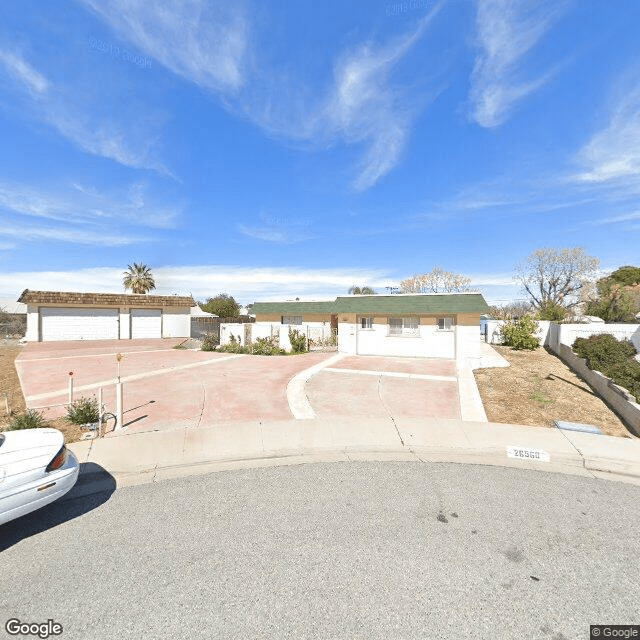
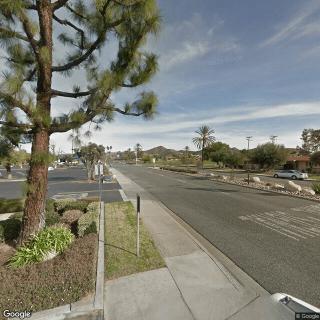
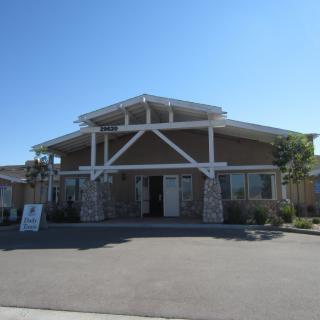
26560 Hempstead Court, Sun City, CA 92586
For more information about senior living options: (866) 208-4318
Peace And Joy Costs & Pricing
Peace And Joy offers competitive monthly rates for its accommodations compared to both Riverside County and the broader California market. For semi-private rooms, Peace And Joy charges $2,300, which not only provides a more affordable option than the county average of $2,844 but also significantly undercuts the state average of $3,333. Similarly, their private room rate of $2,800 is lower than both Riverside County's average of $3,474 and California's statewide average of $3,939. These pricing structures reflect Peace And Joy's commitment to providing quality care while maintaining accessibility for residents seeking comfortable living arrangements.
| Floor plans | Peace And Joy | Riverside County | California |
|---|---|---|---|
| Semi-Private | $2,300 | $2,844 | $3,333 |
| Private | $2,800 | $3,474 | $3,939 |
Memory care communities with a similar price nearby
-
from +$200 / mo
Valley Spring Elderly Care
$2,500 to $3,000 / month23.8 miles away -
from -$300 / mo
Milam Manor
$2,000 to $3,600 / month21.6 miles away -
from +$200 / mo
Golden Horizon Home I
$2,500 to $2,800 / month16.0 miles away -
from -$100 / mo
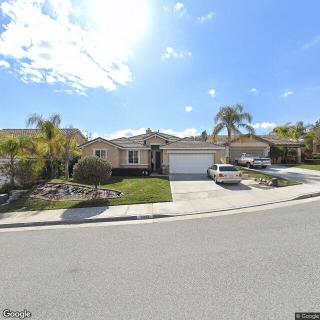
Diamond Residential Care Facility for the Elderly of Murrieta
$2,200 to $3,500 / month11.8 miles away -
from +$200 / mo
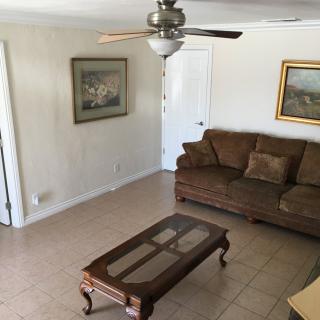
Center Plaza Senior Living
$2,500 to $4,600 / month22.5 miles away
Overall Review of Peace And Joy
Pros
 The reviewers feel very comfortable with everything at Peace and Joy.
- The staff are caring and loving toward residents, including spouses.
- The reviewers are really happy with how things are going at the facility.
- The staff are very friendly, and the residents seem to be in good spirits.
- The surroundings are clean, and the amenities are well addressed.
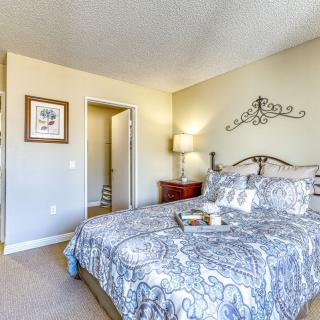
- They found both locations appealing, especially the Channel Way location, where the home was very clean and the bedroom was great.
- The owner seems genuinely caring.
Cons
 The facility seemed average.
- The reviewers were not sure they could care for Alzheimer’s patients.
- The reviewers were concerned that there were all women there, so he would be the only man.
Review
Peace And Joy in Sun City, California, is best suited for seniors who want a small, home-like residential care environment with a warm, faith-forward caregiving team. Operating as a Residential Care Home that accepts dementia, it offers a notably low minimum monthly cost, about $1,800 for private or semi-private rooms. Reviewers repeatedly describe staff who are loving and attentive, and families report a palpable sense that caregivers genuinely care for residents. For couples or individuals who prize personal attention, fewer transitions, and a calm, intimate daily rhythm, this community delivers the human connection that larger campuses often struggle to sustain. The Channel Way location is a plus for families prioritizing proximity and a homey footprint.
That said, the community is not a universal fit. Those prioritizing robust, dementia-specific medical programming or requiring a gender-diverse environment may want to consider alternatives. Several observers flagged questions about the facility’s capacity to handle Alzheimer’s-level needs, and there is explicit concern about a male resident being the sole man among an all-women setting. For families seeking comprehensive clinical oversight, on-site nursing, or a broader menu of memory-care services, a larger, more medically oriented assisted living or specialized memory care community will likely outperform Peace And Joy.
On the flip side, the positives create a meaningful offset for many families. The caregiving staff are described as caring and authentically invested, with owners who come across as genuinely devoted. The atmosphere tends to be clean, residents appear to be in good spirits, and the bedrooms are noted as comfortable in the contexts where arrangements were evaluated. The faith-based environment, paired with highly individualized attention and a straightforward, affordable price point, stands out as a core value proposition. For residents who want a homey routine, meals, activities, and daily care managed in a personal, less clinical frame, the strengths are hard to overlook.
The main drawbacks warrant careful consideration. Uncertainty about dementia-specific capabilities can translate into hesitancy for families facing cognitive decline in a loved one. The all-women milieu, while comforting to some, may be a mismatch for male residents who would prefer or require a mixed-gender setting or greater male companionship. The small size, inherent to a Residential Care Home, also translates into more limited programming options and less on-site medical coordination than larger facilities, which can leave gaps for residents with higher care needs. Details about programming, activity depth, and the nuance of dementia support are not always explicit, increasing the challenge of mapping future needs precisely.
Nevertheless, the solid points can meaningfully offset those drawbacks for a particular care profile. When peace of mind hinges on consistent caregiver attention, a familiar daily routine, and a sense of spiritual or value-driven support, Peace And Joy delivers in ways that larger campuses often struggle to replicate. The low cost relative to many peers reduces financial stress and leaves room for supplemental services if needed, without overwhelming the household budget. The intimate setting can foster stronger relationships among staff, residents, and families, often translating into quicker responses and a heightened sense of security for residents who thrive on predictability and personal connection.
Decision guidance follows a practical path. Families leaning toward a faith-infused, home-like environment with personalized care at a modest price should consider Peace And Joy, but only after a candid check on dementia capabilities and gender fit. Prospective residents should request a straightforward conversation about the level of dementia care available, staff-to-resident ratios, and what the monthly rate actually covers. Visiting both locations can illuminate differences in room layouts, meal schedules, and activity offerings, and help determine whether the environment aligns with the resident’s cognitive needs and comfort with gender composition. If those criteria align, Peace And Joy becomes a prudent choice; if not, pursuing alternatives with stronger dementia programming or more gender-diverse settings will likely yield greater long-term alignment.
 6 resident community capacity
 Assisted Living
 Board and Care Home
 Memory Care
 Activities off-site
 Bath tubs
 Beautician on-site
 Cable or satellite TV
 Devotional services off-site
 Dining room
 Fully furnished
 Garden
 Housekeeping services
 Indoor common areas
 Move-in coordination
 Outdoor common areas
 Private
 Private bathrooms
 Respite or short term stays offered
 Telephone
 Wheelchair accessible showers
 Wi-Fi/high-speed internet available
 24-hour supervision
 Assistance with bathing
 Assistance with dressing
 Assistance with transfers
 Diabetes diet
 High acuity care
 Incontinence care
 Meal preparation and service
 Medication management
 Special dietary restrictions
 Transportation arrangement (medical)
 Transportation to doctors appointments
 Christian services



 Five Subtle Dementia Indicators to Observe: An In-Depth Guide to Understanding “Does My Mom Have Dementia?”
 Dementia, Paranoia, and Caregiver Guidance: Understanding the Connection
 Engaging Memory Care Activities That Enhance Quality of Life