
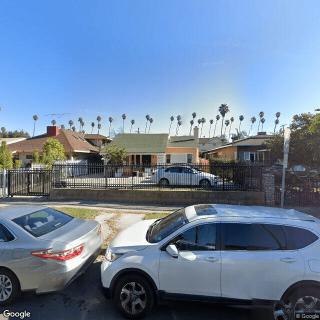
128 North Ardmore Avenue, Los Angeles, CA 90004
For more information about senior living options: (866) 208-4318
Overall Review of Ardmore Home Care
Pros
 The care from Cozy Manor staff is unprecedented and they treat residents as family, ensuring meals they like and on-time medications.
- The Cozy Manor home is clean and comfortable.
- Protocols for healthy living are strictly adhered to at Cozy Manor.
- The first contact with 123 was very professional and well handled.
- The caregivers at 123 were professional and understood what was needed.
- The scheduling with 123 is flexible and not rigid.
- The staff at 123 are stand-up professionals.
- Antone Cook is described as a phenomenal caregiver who provided great care.
Cons
 They have 0 stability. 0 reliability and 0 trust worthy.
- Incompetent people.
- They can't figure out which office is supposed to provide services.
- Their system doesn't work at all.
- 123homecare is a horrible business.
- Recruiter and receptionist were rude and mean, lost personal information, and never returned calls or emails.
Review
Ardmore Home Care in Los Angeles is best suited for families willing to actively oversee and arbitrate care logistics, and for relatives who respond well to personal rapport with individual caregivers. The strongest value arises when a trusted caregiver is matched well and kept engaged, with flexible scheduling that honors the resident’s routines. This is not a plug-and-play solution; it requires hands-on coordination from families who can navigate scheduling, caregiver assignment, and problem-solving. If a smooth, centralized, consistently staffed operation is non-negotiable, this community should be weighed against options that promise tighter management and clearer accountability.
The most meaningful positives come from the human side when the agency functions at its better moments. Several caregivers are described as genuinely compassionate, treating residents like family, ensuring meals align with preferences, and administering medications on time. Some residents enjoy clean, comfortable surroundings and attentive, individualized attention, with staff who communicate and adapt to mood or solitude needs. A handful of reviewers highlight stand-up professionals and even name specific caregivers who delivered exceptionally thoughtful care. Those instances point to real potential value when the right people are doing the work and a plan is simple and flexible.
Yet the downsides are persistent and nontrivial, and they color the experience overall. Repeated complaints center on systemic instability: a lack of reliable staffing, inconsistent caregiver qualifications, and no clear sense of who is responsible for coordinating care week to week. Several reviews describe communication breakdowns, rude or dismissive front-line staff, and an opaque process that makes it feel as though the operation is not aligned with the resident’s needs. The most damaging notes speak to misdirected calls, chaotic sign-up processes, and a sense that critical information is lost or mishandled. In short, the core problem is not necessarily the individual caregivers but the organizational framework that should keep track of who is doing what, when.
This tension between meaningful human care and brittle logistics means the pros can only offset the cons if the right conditions are in place. When a family lands on a stable care team, with a dependable coordinator and predictable scheduling, Ardmore can deliver warmth, timely medications, and attentive daily living support that feels personal and responsive. But those moments are fragile: a single lapse in coordination or a mismatch in caregiver qualifications can quickly erode trust, given the breadth of negative reports about reliability, stability, and communication.
For families with significant medical or behavioral needs, or for those who cannot tolerate repeated miscommunications, alternatives should be seriously considered. Agencies with stronger centralized oversight, clearer assignment processes, and proven caregiver training tend to offer more predictable experiences and easier day-to-day management. If the plan relies on ongoing, embedded supervision by a family member or a dedicated care manager, Ardmore’s current drawbacks become a meaningful risk to overall quality and continuity of care.
When evaluating Ardmore, prospective buyers should demand practical safeguards before committing. Ask for a single, named care coordinator with clear escalation steps; insist on written care plans that specify caregiver qualifications, shift coverage, and replacement policies; request references from families with comparable needs; and probe the onboarding timeline to ensure a concrete schedule rather than open-ended promises. Try to arrange an initial trial period with a guaranteed point of contact, and require proof of accountability measures, including how issues are tracked and resolved. In short, approach Ardmore with a readiness to micromanage the transition, a clear metric for caregiver fit, and a plan to switch vendors if the operational backbone doesn’t meet those standards.
 6 resident community capacity
 Assisted Living
 Board and Care Home
 Cable or satellite TV
 Dining room
 Fully furnished
 Garden
 Housekeeping services
 Move-in coordination
 Outdoor space
 Telephone
 Wi-Fi/high-speed internet available
 Burbank-Glendale-Pasadena (9 miles away)
 24-hour supervision
 Activities of daily living assistance
 Assistance with bathing
 Assistance with dressing
 Assistance with transfers
 Diabetes diet
 Meal preparation and service
 Medication management
 Special dietary restrictions
 Transportation arrangement (medical)
 Transportation to doctors appointments





 Senior Transition Services: Understanding Their Role, Cost, and Importance
 Exploring the Path to Senior Living: A Comprehensive Look at Independent Living and Assisted Living
 Is Assisted Living Deductible on Your Taxes? Understanding the Complexities of Assisted Living Expenses and Deductions