
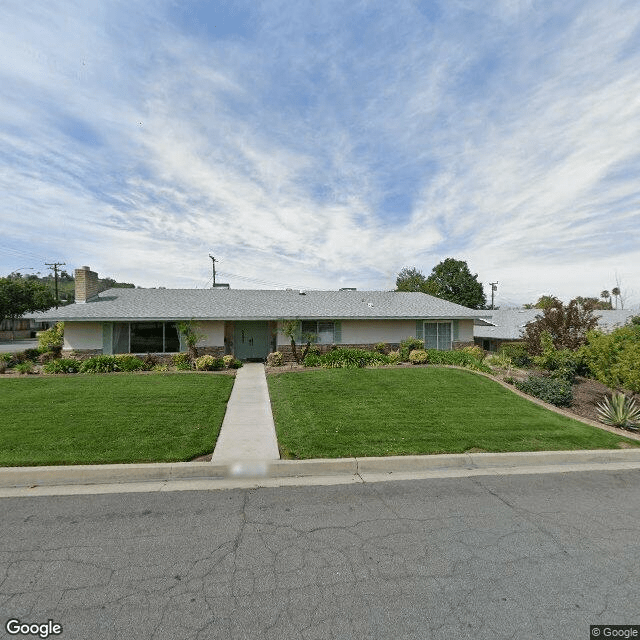
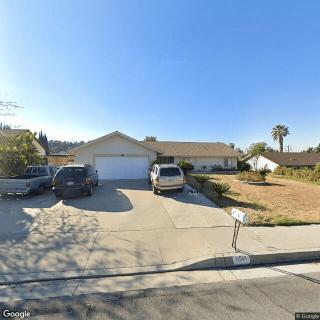
11490 Poplar Street, Loma Linda, CA 92354
For more information about senior living options: (866) 208-4318
A & K Private Home Care Costs & Pricing
A & K Private Home Care offers competitive pricing for its services compared to both San Bernardino County and the broader state of California. For a semi-private room, A & K charges $2,000 per month, significantly lower than the county average of $2,958 and the state average of $3,333. Similarly, their private rooms are priced at $2,300 monthly, which again presents a more affordable option relative to the county's typical cost of $3,561 and the state average of $3,939. This pricing structure positions A & K Private Home Care as an attractive choice for individuals seeking quality care without straining their financial resources.
| Floor plans | A & K Private Home Care | San Bernardino County | California |
|---|---|---|---|
| Semi-Private | $2,000 | $2,958 | $3,333 |
| Private | $2,300 | $3,561 | $3,939 |
Assisted Living communities with a similar price nearby
-
About the same

Milam Manor
$2,000 to $3,600 / month1.9 miles away -
About the same
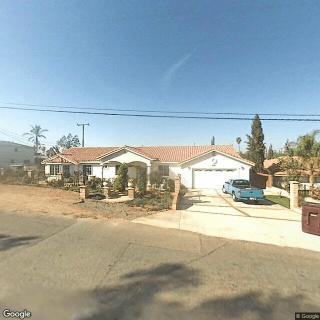
For His Glory Premium Senior Care Home
$2,000 to $2,800 / month13.0 miles away -
from -$300 / mo

Light's Rancho Linda
$1,700 to $2,000 / month7.7 miles away -
About the same

Sun City Gardens
$1,988 to $3,291 / month23.7 miles away -
from +$170 / mo

Raincross at Riverside a Watermark Retirement Community
$2,170 to $5,500 / month11.2 miles away
Overall Review of A & K Private Home Care
Pros
 It is going pretty well.
- It is pretty clean.
- They haven't had any problems with the staff.
- They liked the location.
- They chose them because they liked them.
Cons
 Their customer service is bad.
- There aren't enough outside activities for the residents.
Review
A&K Private Home Care in Loma Linda is best suited for seniors who want a small, home-like care setting with a straightforward, predictable routine, and who place a premium on a clean environment and a convenient location over elaborate programming. This community appears to fit families that prefer simplicity, steady daily rhythms, and a modest level of service without the complexity or price tag of larger facilities. It is a practical option for those who can tolerate variability in customer service and who donā€™t demand a highly active activities calendar. Anyone seeking robust social programming or highly proactive, consistently responsive staff should look at other options.
Two clear positives emerge from the limited feedback available. First, the environment is described as clean, with staff interactions that can be smooth on the positive side. Second, the location is regarded as a strength, offering convenient access for families and visitors. Additionally, one reviewer rated the food around a four, suggesting nourishment and meals are competently handled. These pros create a stable baseline for daily living: predictable upkeep, approachable staff on good days, and convenient access to nearby services or family visits. The combination reduces day-to-day friction and supports routine, quiet living.
Yet the cons are not negligible and deserve serious weight in a decision. The most prominent concern is customer service, highlighted by a reviewer with a blunt, negative read. In small, privately run settings, communication gaps or inconsistent responsiveness can feel amplified, with delays in addressing concerns or questions. This risk matters because even a clean, well-located home can become frustrating if administrative or front-line staff fail to acknowledge needs promptly. When the overall rating sits at 2.5 from two modest reviews, that signals considerable variability in experiences and a potential for dissatisfaction if expectancies are high.
How the positives stack up against the negatives matters for families considering this option. The clean environment and agreeable location partially offset the concern about service gaps, especially for seniors who maintain a routine and do not require intensive day-to-day troubleshooting. However, the limited outside activities and the apparent variability in customer service cannot be completely offset by decent meals alone. For residents who value outdoor or social programming as a core aspect of daily life, the gaps will feel more pronounced. In short, the pro factors offer reassurance for basic comfort, but they do not fully counterbalance the key risk of inconsistent service.
For families weighing choices, the decision hinges on expectations about support, engagement, and oversight. If the priority is a calm, low-demand setting with reliable cleanliness and a convenient location, A&K Private Home Care delivers on that promise. It is less suitable for those who require sustained, proactive customer service, frequent caregiver responsiveness, or a robust activity schedule to keep a resident engaged. Alternatives to explore would include larger assisted living communities with structured calendars, transportation to outings, and clear escalation protocols for concerns. In such settings, the risk of uneven service tends to be lower, and social engagement tends to be richer.
The bottom line is practical and decisive: A&K Private Home Care serves best as a compact, value-oriented option for seniors who value stability, basin-level care, and a favorable locale, while not needing high-touch programming. Families should pursue candid conversations about expectancies: exact response times, weekend coverage, caregiver continuity, and how concerns are escalated. Prospective residents should request a tour with a specific focus on how staff communicate, how daily routines are managed, and what happens if needs change. If the emphasis remains on comfort, cleanliness, and location, this community can fit; if the emphasis shifts to constant engagement and near-perfect service, alternatives will likely serve better.
 6 resident community capacity
 Assisted Living
 Board and Care Home
 Activities off-site
 Bath tubs
 Beautician on-site
 Cable or satellite TV
 Devotional services off-site
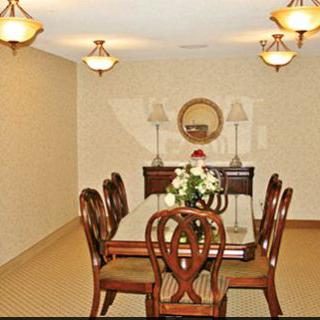
 Dining room
 Fully furnished
 Garden
 Housekeeping services
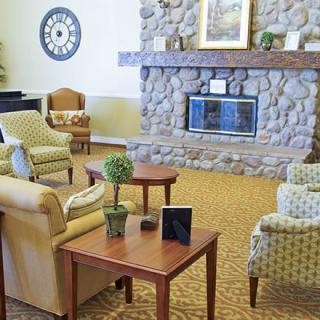
 Indoor common areas
 Move-in coordination
 Outdoor common areas
 Private
 Private bathrooms
 Respite or short term stays offered
 Swimming pool / hot tub
 Telephone
 Wheelchair accessible showers
 Wi-Fi/high-speed internet available
 Ontario International (20 miles away)
 24-hour supervision
 Ambulatory care
 Assistance with bathing
 Assistance with dressing
 Assistance with transfers
 Diabetes diet
 High acuity care
 Meal preparation and service
 Medication management
 Special dietary restrictions
 Transportation arrangement (medical)
 Transportation to doctors appointments
 Adventist services
 Buddhist services


 Vibrant Senior Living: A Comprehensive Guide for Active Older Adults
 When to Transition from Assisted Living to Memory Care: Key Indicators, Steps, and Finding the Right Community
 Assisted Living and Memory Care: Understanding Their Core Differences