
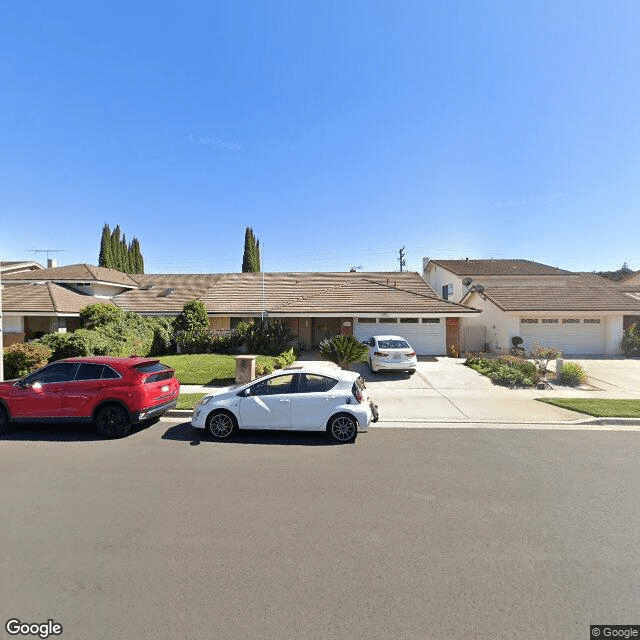
15938 Maidstone St., Fountain Valley, CA 92708
To contact a resident: (714) 397-0445
For more information about senior living options: (866) 208-4318
Shangri- La Costs & Pricing
Shangri-La offers competitive pricing for its accommodation options, especially when compared to the broader market in Orange County and across California. For a semi-private room, residents at Shangri-La pay $2,600 per month, which is significantly lower than the county average of $3,431 and the state average of $3,333. Similarly, for those opting for a private room, the monthly fee at Shangri-La is $3,300 - again more affordable than both Orange County's average of $4,104 and California's statewide figure of $3,939. This positioning highlights Shangri-La as an appealing choice for individuals seeking quality living arrangements while remaining mindful of their budget.
| Floor plans | Shangri- La | Orange County | California |
|---|---|---|---|
| Semi-Private | $2,600 | $3,431 | $3,333 |
| Private | $3,300 | $4,104 | $3,939 |
Senior living communities with a similar price nearby
-
About the same

Berryman Health Inc
$2,625 to $3,050 / month9.6 miles away -
from +$200 / mo
Candlewood Care Home III
$2,800 to $3,400 / month8.5 miles away -
from -$200 / mo
Living Well Care Home
$2,400 to $3,200 / month11.1 miles away -
from +$200 / mo
Leah Loving Elderly Care
$2,800 to $3,000 / month1.4 miles away -
from +$100 / mo
Loving Care Senior Home
$2,700 to $3,500 / month2.6 miles away
Overall Review of Shangri- La
Pros
 The room offers a semi-private bath.
- The space features lots of scented candles.
Cons
 The staff never got back to the guests about a tour, even though it was requested.
- When the guests stopped by, the staff had no idea what they were talking about.
- There was bad communication.
- The place was not as nice as some they had seen.
- The room adjoining had a wall that didn’t go all the way to the ceiling.
- The house needs some TLC.
Review
Shangri-La in Fountain Valley is best suited for seniors who want a basic, no-frills residential option and can tolerate gaps in communication and upkeep. It’s a setting where the expectation is straightforward living, not resort-level amenities or glossy presentations. Families drawn to a smaller, home-like vibe and who can overlook periodic lapses in staff responsiveness will find a workable match here. The community offers a floor plan and room configurations that hint at privacy tradeoffs rather than full suites, appealing to residents who want a simple footprint without premium pricing. In short, Shangri-La serves as a practical stop for budget-minded residents who place reliability and pace of life above polish and bells-and-whistles.
Those who should consider alternatives are anyone who relies on timely communication as part of the care decision, anyone who expects consistent tour management, or families prioritizing privacy and a fragrance-free environment. The reviews repeatedly cite a failure to respond to tour requests and confusion during on-site visits, which is a red flag when evaluating ongoing service levels. Prospective residents who require private baths, sound privacy between rooms, or a well-maintained, fresh-looking interior will want to compare other options. In addition, anyone sensitive to fragrances should be wary of heavy scented candles, which can be uncomfortable or triggering in close quarters.
From a pros-and-cons perspective, the positives are sparse and do not meaningfully offset the dominant drawbacks. The space exists and can accommodate basic living, but there is no evidence of robust amenities, strong staff engagement, or recent upgrades. The reported semi-private bath and a wall that doesn’t reach the ceiling hint at limited privacy and shared spaces rather than a private, comfortable setup. Maintenance appears to be a recurring issue, with the house described as needing TLC. The overall feel is more utilitarian than inviting, and that reality matters when choosing a place where daily routines and personal dignity are at stake.
Communication gaps stand out as the most actionable red flag. Repeated reports of staff not following up on tour requests, and on-site staff not remembering prior conversations, erode trust early in the screening process. For families, this translates into uncertainty about day-to-day responsiveness, care coordination, and the reliability of information about services. If a prospective resident cannot count on clear, timely answers at the inquiry stage, the likelihood of smoother operations after move-in diminishes dramatically. This is not a nuance; it is a predictor of ongoing friction that can color the entire transition.
Living conditions reflect the broader concerns. The interior layout emphasizes basic room-sharing dynamics rather than independent, self-contained residences. The presence of scented candles and notes about TLC signal both a homelike attempt and potential odor-management challenges, which can be problematic for seniors with sensitivities. Privacy issues, partially shared walls and baths, compound comfort concerns for residents who value quiet, personal space. In practical terms, these factors translate into a lower perceived quality of life and higher risk of dissatisfaction if expectations center on a more modern, private, turnkey environment.
For those weighing Shangri-La, the practical next steps are clear. Schedule a live, in-person tour or request a walkthrough with specific questions about tour scheduling, maintenance responsiveness, and the privacy of bathrooms. Request to speak with current residents about daily life, and ask for a written outline of services, staffing levels, and response times. Compare with nearby communities that emphasize proactive communication, fully private baths, and better upkeep. If choosing Shangri-La, enter with a clear plan to assess whether the cost savings are worth the ongoing trade-offs in privacy, upkeep, and responsiveness. The decision should hinge on personal tolerance for risk in administrative reliability and maintenance.
 Board and Care Home
 Cats allowed
 Dogs allowed
 Private
 John Wayne Orange Co (6 miles away)
 Diabetic care

 Comprehensive Approaches for Arthritis: A Detailed Guide to Symptoms, Causes, and Care
 Comprehensive Insights and Practical Strategies to Help Older Adults Avoid Falls
 6 Crucial Ways an Elder Law Attorney Assists Families