
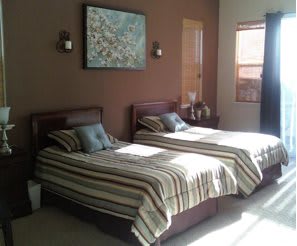
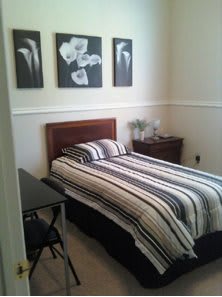

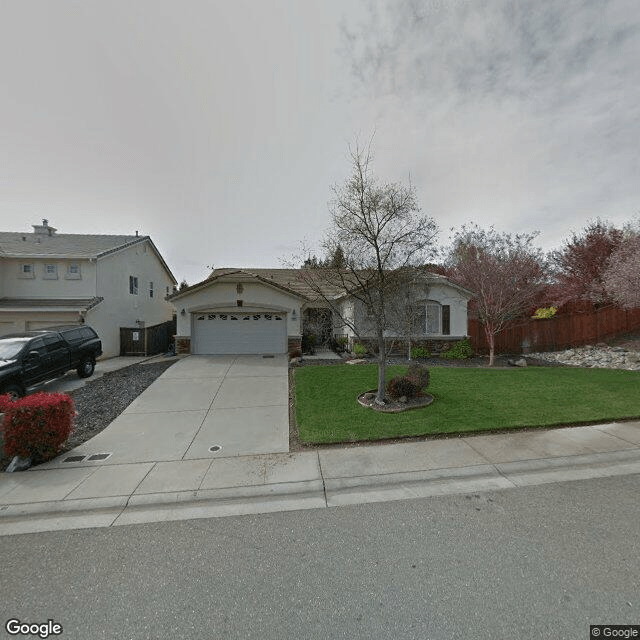
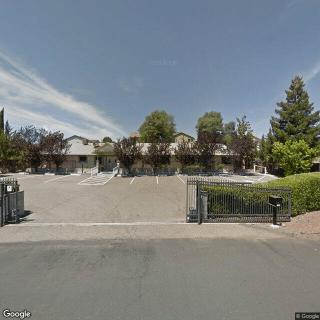
4004 Prairie Falcon Drive, El Dorado Hills, CA 95762
For more information about senior living options: (866) 208-4318
Woodridge Place Costs & Pricing
Woodridge Place offers competitive pricing for its room accommodations, particularly when evaluated against the broader context of El Dorado County and California. The semi-private rooms at Woodridge Place are priced at $2,295 per month, which is notably lower than the county average of $3,046 and the state average of $3,333. Similarly, the private rooms at Woodridge Place are available for $3,095 per month, providing an attractive alternative to the county's average of $3,680 and the state's average of $3,939. This pricing strategy underscores Woodridge Place's commitment to delivering quality care and comfortable living arrangements while still being mindful of affordability in comparison to regional costs.
| Floor plans | Woodridge Place | El Dorado County | California |
|---|---|---|---|
| Semi-Private | $2,295 | $3,046 | $3,333 |
| Private | $3,095 | $3,680 | $3,939 |
Memory care communities with a similar price nearby
-
from +$205 / mo
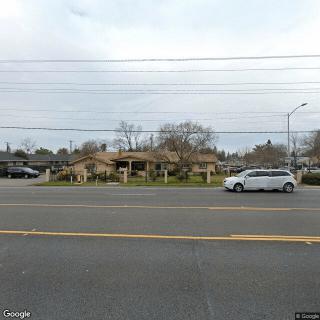
Eastern Manor
$2,500 to $3,000 / month19.7 miles away -
from -$395 / mo
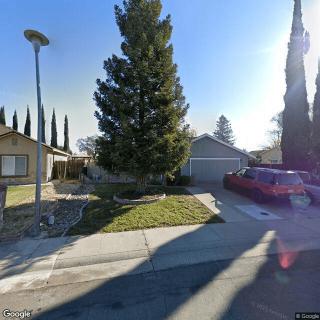
Bloomfield Hills Assisted Living
$1,900 to $2,400 / month16.0 miles away -
from +$169 / mo

Eskaton Village Placerville
$2,464 to $4,678 / month12.7 miles away -
from +$205 / mo
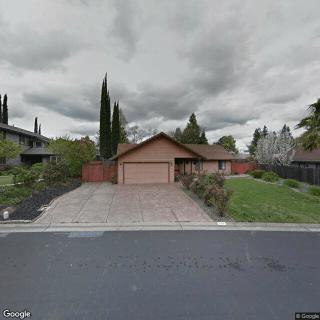
A.R.C. Manor of Folsom
$2,500 to $3,500 / month9.9 miles away -
from +$205 / mo

Loomis Home Care
$2,500 to $4,000 / month12.5 miles away
Overall Review of Woodridge Place
Pros
 She was treated very well during her stay.
- She always looked clean and well cared for.
- The staff who cared for her were appreciated for their kindness.
- The home feels warm and homelike with more personalized attention.
- The meals are good, plentiful, and home-cooked.
- The staff are caring, accommodating, and competent.
- The facility is clean, small, and compact, contributing to a calm environment.
- The entrance smells pleasant and welcoming.
Cons
 The facility could not meet her increasing care needs.
- The facility staff felt understaffed during busy times.
- The staff were not mentally equipped to engage residents in many activities.
- If the staff were not nice or clean, residents would leave.
- The facility offered very limited activities.
- The staff did not seem to be expecting the visitor.
Review
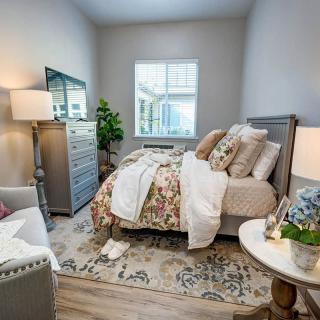
Woodridge Place in El Dorado Hills is best suited for seniors who want a compact, home-like residential setting where attention feels personal rather than clinical. The six-resident footprint creates a calm, navigable environment where routines are predictable and meals feel familiar. Cleanliness and warmth are consistently cited, with residents appearing well cared for and interactions with compassionate staff noted as a strength. For families seeking a peaceful, doable level of support without the bustle of a larger campus, this community offers dignity, safety, and everyday practicality. It’s a place where independence can be preserved longer, and daily spaces, kitchens, living areas, and bedrooms, are easy to access without long walks or elevators.
That intimate design may not fit residents whose needs extend into more intensive daily support or specialized programming. If constant skilled oversight, frequent medical interventions, or robust, staff-led activities are essential, alternatives become a better fit. Daytime staffing can feel stretched during busy periods, which can translate into slower response times or limited supervision at peak moments. Activities exist, but participation is uneven, and the programming does not always meet residents’ desires for social engagement or structured cognitive or physical exercises. For memory care, rehab, or highly active lifestyles, larger facilities with dedicated programming and higher staffing levels are usually more appropriate.
On the upside, the pros present a compelling offset to the limitations. The home-like, compact setting fosters closer connections between residents and caregivers, enabling more individualized attention and quicker, more familiar responses to daily needs. Meals are described as plentiful and home-cooked, contributing to a sense of comfort and consistency that many families value. The environment itself tends to be calmer and easier to navigate, reducing confusion and anxiety for seniors who resist the chaos often found in bigger communities. When staff are available, their care feels genuinely attentive, and the overall atmosphere emphasizes dignity, safety, and personal respect.
The notable gaps center on activity breadth and staffing variability. With each resident group limited to a handful of individuals, programming is naturally constrained, and staff may struggle to deliver a wide range of activities or to engage everyone consistently. Several reviewers note that the team is caring and competent, yet the small team size means coverage varies, and some caregivers are not always the regular ones on duty. This can leave some days feeling uneven, particularly for residents who rely on constant engagement or who thrive on regular, structured activities. The result is a place that delivers strong daily care, but with limited opportunities for ongoing, diversified enrichment beyond basic routines.
For families evaluating Woodridge Place, the bottom line hinges on matching care intensity with personal values. This is an ideal choice for seniors who prize a quiet, tidy, highly personalized setting where staff know residents well, meals feel like home, and safety is readily apparent. It works best for individuals who need routine assistance and appreciate a gentle pace, rather than those with rapidly escalating care needs or a desire for extensive, scheduled activities throughout the day. Pros, intimacy, cleanliness, homelike meals, and attentive staff, clearly offset the main drawbacks when the priority is comfort, predictable routines, and dignity. When the need for more robust activity programming or higher-level medical support arises, however, explore alternatives with larger teams, broader programming, and dedicated memory or rehabilitation services, and plan a visit to see how the specific day-to-day feels in real time.
 6 resident community capacity
 Assisted Living
 Board and Care Home
 Memory Care
 Activities off-site
 Bath tubs
 Cable or satellite TV
 Dining room
 Fully furnished
 Garden
 Housekeeping services
 Indoor common areas
 Move-in coordination
 Outdoor common areas
 Private
 Respite or short term stays offered
 Telephone
 Wi-Fi/high-speed internet available
 24-hour supervision
 Ambulatory care
 Assistance with bathing
 Assistance with dressing
 Assistance with transfers
 Diabetes diet
 High acuity care
 Incontinence care
 Meal preparation and service
 Medication management
 Special dietary restrictions
 Transportation arrangement (medical)
 Transportation to doctors appointments


 Understanding the Distinctions: Assisted Living and Memory Care Explained
 How to Communicate with a Loved One Living with Dementia: 10 Supportive Strategies
 Comprehensive Guide to VA Nursing Homes: A Crucial Long-Term Care Resource for Veterans