
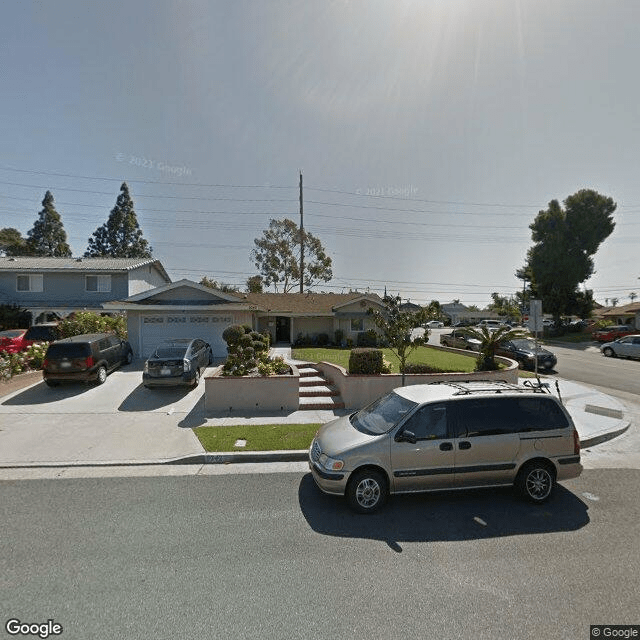
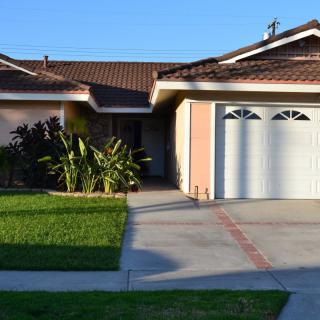
9342 Lime Circle, Cypress, CA 90630
For more information about senior living options: (866) 208-4318
B&C Elderly Care Costs & Pricing
B&C Elderly Care offers competitive pricing for its services, particularly when compared to the broader market in Orange County and California. For a semi-private room, B&C charges $3,000 per month, significantly lower than the county average of $3,431 and the state average of $3,333. Likewise, their private room option is priced at $3,800 per month, which is also more affordable than the local average of $4,104 and slightly above the state average of $3,939. This pricing strategy positions B&C Elderly Care as an attractive choice for families seeking quality elder care without overextending their budgets in a challenging financial landscape.
| Floor plans | B&C Elderly Care | Orange County | California |
|---|---|---|---|
| Semi-Private | $3,000 | $3,431 | $3,333 |
| Private | $3,800 | $4,104 | $3,939 |
Assisted Living communities with a similar price nearby
-
from +$500 / mo
Kind Heart Home Care VI
$3,500 to $5,000 / month16.0 miles away -
from +$500 / mo
Loving Home Care
$3,500 to $4,500 / month4.4 miles away -
from +$300 / mo

Bella Manor II
$3,300 to $4,290 / month3.0 miles away -
from -$200 / mo
Leah Loving Elderly Care
$2,800 to $3,000 / month9.3 miles away -
from -$300 / mo
Loving Care Senior Home
$2,700 to $3,500 / month9.8 miles away
Overall Review of B&C Elderly Care
Pros
 St. Therese has a family-like atmosphere and encourages residents to socialize in the common areas.
- The staff are friendly and caring, and the owners are accommodating.
- The home is located in a beautiful neighborhood.
- The home is within the reviewers’ budget, making it an affordable option.
- The Claudia location is nice and roomy, with Maria described as friendly and knowledgeable.
Cons
 St. Therese has few openings due to its small size.
Review
B&C Elderly Care in Cypress is best suited for families that prize a truly intimate, home-like environment where seniors are known by name and care feels personal. This is the kind of setting that works best when a loved one thrives on routine, close interactions with a small, dedicated staff, and a sense of neighborhood safety and belonging. The model is clearly built around a family feel: a small home with limited occupancy, emphasis on residents gathering in common spaces, and a culture of staff and owners who are readily available and accommodating. For families watching a tight budget, the appeal is strong, with affordability repeatedly highlighted as a practical advantage.
Those who may want to consider alternatives are families whose loved ones require more intensive medical oversight, specialized memory care, or a broader suite of activities and therapeutic services on a daily basis. The small scale, while endearing, naturally limits the breadth of programming and the depth of clinical support that larger assisted living communities provide. If dementia-specific needs, complex wound care, or frequent on-site therapy are priorities, a larger facility with dedicated pathways for diverse care levels will likely serve better. Also, those seeking a wide variety of meal options or more formal culinary programming may find the “standard American” fare less satisfying over time.
The strongest pros here, an intimate setting, attentive staff, and budget-friendly pricing, cohere into a compelling value proposition for a certain resident. Reviewers repeatedly praise the friendly, caring demeanor of the team and the owners’ willingness to accommodate family needs. The neighborhood itself adds tangible value: safe surroundings, ease of access for visits, and a home that feels more like a welcoming residence than a clinical environment. The social dynamic is reinforced by a design that encourages residents to spend time in common areas, providing daily opportunities for interaction that can stave off isolation and promote a sense of belonging.
Yet the main cons loom from the same strengths. The size is a built-in constraint: with space for only a handful of residents, openings come infrequently and wait times can be long. For families with immediate placement needs or those hoping to move a loved one this week, that reality is a practical barrier. Additionally, the facility appears to offer a straightforward, no-frills package: standard meals and a basic board-and-care level of service rather than a broad spectrum of activities or highly specialized care. While that simplicity suits many, it may disappoint families seeking richer programming or more diverse dietary options.
Those pros versus cons play out most clearly in real-life choices. For a senior who values a trustworthy, close-knit environment, where staff know every resident’s quirks and preferences, the positives are meaningfully weightier than the limits. The affordability and warmth of the operation reduce stress for families navigating budgets and transitions, and the social pull of a small, communal setting can enhance daily satisfaction. However, if a loved one requires rapid placement, more intensive clinical oversight, specialized memory care, or a wider palette of activities and meals, the drawbacks begin to bite and alternatives should be pursued with urgency.
In deciding, approach with a practical checklist: arrange a visit, observe the staff-to-resident interaction, and verify how openings are managed and what level of care is actually available on site. Confirm meal options and ask to see a sample menu to assess whether dietary needs or preferences can be accommodated. Inquire about additional services, therapy, transportation, medication management, or nursing oversight, and whether those services scale with evolving needs. If the fit feels right on those fronts, this community offers a compelling blend of warmth, affordability, and social opportunity. If not, seek larger or more medically equipped settings that can deliver richer programming and more robust clinical support while still prioritizing the comfort and dignity of the resident.
 6 resident community capacity
 Assisted Living
 Board and Care Home
 Activities off-site
 Beautician on-site
 Cable or satellite TV
 Devotional services on-site
 Dining room
 Fully furnished
 Garden
 Housekeeping services
 Move-in coordination
 Outdoor common areas
 Private
 Respite or short term stays offered
 Swimming pool / hot tub
 Telephone
 Wheelchair accessible showers
 Wi-Fi/high-speed internet available
 Long Beach (Daugherty) (7 miles away)
 24-hour supervision
 Ambulatory care
 Assistance with bathing
 Assistance with dressing
 Assistance with transfers
 Diabetes diet
 Diabetic care
 High acuity care
 Meal preparation and service
 Medication management
 Special dietary restrictions
 Transportation arrangement (medical)
 Transportation to doctors appointments

 Understanding Medicaid Coverage for Assisted Living: A Comprehensive Guide
 How and When Medicaid May Cover Assisted Living Costs
 A Detailed Exploration of Assisted Living Medicaid Waivers Across the United States