For more information about senior living options: (866) 208-4318
2.8 from 62 reviews
5 stars
24
4 stars
3
3 stars
3
2 stars
1
1 stars
31
A Burbank Residential Care Costs & Pricing
A Burbank Residential Care offers competitive pricing for its services, particularly when compared to local and state averages. For a semi-private room, the facility charges $3,700 per month, which is slightly higher than the average cost in Los Angeles County ($3,349) but remains reasonable within the broader context of California's average of $3,333. In terms of private accommodations, A Burbank Residential Care sets its monthly rate at $4,000. This price is notably lower than the Los Angeles County average of $4,197 and is also more economical compared to California's overall average of $3,939. Overall, A Burbank Residential Care provides a balanced option in terms of quality care and cost-effectiveness within the region.
Floor plans
A Burbank Residential Care
Los Angeles County
California
Semi-Private
$3,700
$3,349
$3,333
Private
$4,000
$4,197
$3,939
Assisted Living communities with a similar price nearby
A tour contact named Gabriel is repeatedly described as patient and responsive.
Two reviewers specifically credit Gabriel for making the admission process feel understandable and supported, citing that he took time to answer questions and reassure them. Another reviewer also points to the facility’s marketing representative as well informed about what care needs the community can provide.
common15 reviews mention this
Staff support is frequently praised
Many reviewers describe staff as attentive, kind, and quick to respond.
A large share of reviews highlight caring, professional, and responsive staff during rehabilitation stays, with families saying they felt supported. Several also mention that when concerns came up, help arrived quickly. A smaller number of reviews say staffing was not responsive or that care was lacking, but overall positive descriptions of staff attention are common in the set of comments.
caveat12 reviews mention this
Medical and daily care are mixed
Care quality reports vary, with some describing neglect and others describing steady improvement.
Some reviewers describe patients being helped promptly and follow-ups staying on track, including rehabilitation progress and better routines. Others report serious problems like delayed assistance, missed care needs, or medication and hygiene concerns, including accounts of patients waiting for help and families feeling communication broke down. Taken together, reviews point to a wide gap between experiences.
caveat14 reviews mention this
Cleanliness gets both praise and complaints
Cleanliness feedback is inconsistent across reviews.
Several reviewers say the facility is clean and welcoming, describing spotless spaces and a well-run environment. But other reviews describe dirty rooms, moldy conditions, strong odors, and lack of cleaning or sanitation support. Because both kinds of reports appear repeatedly, cleanliness seems to vary by visit or situation.
caveat10 reviews mention this
Food satisfaction is split
Food reviews are sharply split between praise and strong criticism.
Some reviewers mention good or even excellent food, and one says the kitchen experience stood out during their stay. Others are much more critical, describing unappetizing meals, odors, and food that did not meet expectations for health. With both positive and negative experiences present, dining appears to be a recurring point of variation in the reviews.
How we summarize
Counts show how many written reviews mention each theme; a review can touch several themes, and only frequently mentioned themes are displayed.
Features
Housing
6 resident community capacity
Types of Care
Assisted Living
Board and Care Home
Amenities
Activities off-site
Activities on-site
Bath tubs
Cable or satellite TV
Devotional services off-site
Devotional services on-site
Dining room
Fully furnished
Garden
Housekeeping services
Indoor common areas
Move-in coordination
Outdoor common areas
Outdoor space
Private
Private bathrooms
Respite or short term stays offered
Telephone
Wheelchair accessible showers
Wi-Fi/high-speed internet available
Transportation
Burbank-Glendale-Pasadena (2 miles away)
Los Angeles International (18 miles away)
Care Services
24-hour supervision
Activities of daily living assistance
Ambulatory care
Assistance with bathing
Assistance with dressing
Assistance with transfers
Coordination with health care providers
Diabetes diet
Diabetic care
High acuity care
Incontinence care
Meal preparation and service
Medication management
Special dietary restrictions
Transportation arrangement (medical)
Transportation to doctors appointments
Dining
Diabetes diet
Kosher
Meals provided
Special dietary restrictions
Vegetarian
Activities
Activities off-site
Activities on-site
Adventist services
Buddhist services
Christian services
Community-sponsored activities
Devotional activities offsite
Devotional activities on-site
Islamic services
Scheduled daily activities
Nearby Places of Interest
This part of Burbank, California offers a convenient and bustling neighborhood with various amenities for seniors. There are multiple cafes and restaurants within close proximity, providing easy access to dining options. Additionally, there are several pharmacies nearby for any medical needs. In terms of entertainment, there are theaters within a short drive for enjoying movies. For transportation, the area is well-connected with the North Hollywood Metro Station and Universal City Metro Station nearby. In case of any medical emergencies, there are hospitals located within a few miles. The abundance of parks in the vicinity also offers opportunities for outdoor leisure activities. Overall, this area provides a vibrant and diverse community for seniors looking to settle down in Burbank.
Cafes
Starbucks (0.1 miles)
Starbucks (2.1 miles)
Starbucks (3.2 miles)
Starbucks (3.8 miles)
Proof Bakery (6.6 miles)
Starbucks (7 miles)
Starbucks (7.5 miles)
Restaurants
Wendy's (0.5 miles)
In-N-Out Burger (1 miles)
Castaway (1.3 miles)
Taco Bell (1.8 miles)
McDonald's (2.1 miles)
Porto's Bakery & Cafe (2.4 miles)
Chick-Fil-A (2.9 miles)
Pharmacies
CVS Pharmacy (0.8 miles)
CVS Pharmacy (1.3 miles)
CVS Pharmacy (2.1 miles)
CVS Pharmacy (2.1 miles)
Walgreens (2.2 miles)
Rite Aid (2.4 miles)
CVS Pharmacy (2.8 miles)
Theaters
AMC Burbank 16 (1.3 miles)
Universal Cinema AMC at CityWalk Hollywood (4.5 miles)
AMC The Americana at Brand 18 (5.4 miles)
TCL Chinese Theatre (6.7 miles)
Transportation
Terminal A (1.5 miles)
Hollywood Burbank Airport (BUR) (1.6 miles)
Baggage Claim (1.6 miles)
Burbank Airport Ride Share Pick Up (1.7 miles)
North Hollywood Metro Station (3.6 miles)
Universal City Metro Station (4.6 miles)
Hospitals
Providence St Joseph Medical Center (2.8 miles)
Kaiser Permanente Emergency (6.2 miles)
Glendale Adventist Medical Center (6.3 miles)
Medical 2 unit (6.3 miles)
Parks
Lake Hollywood Reservoir (4.7 miles)
Lake Hollywood Park (4.8 miles)
Playground (4.9 miles)
Hollywood Bowl Overlook (5.7 miles)
Fryman Canyon Park (5.9 miles)
Nancy Hoover Pohl Overlook (6.2 miles)
Runyon Canyon Park (6.5 miles)
Places of Worship
St Michael & All Angels (6.5 miles)
Physicians
Mid-Valley Comprehensive Health Center (7.1 miles)
A Burbank Residential Care offers competitive pricing for its services, particularly when compared to local and state averages. For a semi-private room, the facility charges $3,700 per month, which is slightly higher than the average cost in Los Angeles County ($3,349) but remains reasonable within the broader context of California's average of $3,333. In terms of private accommodations, A Burbank Residential Care sets its monthly rate at $4,000. This price is notably lower than the Los Angeles County average of $4,197 and is also more economical compared to California's overall average of $3,939. Overall, A Burbank Residential Care provides a balanced option in terms of quality care and cost-effectiveness within the region.
The guide outlines the complexities of Medicaid coverage for assisted living, highlighting significant state-to-state variations, limited coverage often restricted to personal care services, and the existence of specialized waivers for certain needs like memory care. It advises families to consult local Medicaid offices for options while emphasizing the importance of understanding state-specific regulations and facility policies.
Medicaid coverage for assisted living varies by state and is primarily available to low-income individuals, with eligibility dependent on strict income and asset limits. Some states offer HCBS waivers for specific services in assisted living, but families must generally cover room and board costs, and should verify facility acceptance of Medicaid while considering potential waiting lists.
Medicaid waivers for assisted living services provide vital support for seniors and individuals with disabilities in need of long-term care, with varying state-specific eligibility criteria and benefits. These waivers cover personal care and case management but often do not fully cover room and board, leading to waiting lists for many applicants.
Get PricingAsk A QuestionSchedule A TourContact Senior Advisor
By clicking submit, you agree to our Partner's Terms of Use. You
also consent to receive calls and texts, which may be autodialed, from our Partner. Your consent is not a condition to
using our Partner's service. Please visit our Partner's Privacy Policy for information about their privacy practices.

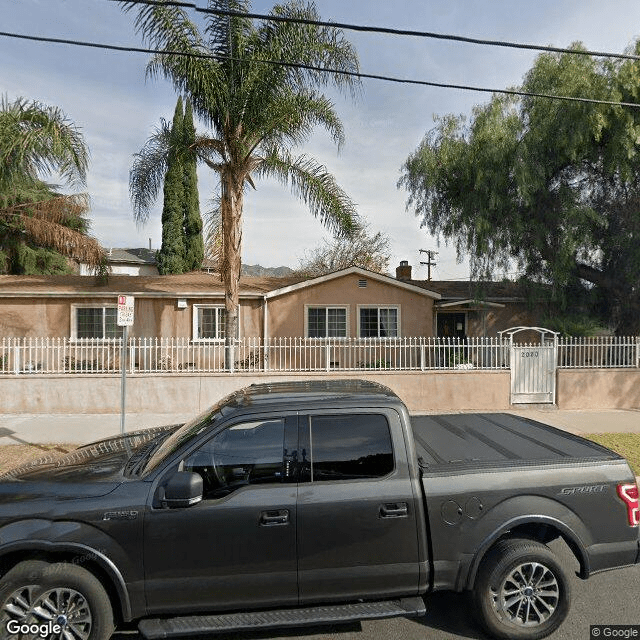
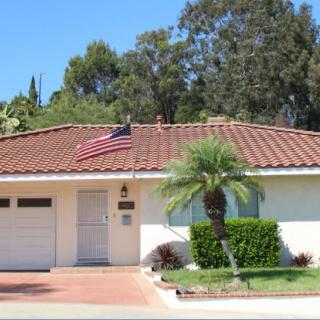
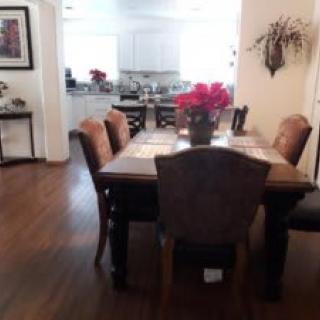
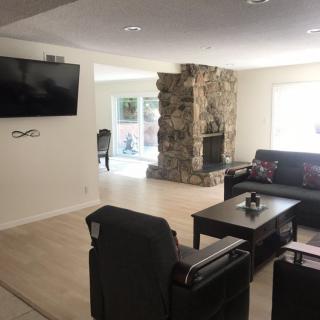

 6 resident community capacity
 Assisted Living
 Board and Care Home
 Activities off-site
 Bath tubs
 Cable or satellite TV
 Devotional services off-site
 Dining room
 Fully furnished
 Garden
 Housekeeping services
 Indoor common areas
 Move-in coordination
 Outdoor common areas
 Private
 Private bathrooms
 Respite or short term stays offered
 Telephone
 Wheelchair accessible showers
 Wi-Fi/high-speed internet available
 Burbank-Glendale-Pasadena (2 miles away)
 24-hour supervision
 Ambulatory care
 Assistance with bathing
 Assistance with dressing
 Assistance with transfers
 Diabetes diet
 Diabetic care
 High acuity care
 Incontinence care
 Meal preparation and service
 Medication management
 Special dietary restrictions
 Transportation arrangement (medical)
 Transportation to doctors appointments
 Adventist services
 Buddhist services
 Islamic services
 Small, personalized care with 24/7 supervision, medical coordination, and tailored meals.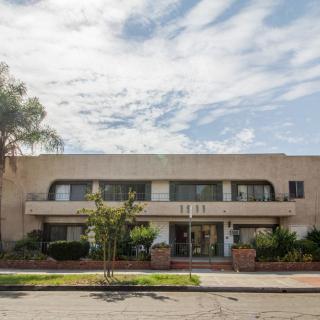


 Understanding Medicaid Coverage for Assisted Living: A Comprehensive Guide
 How and When Medicaid May Cover Assisted Living Costs
 A Detailed Exploration of Assisted Living Medicaid Waivers Across the United States