
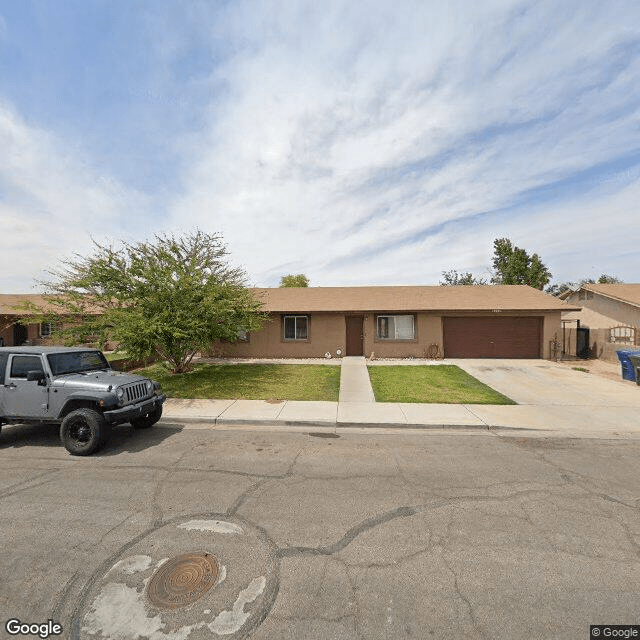
4240 West 21 Lane, Yuma, AZ 85364
For more information about senior living options: (866) 208-4318
Overall Review of A Special Place Care Home
Cons
 They kept the family friend isolated, denying access to friends, family, and church members.
- They could not contact the facility, and there was no information about what happened to a friend who was sent there.
Review
A Special Place Care Home in Yuma, AZ is best viewed as a last-resort option for families that must prioritize cost and a willingness to actively advocate for a resident, because the available signal from these reviews points to an environment where access and transparency are not reliably guaranteed. The community seems most suitable for households that can tolerate limited staff-initiated communication and expect to take up the slack themselves to stay informed about a loved one’s status, routines, and well-being. In short, it’s a fit only for families willing to take on a coaching role for the facility rather than relying on consistent, proactive updates.
The most troubling themes in the feedback are clear and actionable: residents were reportedly kept isolated, with visitors, including friends, family, and church connections, effectively blocked from access. This is not a minor irritant; it directly erodes the essential support network that families must rely on to monitor care, advocate for needs, and ensure emotional and spiritual needs are met. Coupled with that, there was a persistent sense of unresponsiveness to inquiries, leaving families in a vacuum when trying to understand what happened to a friend who was placed there. The combination of restricted contact and scarce information signals a risk profile that centers on obstructed accountability and diminished resident-family engagement.
On the positive side, the rating history includes a single five-star note, suggesting that not every experience is monolithically negative. However, without corroborating detail, that one favorable voice carries little weight against the pronounced concerns documented by the other reviews. The absence of transparent, consistent communication appears to be a shared failure, and the lack of accessible contact channels is a red flag that cannot be dismissed as a matter of “teething problems.” In practical terms, the pros that might exist, unknown from the reviews, do not rise to the level required to offset the core risk: families cannot count on timely information or on staff facilitating meaningful connections with loved ones.
Given these dynamics, families should approach alternatives with a sharp checklist: prioritize facilities with open, predictable communication practices, visible and reachable administration, and established policies that actively encourage family involvement and visits. Look for homes that provide scheduled progress updates, care planning collaborative reviews, and clear channels for concerns that are answered promptly. Activity programming and social opportunities should be documented and accessible, ensuring residents are not drifting into isolation. Above all, visits should be welcomed and unimpeded, with staff readily available to discuss daily routines, any changes in health status, and care goals.
The decision hinges on the resident’s care needs and the family’s tolerance for risk. If the priority is seamless access to the resident, transparent reporting, and an environment that actively combats isolation, this community does not meet those criteria based on the available information. For families with tight budgets but strong advocacy muscle, it may still be worth a cautious, hard look, but only after rigorous checks: request to speak with multiple staff, review incident logs or care plans, observe a tour focused on social interaction pathways, and insist on direct contact with the administrator. Seek independent references beyond the promotional material, and verify that there is a reliable, documented process for addressing complaints and escalating concerns.
In sum, A Special Place Care Home should be considered with substantial caution. The dominant concerns, restricted resident access, limited family contact, and a lack of clear responsiveness, underscore a risk that can undermine both safety and emotional well-being. For families unwilling to compromise on visibility and collaboration in care, pursuing other options is strongly advised. If proceeding to evaluate this facility, carry out rigorous due diligence: insist on direct conversations with leadership, confirm visitation policies in writing, review care schedules and contact logs, and solicit candid feedback from current or recent residents’ families. The right choice will balance cost with a robust framework for communication, oversight, and meaningful resident engagement; this facility, based on the reported experiences, is unlikely to deliver that balance.
 7 resident community capacity
 Assisted Living
 Board and Care Home
 Activities on-site
 Cable or satellite TV
 Devotional services off-site
 Dining room
 Fully furnished
 Garden
 Housekeeping services
 Indoor common areas
 Move-in coordination
 Outdoor space
 Telephone
 Wi-Fi/high-speed internet available
 Yuma MCAS-Yuma International (4 miles away)
 24-hour supervision
 Ambulatory care
 Assistance with bathing
 Assistance with dressing
 Assistance with transfers
 Diabetes diet
 Diabetic care
 Meal preparation and service
 Medication management
 Special dietary restrictions
 Transportation arrangement (medical)
 Transportation to doctors appointments
 Friendly staff, clean facility, and engaging on-site activities in a pleasant setting.



 Choosing the Right Senior Care: A Detailed Exploration of Assisted Living and Nursing Homes
 Understanding the True Cost of Assisted Living in 2025: A Comprehensive Guide
 Understanding Medicaid Coverage for Assisted Living: A Comprehensive Guide