
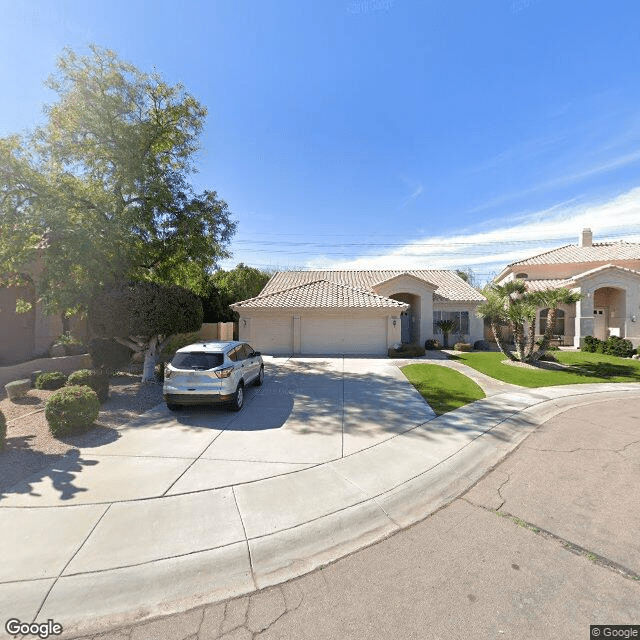
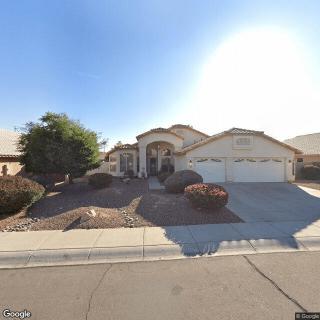
473 West Courtney Lane, Tempe, AZ 85284
For more information about senior living options: (866) 208-4318
Summerhaven Assisted Living Costs & Pricing
Summerhaven Assisted Living offers competitive rates for its residents, providing a cost-effective alternative compared to the broader market in Maricopa County and the state of Arizona. With semi-private rooms priced at $1,800 per month, Summerhaven presents significant savings, as the county average stands at $2,801. For those seeking more privacy, private rooms are available at $2,400 - again lower than both the county average of $3,318 and the state average of $3,345. Studio accommodations are also attractively priced at $2,800 per month, notably less than the regional averages of $3,960 for Maricopa County and $3,829 for Arizona. These pricing strategies reflect Summerhaven's commitment to offering quality assisted living services without compromising affordability for families and individuals in need.
| Floor plans | Summerhaven Assisted Living | Maricopa County | Arizona |
|---|---|---|---|
| Semi-Private | $1,800 | $2,801 | $2,820 |
| Private | $2,400 | $3,318 | $3,345 |
| Studio | $2,800 | $3,960 | $3,829 |
Memory care communities with a similar price nearby
-
from +$200 / mo

Santo Nino Villas 2
$2,000 to $2,300 / month8.7 miles away -
from +$200 / mo
Angel's Adult Group Home
$2,000 to $3,000 / month2.6 miles away -
About the same
Divine Mercy Assisted Living II
$1,850 to $3,350 / month6.0 miles away -
from +$100 / mo

Maravilla Scottsdale
$1,900 to $6,130 / month22.0 miles away -
from -$205 / mo

The Citadel
$1,595 to $2,080 / month14.1 miles away
Overall Review of Summerhaven Assisted Living
Pros
 The atmosphere is appealing and the facility is clean.
- The staff are cooperative in answering questions and seem caring toward residents.
- The place is neat, small, and not hospital-like, offering a personal touch.
- Caregivers have long tenures, providing consistency and knowledgeable care.
- Meals are satisfactory and smell inviting during lunch and dinner.
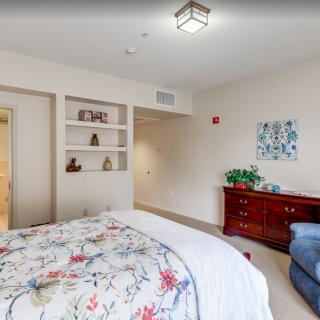
- Rooms are well-kept, clean, and not overly congested, with features like a walk-in closet.
- The care feels so reassuring that families say the staff become like family.
Cons
 The quality of care has gone down.
- Help at night seems to be slowing down.
- There are long 15-20 minute waits for the bathroom.
- They are a little pricey.
Review
Summerhaven Assisted Living in Tempe, AZ, is best suited for seniors who thrive in a small, homey setting where caregivers are familiar faces and daily routines feel personal rather than institutional. This community works particularly well for families willing to invest in a higher-touch model: a clean, calm environment with steady staff, ample opportunities for outdoor time, and everyday acts of care that feel approachable and neighborly. It is ideal for residents who value consistency, a non-hospital-like atmosphere, and staff who can provide ongoing companionship and attentiveness without the bustle of a large campus.
The strongest selling points center on atmosphere, reliability, and personal touch. Reviews repeatedly highlight a neat, clean facility where staff are cooperative and responsive to questions, and where residents and families quickly sense a caring, diligent approach. The property’s small scale translates into less congestion, well-kept rooms, and practical amenities like walk-in closets and accessible layouts. A standout feature is the level of staff stability: long-tenured caregivers, minimal turnover, and three caregivers on site at all times. The result is consistent routines, meaningful interactions, and a genuine feel of “being looked after,” with daily activities such as supervised outdoor time and regular meals that smell inviting during visits.
That said, the price point and a couple of care-generation concerns warrant careful consideration. Some families perceive the rate as pricey, suggesting it may not fit tighter budgeting. A caveat appears in one account noting a perceived decline in care quality over time, with nighttime help described as slower and occasional 15- to 20-minute waits for basic needs. Such feedback signals that, in exchange for the intimate, highly staffed model, there may be trade-offs in responsiveness during off-hours or in preserving a uniformly seamless experience as circumstances evolve. Those evaluating Summerhaven should weigh the value of personal attention and stability against these potential gaps, especially if 24/7 rapid response or aggressive medical oversight is a priority.
On balance, the pros, home-like ambiance, strong caregiver continuity, daily personal care routines (including daily showers), and a quiet, non-clinical environment, largely offset the main cons for families prioritizing relationship-driven care. The repeated emphasis on small, personal dynamics and a sense of family around the residents makes a meaningful difference for many families, particularly those who value trust built over years. The fact that residents stay for extended periods and that caregivers remain with the home for long stretches adds a level of predictability that can reduce stress for families navigating transitions. In short, the overall package is a reassuring match for those who want warmth, steadiness, and dignity in everyday living.
For families actively deciding, several concrete steps help translate these impressions into a well-grounded choice. During tours, verify nighttime staffing levels and ask about response times for urgent needs after hours. Inquire about what “care” covers daily beyond meals, showering routines, medication administration, mobility assistance, and how personal attention is scheduled. Observe how residents interact with staff and whether activities reflect ongoing engagement. Confirm the resident mix and turnover, and discuss memory-care or additional medical supports if those needs exist. Finally, compare the monthly cost to the perceived value of individualized attention, long-term caregiver relationships, and the overall living environment to determine whether Summerhaven’s model aligns with the resident’s priorities and the family’s budget.
The verdict is clear: Summerhaven Assisted Living is a strong match for seniors who want a small, intimate, family-like community with stable staffing, visible compassion, and a clean, comfortable home atmosphere. It excels where personal attention and consistency matter most, especially for residents who respond well to daily, hands-on care and who appreciate a calmer, non-hospital setting. Prospective buyers should acknowledge the premium cost and weigh any potential night-time response limitations against the profound benefit of reliable, long-tenured caregivers and resident-focused routines. For the right family, this is a deliberate, well-considered choice that can feel like choosing a welcoming extended family for a loved one.
 5 resident community capacity
 Assisted Living
 Board and Care Home
 Memory Care
 Respite Care
 Cats allowed
 Dogs allowed
 Cable or satellite TV
 Dining room
 Fully furnished
 Garden
 Housekeeping services
 Move-in coordination
 Outdoor space
 Private
 Telephone
 Wi-Fi/high-speed internet available
 Phoenix Sky Harbor International (8 miles away)
 24-hour supervision
 Activities of daily living assistance
 Assistance with bathing
 Assistance with dressing
 Assistance with transfers
 Diabetes diet
 Diabetic care
 High acuity care
 Incontinence care
 Meal preparation and service
 Medication management
 Special dietary restrictions
 Transportation arrangement (medical)
 Transportation to doctors appointments

 When to Transition from Assisted Living to Memory Care: Key Indicators, Steps, and Finding the Right Community
 Understanding the Distinctions: Assisted Living and Memory Care Explained
 How to Communicate with a Loved One Living with Dementia: 10 Supportive Strategies