
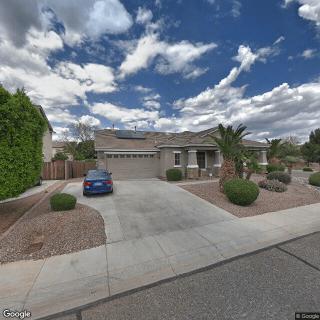
14439 West Banff Lane, Surprise, AZ 85379
For more information about senior living options: (866) 208-4318
Surprise Assisted Living Costs & Pricing
Surprise Assisted Living offers competitive pricing for its residents, particularly when compared to the broader averages for Maricopa County and the state of Arizona. For semi-private rooms, Surprise Assisted Living charges $2,200 per month, significantly lower than the county average of $2,801 and the state average of $2,820. Similarly, private room rates at Surprise are set at $2,500 monthly, which presents a favorable option against Maricopa County's average of $3,318 and Arizona's statewide average of $3,345. These cost advantages make Surprise Assisted Living an appealing choice for those seeking quality care without compromising on affordability.
| Floor plans | Surprise Assisted Living | Maricopa County | Arizona |
|---|---|---|---|
| Semi-Private | $2,200 | $2,801 | $2,820 |
| Private | $2,500 | $3,318 | $3,345 |
Overall Review of Surprise Assisted Living
Pros
 The facility is a very nice place.
- John and Dana have created a quality, loving family environment where residents are treated with respect and dignity.
- John and Dana’s infinite patience and humor diffuse difficult behaviors and bring smiles and laughter.
- They listen to concerns and respond with graciousness and goodwill.
- The staff treat residents as family and go beyond expectations.
- The care provided is exceptional and the facility is fantastic.
Review
Surprise Assisted Living in Surprise, AZ is best suited for families seeking a genuinely home-like, family-centered environment for an elder loved one, especially someone navigating dementia. The care is clearly grounded in a domestic, caregiver-led model, with John and Dana at the heart of daily operations. Reviews describe a quality, loving atmosphere where residents are treated with dignity and respect, and where staff bring patience, humor, and steady, human connection to challenging behaviors. This is not a cold or clinical setting; it is a small, intimate home where long-term relationships, and long-term comfort, matter.
Those weighing alternatives should consider families whose priorities include larger scale amenities, heavier clinical oversight, or a more formalized memory-care program. If the goal is hospital-level nursing, on-site physicians, or a comprehensive calendar of structured activities across a sizable campus, a bigger facility may be a better fit. Likewise, if rapid access to a broad network of specialists or more predictable, standardized care protocols are essential, this intimate home might feel limiting. In short, for highly generalized, facility-wide medical complexity or highly regimented programming, alternatives deserve consideration.
On balance, the strongest positives here are compelling and repeatedly reinforced in the feedback. The owners’ hands-on approach creates a true family environment where residents are known personally, not as room numbers. Patience and humor are not afterthoughts but core tools that diffuse difficult moments and cultivate smiles and laughter. The willingness to listen to concerns and respond with grace is repeatedly cited as a defining strength, and the effect is a steady stream of reassurance for families who want to know their loved ones are cared for with warmth and respect. This is exactly the kind of steadfast, person-centered care that makes a lasting difference for individuals with dementia and their families.
The lack of explicit drawbacks in the reviews is telling, yet not a reason to overlook potential tradeoffs. A small, owner-operated home naturally carries tradeoffs around scalability, nuance of medical staffing, and the breadth of programmatic options competitors offer. Families evaluating Surprise Assisted Living should ask targeted questions about staffing coverage, access to licensed nurses, care escalation plans, and the availability of dementia-specific activities as needs evolve. The reality is that, while the environment excels at intimacy and individualized attention, it is reasonable to verify how a shift in medical complexity would be managed and what contingencies exist if more intensive care becomes necessary.
When weighing these pros against any potential gaps, the offsetting advantages remain decisive. The strength of a true home atmosphere, continuity of care, consistent caregivers, and a focus on dignity, translates into sustained comfort for residents and peace of mind for families. The fact that a resident could live for years with dementia under such compassionate, attentive care, and that families consistently report gratitude and high satisfaction, speaks volumes about the value offered here. The care model prioritizes relationships, responsive listening, and personalized adjustment, which often makes up for any limits in scale or formal programming.
For families prioritizing a warm, dementia-capable environment where staff treat elderly residents as family members, Surprise Assisted Living stands out as a strong, trustworthy option. Prospective residents should visit with questions about care plans, daily routines, and room options, and should seek transparent discussions about cost, staffing patterns, and what happens if medical needs intensify. If the aim is to minimize transitions, maximize personal connection, and maintain a high degree of dignity and individualized attention, this community delivers. If those criteria do not align, if the emphasis is on large-scale services, advanced clinical oversight, or extensive structured programming, alternatives should be on the table as part of a thorough decision process.
 10 resident community capacity
 Assisted Living
 Board and Care Home
 Memory Care
 Activities off-site
 Beautician on-site
 Cable or satellite TV
 Devotional services off-site
 Dining room
 Fully furnished
 Garden
 Housekeeping services
 Indoor common areas
 Move-in coordination
 Outdoor common areas
 Private
 Respite or short term stays offered
 Telephone
 Wheelchair accessible showers
 Wi-Fi/high-speed internet available
 Phoenix Sky Harbor International (24 miles away)
 24-hour supervision
 Ambulatory care
 Assistance with bathing
 Assistance with dressing
 Assistance with transfers
 Diabetes diet
 Diabetic care
 High acuity care
 Incontinence care
 Meal preparation and service
 Medication management
 Special dietary restrictions
 Transportation arrangement (medical)
 Transportation to doctors appointments


 Dementia Behaviors: In-Depth Understanding and Effective Coping Strategies
 5 Early Indicators of Dementia and What You Can Do
 8 Important Indicators That Memory Care May Be Necessary