
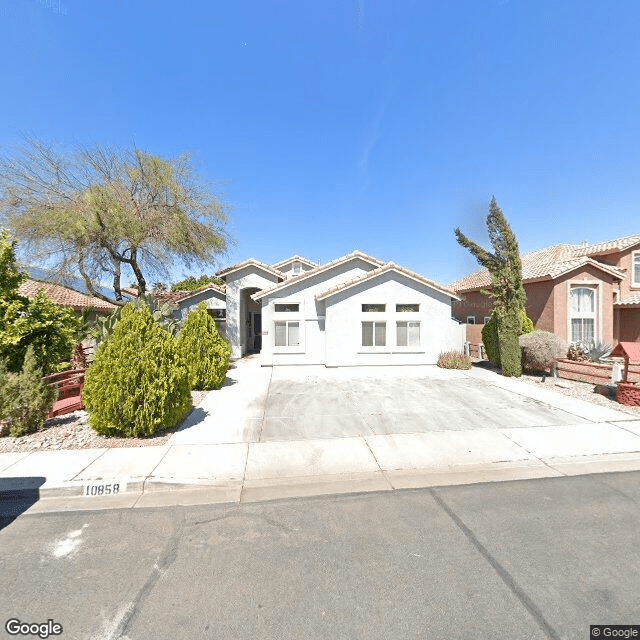
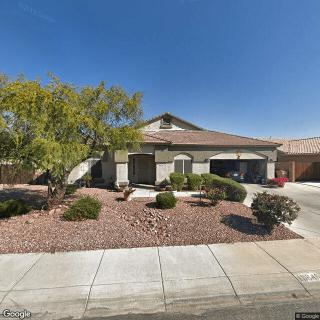
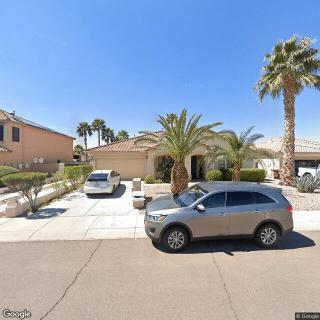
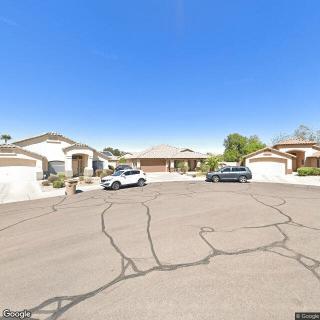
10858 West Carlota Lane, Sun City, AZ 85373
For more information about senior living options: (866) 208-4318
Orange Garden Assisted Living Costs & Pricing
At Orange Garden Assisted Living, the monthly costs for accommodations reflect a competitive positioning within the broader landscape of Maricopa County and Arizona. For semi-private rooms, residents can expect to pay between $2,500 and $3,443, which is notably lower than the county average of $2,801. For those seeking more privacy, private rooms range from $3,000 to $4,131 - still reasonably priced compared to the county's average of $3,318 and the state average of $3,345. These pricing structures highlight Orange Garden's commitment to providing quality care at accessible rates while ensuring that residents enjoy a comfortable living environment tailored to their needs.
| Floor plans | Orange Garden Assisted Living | Maricopa County | Arizona |
|---|---|---|---|
| Semi-Private | $2,500 to $3,443 | $2,801 | $2,820 |
| Private | $3,000 to $4,131 | $3,318 | $3,345 |
Assisted Living communities with a similar price nearby
-
from +$300 / mo

Pinnacle Peak Assisted Living
$2,800 to $3,100 / month22.0 miles away -
from +$400 / mo
Royal Paradise Care
$2,900 to $3,800 / month5.5 miles away -
from +$350 / mo

Covenant Care Assisted Living Home
$2,850 to $3,705 / month9.2 miles away -
About the same
Anc Assisted Living Homes I
$2,500 to $3,500 / month10.3 miles away -
from -$100 / mo
Arabian Views Assisted Living One
$2,400 to $3,200 / month19.3 miles away
Overall Review of Orange Garden Assisted Living
Pros
 The staff are very caring and very nice.
 - The staff keep families informed and call if there are problems.
- They ensure residents' phones work and that family can hear them.
- It is a very small, homelike group home with about eight residents.
- The resident seems to like it there.
- Residents love the food and receive ample portions through set meals.
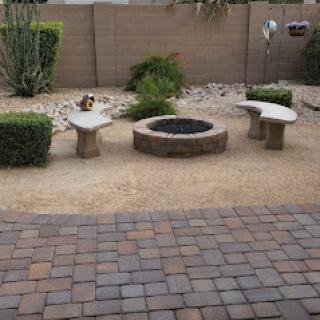
- The house is clean, nicely decorated, and has a patio and backyard.
- They provide home-cooked meals three times a day with snacks, and the food is good.
- They offer three levels of care with a house doctor and on-call nurse, and all caregivers are certified; transportation is available.
- They run a wide range of activities in-house and in the community, including bingo, parties, movies, exercises, and trips to shops and restaurants.
- It looked like a great place to live, with plans to move there in two weeks.
Cons
 Orange Garden Assisted Living raised its monthly fees by over $1,000, a major drawback for residents and families.
- The facility does not offer field trips or grocery shopping, limiting residents' outings.
Review
Orange Garden Assisted Living is best suited for families seeking a quiet, home-like setting where care is highly personalized and staff know each resident well. In Sun City, AZ, this privately run small-group home supports a tightly knit community, about eight residents, where daily routines feel more like a family environment than a campus. It works well for seniors who are largely self-sufficient but want dependable assistance with everyday tasks, predictable, home-cooked meals, and frequent, direct communication with caregivers. The atmosphere is bright, clean, and intimate, with concrete examples of individualized attention, from helping residents stay connected by phone to engaging them with in-house activities and simple social outings within the local area.
Those weighing alternatives should note a couple of clear trade-offs. If budget predictability is paramount, the recent experience of a substantial monthly increase, over a thousand dollars, will be a decisive factor for many families. For seniors who crave extensive social programming, frequent field trips, or shopping-based outings, Orange Garden’s offerings may feel limited. The home’s size naturally curtails the breadth of activities and the scale of social opportunities that larger communities provide. Additionally, while medical oversight exists, the setting is not described as a full-service memory-care or highly specialized skilled-nursing environment, so residents with advanced or highly complex medical needs may eventually need a different arrangement.
The core advantages, intimacy, warmth, and hands-on attention, firmly offset several notable drawbacks. The small staff-to-resident ratio means caregivers can respond quickly, call families with updates, and coordinate care with a level of continuity hard to match in bigger facilities. Residents benefit from three meals a day prepared on site, good-tasting food, and the consistency of daily housekeeping and laundry services. Private and semi-private rooms are available within a home-like floor plan, all designed to accommodate mobility challenges. In-house activities, bingo, celebrations, movies, exercises, and one-on-one engagements, plus occasional outings to shops or restaurants, create a steady rhythm without the overwhelm of a larger campus.
The care framework here covers three levels of care with a house doctor and nurses on call, and staff who are certified. Transportation to appointments is available, which lowers the burden of medical logistics for families. This combination is a meaningful advantage for seniors who want reliable medical coordination without navigating a large facility’s bureaucracy. However, the absence of more expansive on-site medical services or broad, scheduled off-site programming means families should not expect the kind of robust continuum offered by larger communities. For residents whose needs will escalate into intensive memory care or continuous skilled nursing, a different setting would likely be more appropriate.
Practically, this community excels for households prioritizing comfort, predictability, and strong daily contact with a caring team. It particularly suits seniors who value a home-like pace, straightforward routines, and meals that feel home-prepared. Communication with families is a consistent strength, and the environment supports a sense of belonging, an important factor for many long-term care decisions. Yet, the modest size and limited outing options are real constraints. If the goal is to maximize social programming or to insulate against future cost volatility, alternatives should be explored.
In the end, Orange Garden Assisted Living is a compelling option for families seeking an intimate, caregiver-focused setting where residents are treated like individuals within a small community. It stands out when warmth, cleanliness, reliable in-house services, and straightforward medical oversight matter most. Prospective residents should weigh the recent price dynamics against the value of a calm, home-like atmosphere and the ease of communication with a close-knit caregiving team. For those who require more extensive activities, larger networks, or steadier budget planning, exploring other small to mid-sized or larger facilities with broader programs will be prudent. A visit should center on a day-in-the-life tour, a review of the latest pricing, and candid conversations about medical needs, transportation expectations, and the resident’s goals.
 10 resident community capacity
 1-bedroom apartments
 Assisted Living
 Board and Care Home
 Respite Care
 Cable or satellite TV
 Dining room
 Fully furnished
 Garden
 Housekeeping services
 Move-in coordination
 Outdoor space
 Private
 Private bathrooms
 Telephone
 Wi-Fi/high-speed internet available
 Phoenix Sky Harbor International (24 miles away)
 24-hour supervision
 Activities of daily living assistance
 Ambulatory care
 Assistance with bathing
 Assistance with dressing
 Assistance with transfers
 Diabetes diet
 Diabetic care
 High acuity care
 Meal preparation and service
 Medication management
 Special dietary restrictions
 Transportation arrangement (medical)
 Transportation to doctors appointments
 Christian services


 Comprehensive Supportive Living Arrangements for Adults with Disabilities
 Funding and Affording Assisted Living: A Thorough Overview
 Assisted Living Expenses and Long-Term Care Insurance: A Comprehensive Exploration