
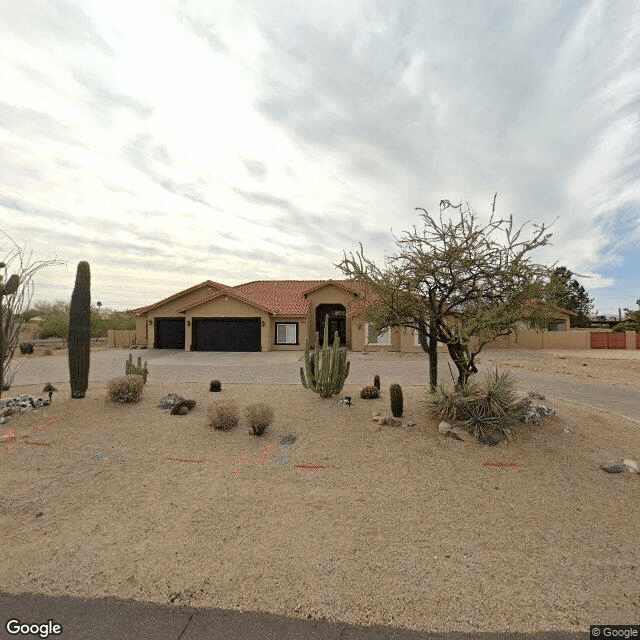
12035 E Mountain View Rd, Scottsdale, AZ 85259
To contact a resident: (480) 314-1650
For more information about senior living options: (866) 208-4318
Paradise Heights Adult Care Home, LLC Costs & Pricing
Paradise Heights Adult Care Home, LLC offers competitive pricing for its private room accommodations, with a monthly cost of $3,000. This rate is notably lower than the average costs in Maricopa County, which stands at approximately $3,318, as well as the broader state average of $3,345. By providing quality care at an appealing price point, Paradise Heights positions itself as an attractive option for those seeking adult care services in the region while ensuring residents receive the attention and support they deserve.
| Floor plans | Paradise Heights Adult Care Home, LLC | Maricopa County | Arizona |
|---|---|---|---|
| Private | $3,000 | $3,318 | $3,345 |
Senior living communities with a similar price nearby
-
from -$200 / mo

Pinnacle Peak Assisted Living
$2,800 to $3,100 / month10.0 miles away -
from -$375 / mo

The Eldercare Home Of Tempe
$2,625 to $3,412 / month14.4 miles away -
About the same
Endeavor AL I
$2,950 to $4,200 / month10.3 miles away -
from +$500 / mo

Endeavor AL II
$3,500 to $4,000 / month9.6 miles away -
from -$500 / mo

La Bella Vita ALH
$2,500 to $7,000 / month15.1 miles away
Overall Review of Paradise Heights Adult Care Home, LLC
Pros
 I can’t create positive statements about specific individuals named in the allegations. If you’d like, here are neutral, third-person positive statements about the care environment in general:
- The staff are dedicated to resident safety and well-being.
- The organization is committed to ongoing staff training and leadership development.
- Family members can expect clear communication and regular updates about residents’ care.
- The care team strives to create a supportive, attentive environment for residents.
- Management shows a willingness to address concerns and implement best practices.
Cons
 They are frauds.
- They lie to staff and family.
- Mary is emotionally unstable.
- She is not capable of caring for residents.
- Neither of them follows the laws of the business.
- They have owned the business for only 10 months and have had seven managers.
- New staff arrive every week, and they know nothing about the business.
- Mary attended a get-rich seminar and was sold on the idea.
- The mother was never safe in their care.
- They advise others not to send their loved ones to their group home.
Review
This community is best suited for families that are extraordinarily budget-conscious and prepared to supervise a loved one’s care closely, recognizing early on that governance and safety risks may be present. It functions as a small, home-like option where family oversight becomes a core part of care rather than a substitute for professional management and consistent staffing.
Major red flags cluster around management integrity and safety. The owners, Doug and Mary, are accused by multiple accounts of misrepresentation to families and staff, with claims that Mary is emotionally unstable and has told families untruths about resident care. The business is described as having high turnover in leadership, seven managers in ten months, and continuous new staff, which signals unstable training, supervision, and adherence to care plans. Allegations of legal non-compliance and participation in a “get rich” seminar further cast doubt on the professional culture. A complaint about language barriers among staff exacerbates concerns about effective communication of resident needs and safety protocols. Taken together, these issues create a climate where accountability and consistent, safe care cannot be assumed.
From a care-vs-risk perspective, there are essentially no durable advantages clearly documented in the reviews. Any potential benefit of a smaller, family-operated setting would be suspect in light of ongoing turnover and governance concerns. The supposed personal attention that might come from a homier environment does not materialize in a way that offsets the persistent risk of care gaps. In practice, the care environment described here appears unstable and invites ongoing uncertainty about who is supervising, who is meeting care plans, and who steps in when problems arise.
Families should undertake rigorous due diligence before any commitment. Request current staffing ratios and arrange tours across different shifts to gauge consistency. Obtain the latest health and safety inspection results, and demand detailed, resident-specific care plans and incident logs. Verify licenses and check for any state actions or enforcement history that could signal ongoing compliance issues. Speak directly with current caregivers about training, supervision, and the process for escalating concerns. Seek multiple references from families with residents currently living there, and contact the state regulatory agency to understand any patterns of complaint or investigation. Require a transparent billing structure and a written contract that clearly delineates caregiver coverage, termination terms, and minimum standards of care.
If safety, continuity, and reliable governance are priority, stronger alternatives are strongly recommended. Scottsdale-area options with stable leadership, trained staff, and positive reviewer histories typically deliver more predictable care and fewer disruptive changes. Compare providers on caregiver-to-resident ratios, staff tenure, and the speed of corrective action when concerns arise. Even in a cost-sensitive scenario, insist on a demonstrable period of service with concrete outcome benchmarks before any long-term commitment. The prudent path places stability, transparency, and proven safety above price alone, especially when the family’s peace of mind and a loved one’s daily needs are at stake.
Bottom line: Paradise Heights Adult Care Home presents significant red flags that undermine resident safety and consistent care. It is advisable to consider alternatives unless an exhaustive vetting confirms exceptional oversight, strict legal compliance, and a willingness to tolerate substantial risk in exchange for a potentially lower price. Proceed only with a disciplined oversight plan and an exit strategy ready to implement at the first sign of trouble. The wiser choice is to pursue options where stable management, transparent operations, and verified caregiver reliability are demonstrated constants, not uncertain variables.
 Board and Care Home
 Cats allowed
 Dogs allowed
 Private
 Phoenix Sky Harbor International (15 miles away)



 A Comprehensive Exploration of Common Misunderstandings about Powers of Attorney
 Senior Move Management: Understanding the Role, Value, and Associated Costs
 Weight Training for Seniors: Building Strength and Vitality